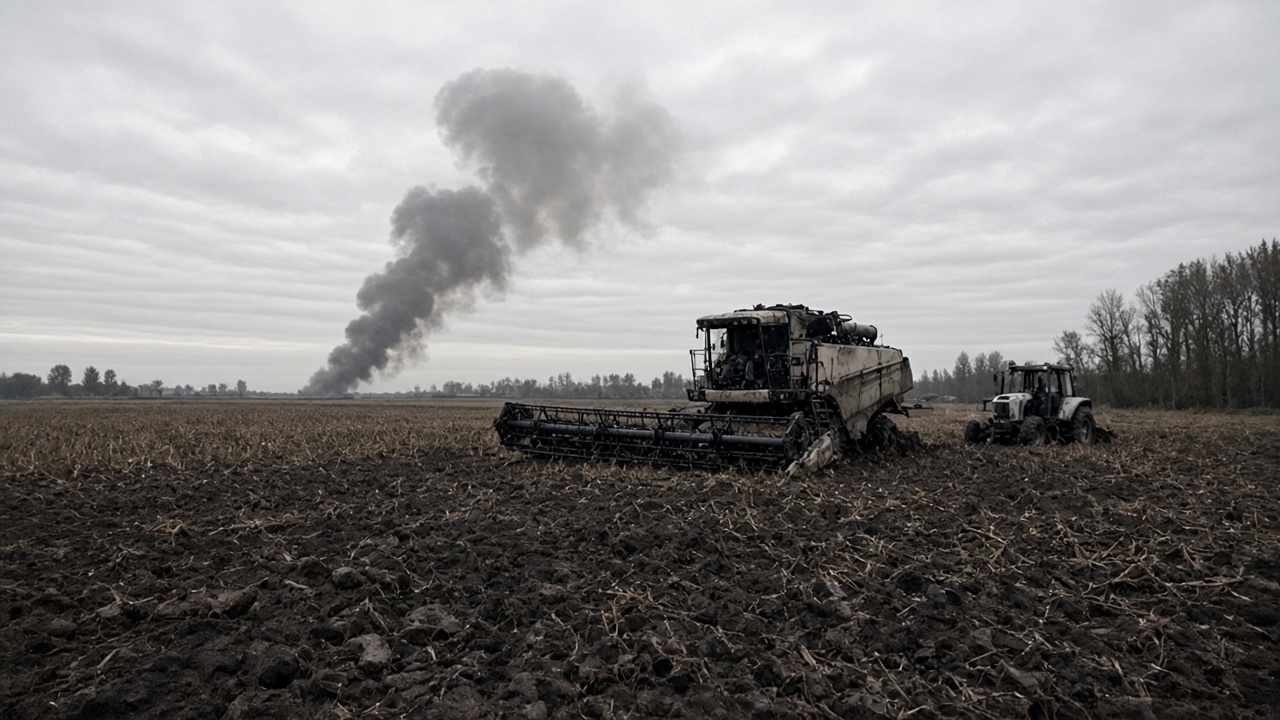
Russian forces struck a farm in northern Ukraine’s Kharkiv region on Thursday, killing six people and wounding eight, according to regional governor Oleh Syniehubov. The attack came the same day officials in Kyiv reported two additional deaths, including a strike that damaged the car park of a maternity hospital—raising the civilian toll as diplomats at the United Nations pressed for ceasefire language focused on Black Sea shipping.
The Kharkiv farm strike
Syniehubov posted on Telegram that the strike hit agricultural workers on a farm in Kharkiv region, without immediately naming the settlement. Six people died at the scene or shortly after, he said, and eight others were injured. Ukrainian authorities have repeatedly accused Russia of targeting rural infrastructure and laborers who remain in front-line provinces to harvest crops or maintain equipment.
The strike fits a pattern of mixed munitions used against dispersed targets away from major cities. For the security desk, the knowable fact set is casualty reporting from a named governor through an official channel, not attribution of which airframe delivered the weapons. Russia’s defense ministry typically does not comment on individual farm strikes in real time.
Kyiv casualties the same day
Separately, officials said Russian attacks killed two people in the capital. One victim died in the car park of a maternity hospital that sustained damage, according to city authorities—a detail that will feature in humanitarian briefings even if the facility’s clinical wards remained operational. Photos circulated by Ukrainian outlets showed shattered glass and burned vehicles in a parking area, not the hospital’s main entrance.
The juxtaposition matters for readers following UN-week diplomacy: German Foreign Minister Johann Wadephul called Thursday for an immediate ceasefire starting on the Black Sea to protect grain exports, while strikes hundreds of kilometers inland continued to kill civilians. Kyiv’s government argues maritime talks cannot ignore daily bombardment of population centers.
Diplomatic backdrop
U.S. officials met separately with Russian and Ukrainian delegations on the sidelines of the General Assembly, according to diplomats briefed on the schedule. No breakthrough was announced publicly. Turkey’s president, meanwhile, told Ukraine’s leader that attacks on commercial vessels in the Black Sea are “inexplicable,” echoing concerns that port security and inland violence are linked in public messaging even if negotiators treat them as separate files.
For Ukraine’s military planners, farm strikes also carry economic weight: Kharkiv region remains agriculturally productive when security permits. Losing laborers and equipment mid-harvest can depress local output even when national export totals look healthy on paper.
Verification and exposure
International organizations may request access to document civilian harm, but front-line farms are often difficult for independent monitors to reach quickly. Syniehubov’s figures are the primary chip for now. Hospital officials in Kyiv may publish structural assessments of the maternity facility’s parking area; engineers will determine whether vehicles shielded the building from worse damage.
Until Russia comments or third-party investigators arrive, the bulletin stands on Ukrainian official reporting plus visual evidence from Kyiv. The procedural story is escalation on a day when ceasefire language returned to Western speeches—another data point for whether UN diplomacy is detached from the tempo of strikes.
What changes tonight
Ukrainian emergency services were expected to continue search-and-rescue around the farm strike zone if munitions left craters in fields. In Kyiv, police cordoned the hospital car park for forensic work. Air-defense command may issue overnight posture updates if drones or missiles target the capital again.
For readers, the new facts are numeric and geographic: six dead on a Kharkiv-region farm, eight wounded, and two more killed in Kyiv including at a maternity hospital’s car park—on the same day diplomats argued about grain routes and ceasefire sequencing.