Saudi Arabia, Turkey and Pakistan said Thursday they are arranging an urgent meeting of their chiefs of staff on how to support the kingdom under the Mecca Joint Defence Agreement, a step their foreign ministers disclosed after talks on the sidelines of the UN General Assembly in New York.
The announcement came in a Saudi foreign ministry statement carried by the Saudi Press Agency, after a session between Saudi Foreign Minister Prince Faisal bin Farhan Al Saud, Pakistan's Deputy Prime Minister and Foreign Minister Ishaq Dar, and Turkish Foreign Minister Hakan Fidan. The same day, Saudi air defences intercepted six ballistic missiles fired toward Taif and Yanbu.
What the statement commits to, and what it leaves open
The ministers "discussed arrangements for holding an urgent meeting of the chiefs of staff of the three countries to discuss ways to support Saudi Arabia under the Mecca Joint Defence Agreement," the statement said. The pact, signed in Mecca on Aug. 7, provides that an armed attack on any one of the three states is treated as an attack on all.
Nothing in the statement sets a date or venue for the military talks, or says what form of support is under consideration. The three governments have been standing up the pact's machinery since the signing, meeting in Istanbul on Aug. 31 to launch its Strategic Political and Defence Committee and agree a secretariat in Saudi Arabia, with the first secretary-general drawn from Pakistan.
The ministers also condemned attacks on Mecca and on civilian and economic facilities in the kingdom, and affirmed Saudi Arabia's right to defend itself under Article 51 of the UN Charter.
Six missiles, and alerts from the holy city to the Red Sea
The Saudi-led coalition backing Yemen's government said six ballistic missiles aimed at Taif and Yanbu were intercepted. Saudi Civil Defence issued a short series of alerts covering Mecca, Jeddah, Yanbu, Taif and Tabuk before saying the danger had passed. Coalition spokesman Maj. Gen. Turki al-Maliki said further escalation would be "dealt with firmly."
The Houthis separately claimed missile and drone strikes on a "sensitive target" in Riyadh and on Saudi Aramco facilities at Yanbu. Those claims have not been independently confirmed, and Saudi authorities have not reported damage at either site.
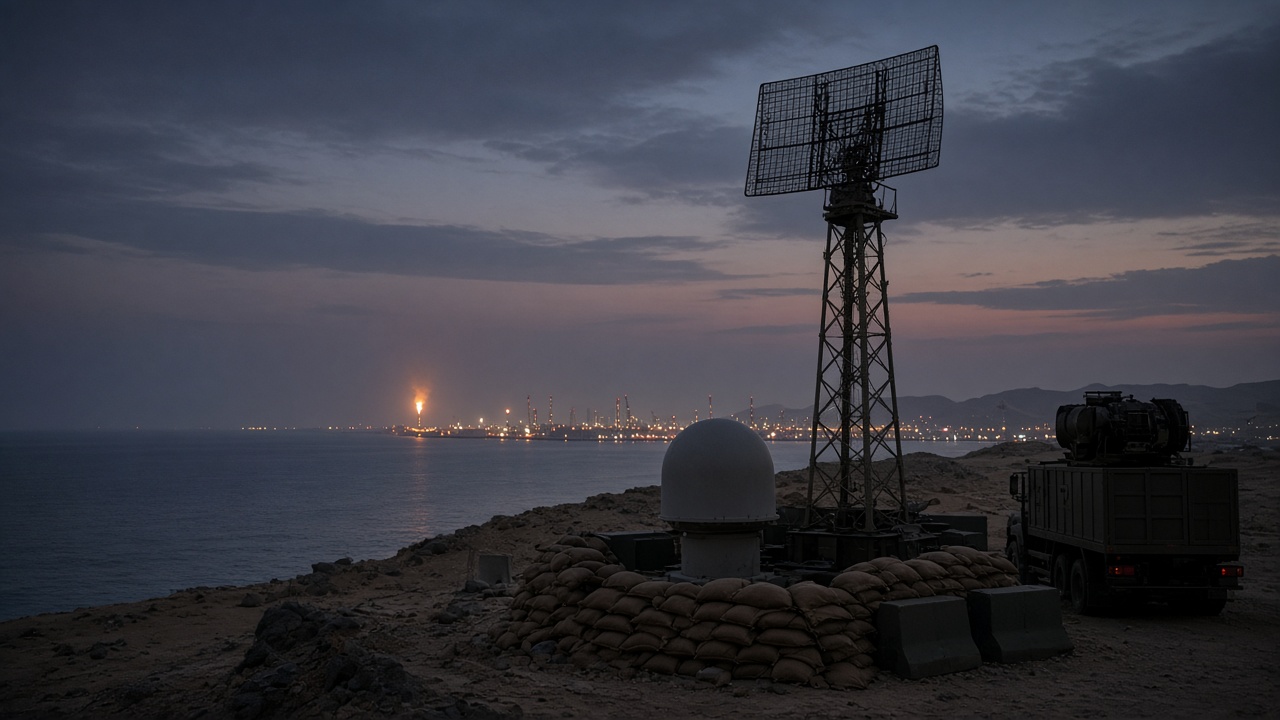
Yanbu is the kingdom's main crude export terminal on the Red Sea. President Emmanuel Macron said in an interview with TF1 that France would send "military assets, meaning soldiers, radars and defence systems to protect this site."
Iran moved to separate itself from the campaign. President Masoud Pezeshkian told Fox News that "the Houthis are responsible for their own actions" and do not take direction from Tehran — a denial no party has yet met with public evidence of operational control.
Inside Yemen, the cost lands on civilians
Fighting across several fronts killed at least 150 fighters in the 24 hours leading into Friday, according to a tally by Agence France-Presse compiled from seven sources: 98 on the government side and 52 from the Houthis, with clashes around the Kahboub Mountains and between Lahj and Taiz.
The UN refugee agency put the civilian toll in harder numbers. More than 130,000 people have fled their homes since the start of September, UNHCR spokesperson Babar Baloch told reporters in Geneva, with Taiz accounting for more than 60 percent of the movement. Displacement is also reported from Al Jawf, Marib and Hudaydah, on top of the 5.2 million Yemenis already displaced before this round of fighting.
More than 3,000 people have crossed the Gulf of Aden to Djibouti, a figure UNHCR expects to pass 10,000 as sea conditions improve in mid-October. Its Djibouti operation is 15 percent funded, and in Yemen it has received $34 million of the $194 million requested for 2026.
What is still unknown
No date, city or agenda has been set for the chiefs of staff, and no government has said whether Turkish or Pakistani personnel, aircraft or air-defence systems would be committed to Saudi Arabia. It is equally unclear whether Riyadh wants a formal activation of the pact's collective-defence clause or the committee process to keep running, and whether Iran directed Thursday's launches remains unproven in public.