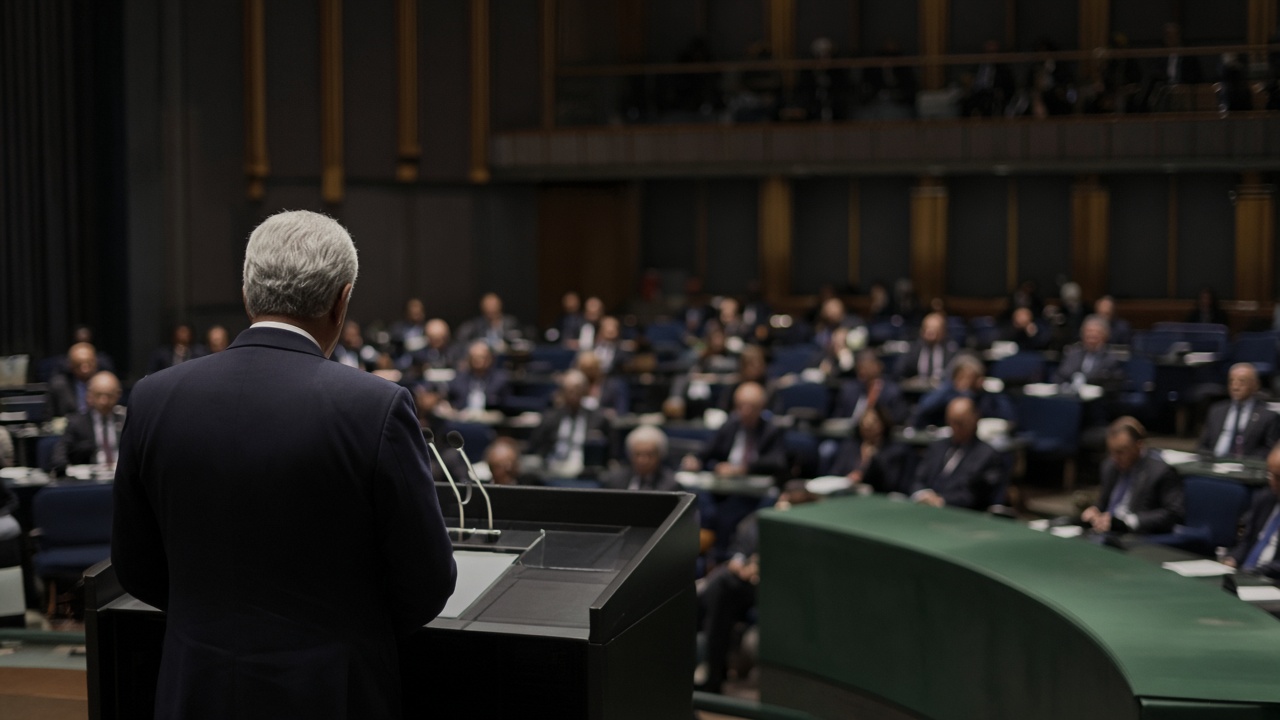
Argentine President Javier Milei used his General Assembly address on Wednesday to argue that the United Nations had replaced its founding peace-and-security mission with a "supranational" bureaucracy that imposes lifestyles on citizens, while simultaneously pressing classic Argentine demands: sovereignty talks over the Malvinas, freedom for a detained gendarme in Caracas, and immediate release of Gaza hostages.
Subsidiarity and a smaller UN
In a seventeen-minute speech broadcast on UN Web TV, Milei said prosperity requires reversing what he called decades of regulatory sprawl. He proposed four principles: treat peace and security as the core mandate; apply subsidiarity so the UN acts only when nations cannot; simplify norms so prosperity—not just absence of war—defines stability; and streamline institutions he said duplicate national regulators. The rhetoric echoed his domestic campaign against Argentina's public payroll, but the venue was the 80th session's green marble hall, where smaller states often welcome UN technical agencies they cannot fund alone.
Milei praised U.S. President Donald Trump for understanding that "a disaster in the United States is a global disaster," linking that applause line to Trump's border policies without detailing bilateral trade talks. Argentine media noted the speech followed confirmation of a large U.S.-backed currency swap intended to steady the peso—financial support Milei's government needs even as he bashes multilateral governance.
Malvinas and hostage appeals
Closing with "sensitive" regional files, Milei reiterated Argentina's claim to the Malvinas, South Georgia, and South Sandwich Islands, calling British control an unresolved colonial situation and urging London to resume negotiations under General Assembly Resolution 2065. The UK government maintains that islanders chose British sovereignty in a 2013 referendum and has no obligation to reopen sovereignty talks—a position Foreign Office spokespeople repeated within hours of Milei's remarks.
Milei also demanded the release of Nahuel Gallo, an Argentine gendarmerie member his government says was abducted and is held in Venezuela without charge, and he called for hostage releases in Gaza. Those passages aimed at different audiences: human-rights groups in Buenos Aires, anti-Maduro coalitions in Latin America, and Western capitals where Milei styles himself an ally against left-wing authoritarianism.
Reaction in Buenos Aires and London
Argentina's opposition controlled Congress committees said Milei's UN reform agenda lacks a legislative path, while his coalition celebrated the speech as proof Argentina "returned to the world stage" with libertarian economics. British diplomats treated the Malvinas paragraph as familiar noise, but Falklands lawmakers said any UN platform that revives 2065 language warrants a response in the islands' own assembly.
UN officials declined to engage Milei's institutional critique on the record, noting that member states routinely complain about bureaucracy while expanding mandates in climate and health. For analysts, the tension is structural: Milei wants a thinner UN, yet Argentina relies on UN agencies for agricultural standards and debt-workout forums.
Why the speech matters now
The bulletin is not a new Falklands crisis—it is Milei packaging domestic ideology for a global audience while anchoring Argentina's perennial territorial claim and two hostage cases in the same closing minute. Markets focused more on the U.S. swap than on UN reform, but diplomats filed the speech as another data point in a General Assembly week already dominated by Gaza, Ukraine, and great-power trade truces.
For the politics desk, the new fact is procedural and rhetorical: Argentina's president used the rostrum to call for shrinking the UN's ambit even as he invoked the body's resolutions to pressure the United Kingdom and Venezuela in the same breath.