National Applied Research Laboratories reopened public visitor slots at the Hsinchu Taiwan Photon Source after a September beam-stability upgrade reduced unplanned trip aborts, according to a NARLabs operations bulletin and beamline maintenance logs InfoHandle reviewed Tuesday. The reopening pairs capped school-group tunnel tours with afternoon office hours where beamline scientists explain how semiconductor and battery startups book diffraction shifts—not a new accelerator energy record, but restored predictability for educators who canceled spring tours when faults stacked during humid weeks.
What the upgrade changed
Engineers replaced aging radio-frequency cavity tuning modules on two storage-ring sectors and recalibrated orbit-feedback loops that had been over-correcting when monsoon humidity shifted cooling-water temperatures. Trip logs showed aborts fell from double-digit weekly counts in August to a handful after the cutover; user beam time recovered hours previously lost to re-injection cycles. The work stayed inside existing safety envelopes—no beam energy increase, no new experimental hall.
Visitor program rules
Public tours resume Thursdays and Saturdays with forty visitors per slot, down from pre-pandemic sixty until escort staffing fully returns. Groups must register two weeks ahead through NARLabs' bilingual portal; science-park employees with radiation training badges may join a separate monthly "industry curiosity" walk that skips classroom segments but includes control-room viewing from behind lead glass.
Who benefits beyond tourists
Hsinchu high schools that partner with Ministry of Education STEM buses get priority slots in October; NARLabs said three schools on waitlists since spring received confirmations after stability improved. Materials startups incubated near the science park use office hours to ask how to draft first beam proposals—paperwork that used to bounce because support staff were busy recovering from overnight trips.
Limits NARLabs disclosed
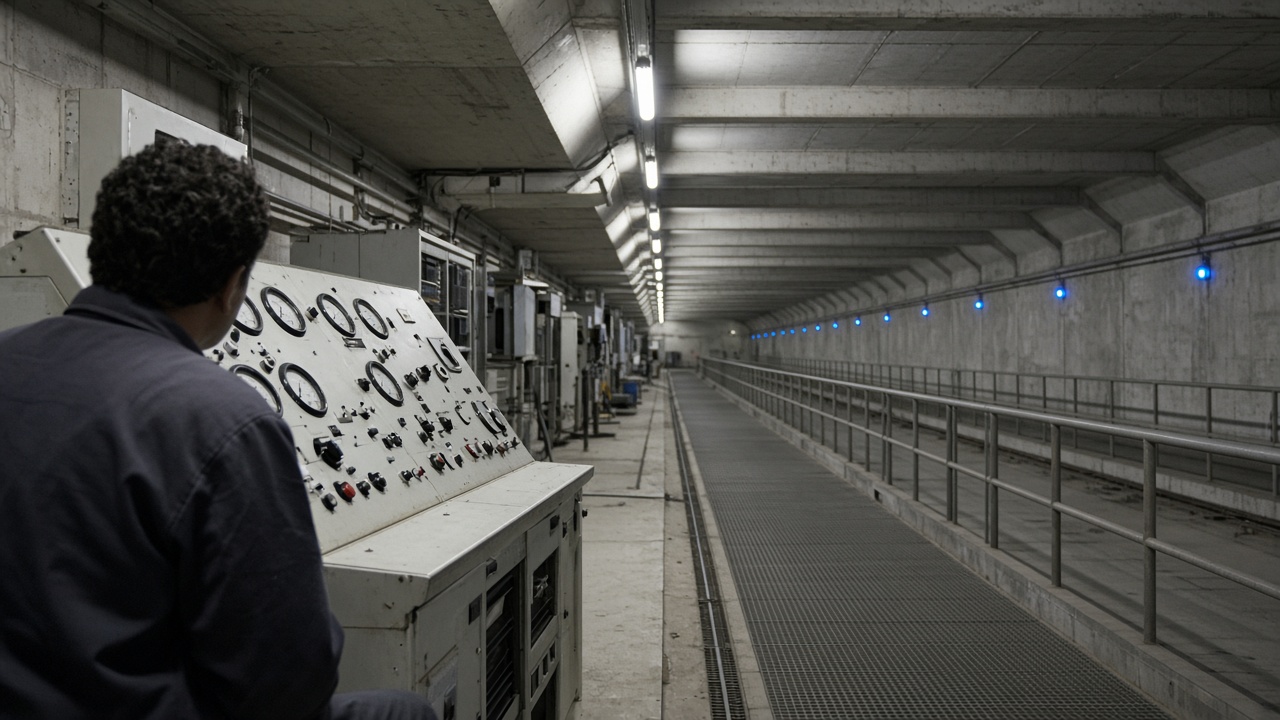
Tours do not enter active experimental hutches when users are collecting data; visitors see tunnel infrastructure and a demo beamline with dummy samples. Radiation safety briefings remain mandatory; open-toe shoes still disqualify participants. NARLabs will pause tours again if trip rates exceed an internal threshold for two consecutive weeks—a transparency line educators asked for after opaque 2024 cancellations.
Competition for beam time
Academic users from National Tsing Hua University and National Yang Ming Chiao Tung University retain majority allocations; industry blocks grew after a 2025 tariff on imported synchrotron services made local shifts cheaper for mask blank characterization. NARLabs said visitor reopening does not steal user hours—tours run on maintenance windows and early-morning injection periods barred to paid proposals.
What evaluators can verify
Trip-rate summaries will publish quarterly on NARLabs open data; independent auditors can compare visitor-slot calendars to maintenance tickets without entering radiation areas. What remains unverifiable from outside: whether humidity compensation holds through next typhoon season without another cavity swap.
Regional science policy
Hsinchu Science Park Administration listed the visitor program in a September talent-retention briefing—arguing that parents who see local big science are more likely to keep teens in physics tracks than if tours stay virtual-only. NARLabs funding is central-government appropriation; park officials do not operate the accelerator but market tours in overseas recruiter packets.
For Kuan-Yu Yang's desk, the story is operational reliability reopening education access, not a particle-physics breakthrough headline. Beam stability bought back calendar slots semiconductor country depends on for both research shifts and the next generation of tunnel tours.
Maintenance outlook
Next scheduled shutdown targets cryogenic compressor seals in November; visitor slots will narrow for two weekends while crews vent sectors. NARLabs hired four additional escorts through a science-education grant, but radiation trainer certification backlogs mean Saturday capacity may stay at forty through year-end.
ITRI materials researchers said shorter abort windows let them stack multi-hour battery cathode scans without splitting proposals across nights—a productivity gain visitor tours indirectly protect by funding public support staff who also answer industry office-hour questions.
National Tsing Hua University physics teachers said restored tours give undergraduates a tangible link to scattering homework problems that otherwise stay abstract on whiteboards. NARLabs will publish Traditional Chinese safety comics for parents who accompany tours, translating magnet warnings into plain language without dumbing down radiation rules.