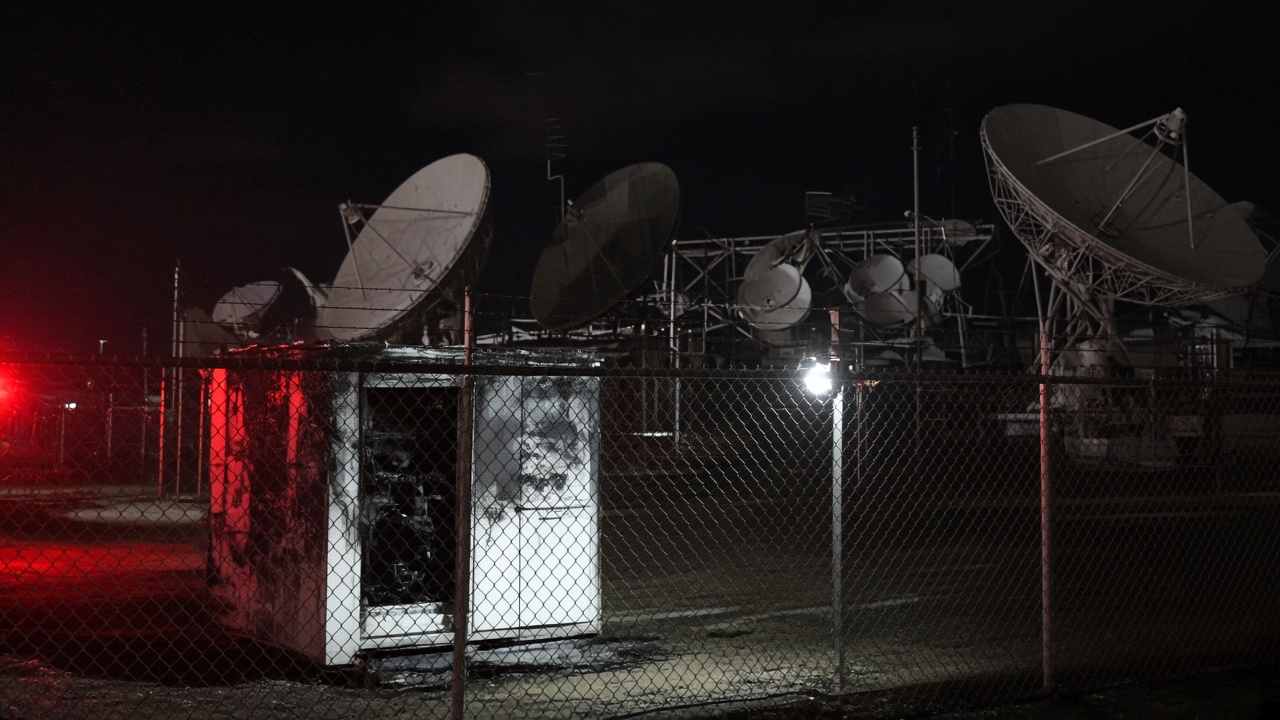
Poland’s government said a fire that tore through power equipment at a Starlink ground station in Wola Krobowska, about 40 kilometres south of Warsaw, was an act of sabotage aimed at telecommunications infrastructure that also carries traffic for Ukrainian users.
What burned and what stayed online
Fire services were called to the Exatel facility late on Wednesday after flames engulfed a distribution board, generator housing, and supporting power gear, according to Polish broadcasters. No injuries were reported, and officials said the station remained operational after crews extinguished the blaze and secured the compound.
Exatel, a state-owned telecom operator, uses the site to route satellite-linked internet traffic, including links that Polish officials describe as supporting secure communications in Ukraine. Deputy Prime Minister Krzysztof Gawkowski told TVP Info that the incident was “deliberately designed to disable the station” and disrupt access for institutions that rely on the hub.
Sabotage claims versus the investigation
Gawkowski said “many indications” point to a hybrid-warfare playbook associated with Russian operations across NATO’s eastern flank, though he and other ministers stopped short of naming Moscow as the perpetrator while forensic work continues. Justice Minister Waldemar Żurek told RMF radio that sabotage could not be ruled out given the sensitivity of satellite ground segments.
Jacek Dobrzyński, spokesman for Poland’s security-services coordinator, cautioned that not every serious fire equals sabotage and that investigators were still weighing arson against an electrical fault. Police, the Internal Security Agency, and the Central Bureau of Investigation have all been notified, TVP World reported.
UK and NATO context
For British readers tracking European security, the fire arrives the same week Poland scrambled fighters after a Russian military helicopter briefly crossed its airspace—an incursion Warsaw publicised alongside broader warnings about sabotage campaigns. The BBC reported Danish officials separately cautioning that Russian hybrid threats are intensifying across the alliance.
NATO members have documented a string of arson and infrastructure incidents from the Baltics to Central Europe since 2022. UK agencies have urged critical-infrastructure operators to rehearse failover plans when satellite backhaul or power nodes are hit, even if primary services stay online.
Why Starlink ground segments matter
Starlink terminals are visible at the tactical edge in Ukraine, but terrestrial gateways still matter for backhaul, latency, and lawful intercept paths that governments negotiate with operators. Damaging Polish ground power systems does not necessarily blackout every terminal, yet it signals that satellite supply chains have physical nodes inside NATO territory worth attacking.
SpaceX and Exatel have not issued detailed technical statements on redundancy at Wola Krobowska. Insurers and telecom regulators will watch whether the incident triggers new security standards for gateway sites that also serve cross-border defence customers.
What happens next in Warsaw
Investigators must produce a provable chain from charred equipment to a responsible party—a bar Gawkowski’s political language has not yet met. Until then, Poland is treating the fire as a national-security event with hybrid-war overtones, keeping Ukraine-linked connectivity under guard while allies, including the UK, monitor whether sabotage patterns are accelerating on NATO soil.