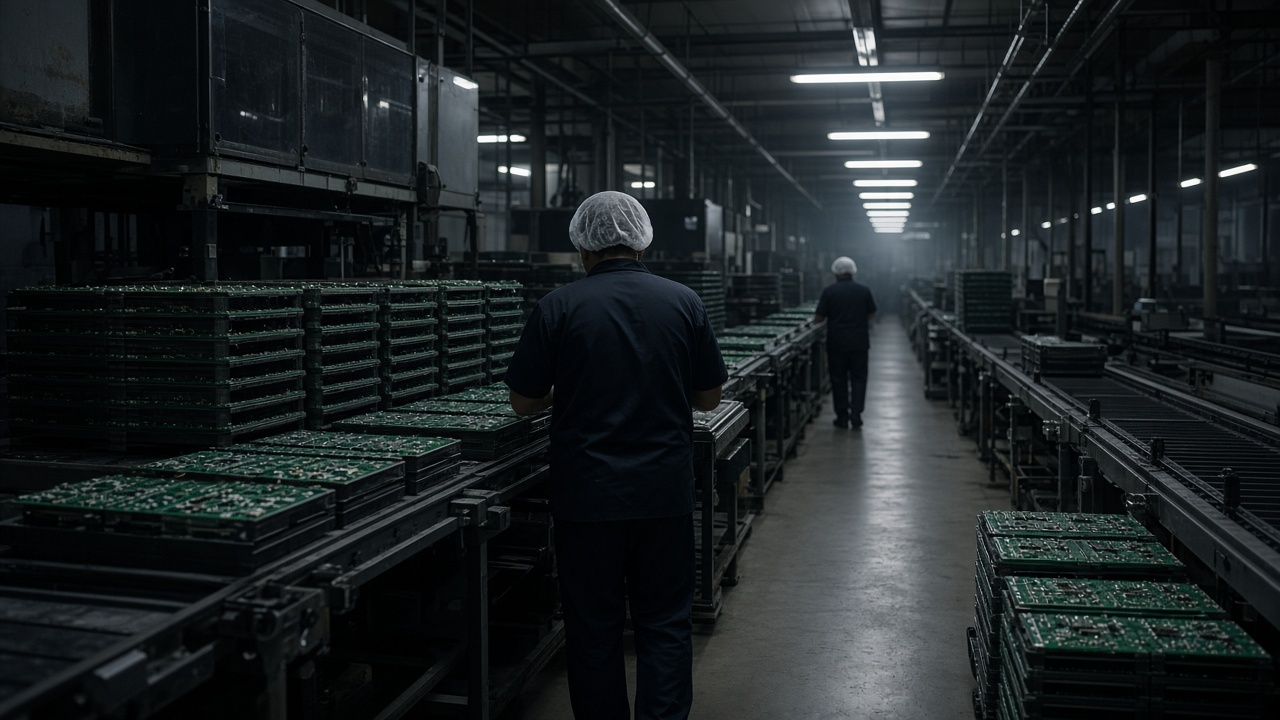
Singapore’s factory pulse ticked back into expansion territory in September, according to a flash purchasing managers’ index (PMI) compiled for the Singapore Business Federation (SBF), as electronics and precision-engineering clusters absorbed export orders even as domestic construction inputs softened. A reading above 50 signals output growth month on month; September’s print broke a brief contraction streak that had worried procurement desks watching US tariff rhetoric and China inventory swings.
Electronics led the rebound
SBF’s survey panel—covering manufacturers across semiconductors, medtech subcomponents and industrial automation—reported stronger new orders and finished-goods inventories normalising after a cautious August. The Straits Times cited sector contacts who linked the uptick to AI-server and smartphone refresh cycles pulling wafer fab and backend packaging demand through Tuas and Woodlands suppliers. Precision engineering, which feeds aerospace and offshore marine repair, posted a milder but still positive contribution as shipyard schedules stabilised.
Ministry of Trade and Industry (MTI) monthly indicators, updated on a similar calendar, tend to lag the PMI flash but directionally align when electronics exports rise. Non-oil domestic exports data earlier in the month already hinted at semiconductor strength; the PMI confirms that sentiment reached shop floors, not just port statistics.
Sub-indices worth watching
New export orders sub-indexes improved faster than domestic new orders, a pattern consistent with Singapore’s trade hub role. Employment and supplier delivery times remained tight—firms still report skilled technician shortages, particularly in equipment maintenance roles that cannot be offshored easily. Input prices eased slightly as commodity metals cooled, but electronics inputs tied to advanced packaging stayed elevated, squeezing margin for smaller contract manufacturers without long-term customer contracts.
Inventory sub-indices showed firms willing to hold more finished goods when delivery lead times stretch—a bet that customers will not cancel backlog as they did in prior downcycles. That confidence is fragile: any sudden US policy shift on chips or China consumption could reverse the build within a quarter.
What MTI and SBF narratives share
MTI’s commentary in recent months has stressed diversified supply chains and value-added manufacturing rather than headline employment in legacy plastics and printing, sectors that continue to contract in PMI breakdowns. SBF’s release emphasised business sentiment among small and medium enterprises (SMEs) supplying the electronics majors—tooling shops, clean-room logistics, and test-equipment integrators that do not appear in multinational earnings calls but set local hiring.
For households the PMI is indirect: expansion supports overtime and bonus pools in industrial towns from Jurong to Changi Business Park. Contraction shows up first in temp hiring and transport subcontracting. September’s above-50 read is a relief for policymakers balancing a strong dollar with tourism and finance hiring that has carried services PMI higher all year.
Risks into the fourth quarter
Global electronics is cyclical; flash PMIs have reversed within two months when smartphone launches slip or cloud capex pauses. Singapore’s exposure is concentrated—semiconductor-related clusters account for a double-digit share of manufacturing value-add. A sustained expansion requires orders to hold through year-end, when US holiday inventory builds traditionally peak.
Construction-related manufacturing inputs—cement products, metal fixtures—remain a drag as public housing and infrastructure projects face labour and material scheduling frictions. That divergence is healthy for diversification but complicates single-number headlines: headline PMI above 50 does not mean every factory bay is humming.
Implications for business planners
Procurement teams should treat September’s flash as a green light to firm up Q4 component orders where suppliers had been quoting short lead times only. Banks lending to SME manufacturers may see working-capital requests rise with inventory builds—credit committees will still ask for customer concentration risk disclosures. Investors watching Singapore industrials on the Straits Times Index should read PMI alongside listed EMS players’ order books; the index move is macro confirmation, not a substitute for company guidance.
If electronics strength persists into October’s final PMI, MTI may revise full-year manufacturing growth assumptions modestly upward in year-end economic reviews. For now September’s expansion is a data point—not a boom—but it ends a nervous sub-50 August and gives factory managers something firmer than trade headlines to plan around.