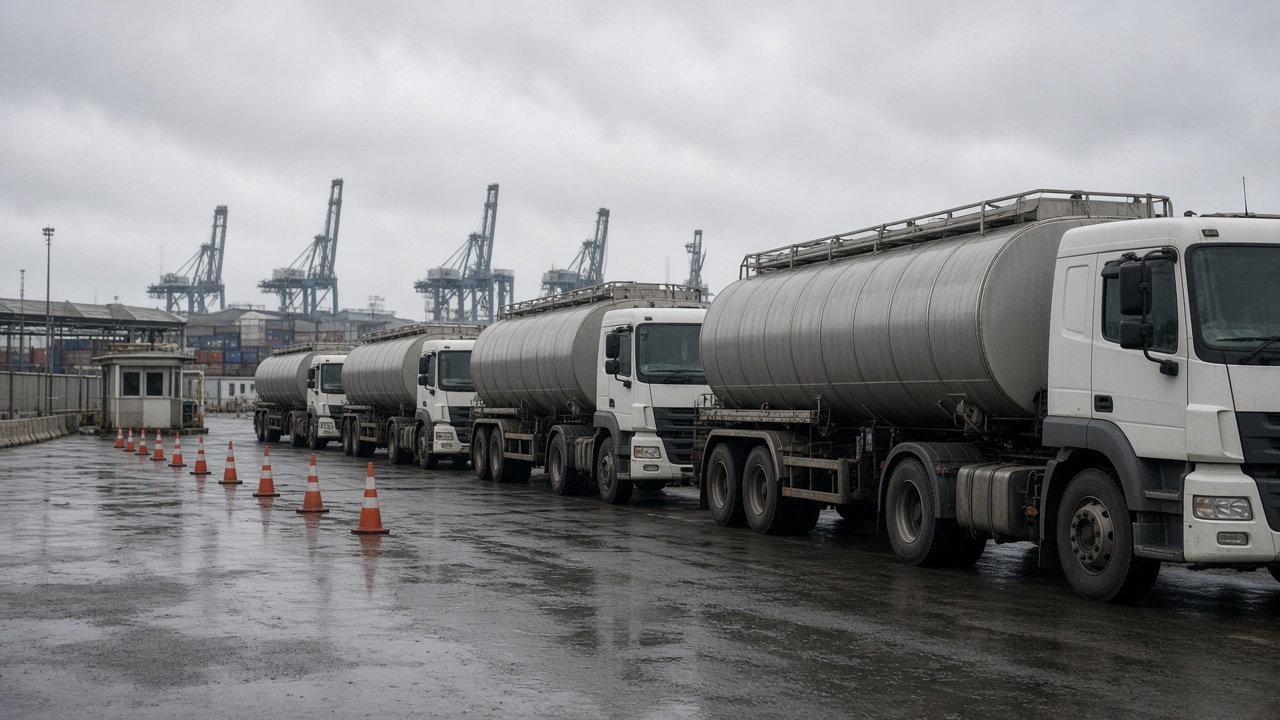
Japan’s big three general trading houses spent Wednesday repricing spot liquefied natural gas inventory and diesel-linked power margins as Typhoon Dujuan left fuel trucks queued outside Chiba port gates, delaying Silver Week deliveries that feed Tokyo Bay gas plants and independent power sellers still running on backup generation. Mitsui & Co, ITOCHU Corp, and Marubeni Corp did not issue storm-specific profit warnings, but desk chatter described a familiar post-typhoon pattern: physical queues at the gate translate into mark-to-market gains on stored molecules while retail fuel lines lengthen inland.
What the queues are blocking
Chiba concentrates LNG receiving terminals, coastal oil terminals, and the truck lanes that bridge imported molecules to Kanto power demand. Port authorities kept safety inspections running through holiday-thinned staffing, but operators said flooded yard approaches and intermittent TEPCO outages at weigh stations stretched turnaround times from hours to most of a shift. Trading-house logistics teams rerouted some diesel batches through Yokohama and Kawasaki berths that stayed dry, paying demurrage on delayed tankers rather than missing utility nominations.
For LNG, the issue is less import volume—Japan’s tanks entered the week well stocked—and more timing of regasified send-out when city-gas utilities and JERA-linked plants schedule maintenance around Silver Week. A truck queue that blocks diesel also blocks contractor crews trying to reach coastal vaporisers, a coupling Kenji Watanabe’s business desk watches because trading houses book both commodity margin and tolling fees on the same geography.
How sogo shosha books move
Mitsui’s energy division markets LNG from upstream equity and third-party cargoes; ITOCHU’s chemicals-energy segment blends power trading with fuel oil and LPG distribution; Marubeni’s power portfolio spans domestic IPPs and overseas gas fields. None break out Chiba queue hours in quarterly filings, but investors know typhoon seasons show up as inventory fair-value lines and higher short-term logistics opex rather than lost long-term contracts.
When spot Asian LNG prices are flat, inventory repricing is mostly about location spreads: molecules already in Japanese tanks gain option value if truck and berth delays tighten same-week delivery. When prices are volatile, trading desks may layer hedges on Osaka electricity futures—another Chiba-adjacent market that woke Thursday with cash equities.
Silver Week demand on the ground
Return traffic from Boso resorts collided with motorists topping tanks before long highway drives, amplifying retail queues even as wholesalers waited on port releases. Convenience chains that lost cold-chain power during the storm rushed diesel for generators once feeders returned, competing with utility tanker nominations trading houses schedule. Prefectural officials asked distributors to prioritise hospitals and water plants; commercial users with firm contracts still jumped the line when paperwork cleared.
City-gas utilities published calm notices about storage cover, but industrial buyers without dual supply paths paid spot premiums on trucked LNG and LPG substitutes—margins that flow to trading-house marketing arms when they hold the molecules.
Power sellers and the BOJ backdrop
Independent power retailers exposed to spot fuel pass through costs on tariffs reviewed quarterly; a week of port friction does not rewrite annual contracts but can delay pass-through filings METI watches. With the Bank of Japan holding 1.25 per cent and the yen range-bound into Thursday’s equity reopen, trading houses fund inventory with stable short rates—a small tailwind to carrying extra LNG in tank if delivery spreads widen.
Equity investors often lump sogo shosha energy earnings with commodity beta; typhoon logistics are a reminder that Japan exposure is also pier-side asphalt and truck manifests, not only Middle East production headlines.
What filings will and will not show
Next EDINET cycles may mention disaster costs in footnotes—higher subcontractor rates, overtime at terminals—without quantifying Chiba alone. Segment operating profit bridges could show energy marketing up while machinery or metals soften, obscuring weather unless management takes questions on earnings calls.
Competitors Sumitomo Corp and Mitsubishi Corp face the same geography; if only one house guides higher energy trading, analysts will ask whether queue delays were shared industry friction or superior tank positioning before Dujuan landfall.
Investor checklist through month-end
Watch JOGMEC weekly stock reports for Kanto cover, Chiba prefecture port reopening bulletins, and TEPCO restoration timestamps that unlock weighbridges. If queues clear before October city-gas demand rises with cooling season, repricing stays a one-week P&L blip; if berths stay congested into typhoon season’s next name, expect more frequent inventory fair-value noise in trading-house statements.
For now the story is physical: trucks idling at Chiba gates, trading desks updating spreadsheets, and Silver Week motorists feeling diesel lines that start at the port fence—not at the futures screen.
Household and SME angle
Small factories on trucked fuel should confirm delivery windows with marketers tied to trading-house terminals; assumed just-in-time schedules failed for many during the holiday. Households see the outcome as petrol station lines, but the upstream choke point is the port queue trading houses are repricing molecule by molecule.