United Nations member states adopted a concise, action-oriented declaration on sea-level rise on Thursday at a high-level plenary meeting in New York, capping months of negotiation that diplomats said had to stay practical enough for small island governments to take home to parliaments already spending disaster budgets twice a year. The text passed after a silence procedure in August and did not require a vote on the floor, a procedural choice meant to preserve consensus among countries that disagree sharply on fossil-fuel timelines but share anxiety about eroding coastlines.
What the declaration commits
According to the final document published by the U.N. Department of Economic and Social Affairs, the declaration organizes work around four pillars: improving knowledge and data on local sea-level change; scaling adaptation and finance for coastal communities; protecting socioeconomic and cultural livelihoods tied to fisheries and tourism; and clarifying legal questions about maritime zones and statehood when dry land disappears. None of the paragraphs impose binding emissions cuts—that remains the province of the Paris Agreement—but they do instruct the secretariat to coordinate technical exchanges and to report back on finance gaps.
Small island developing states pushed hardest for explicit language on loss and damage, the term for irreversible climate harm. Wealthier delegations accepted references to “enhanced support” without quantifying dollars, leaving the fight over replenishing the Green Climate Fund and related vehicles to budget seasons in Washington, Brussels, and Beijing.
Who spoke and what they asked for
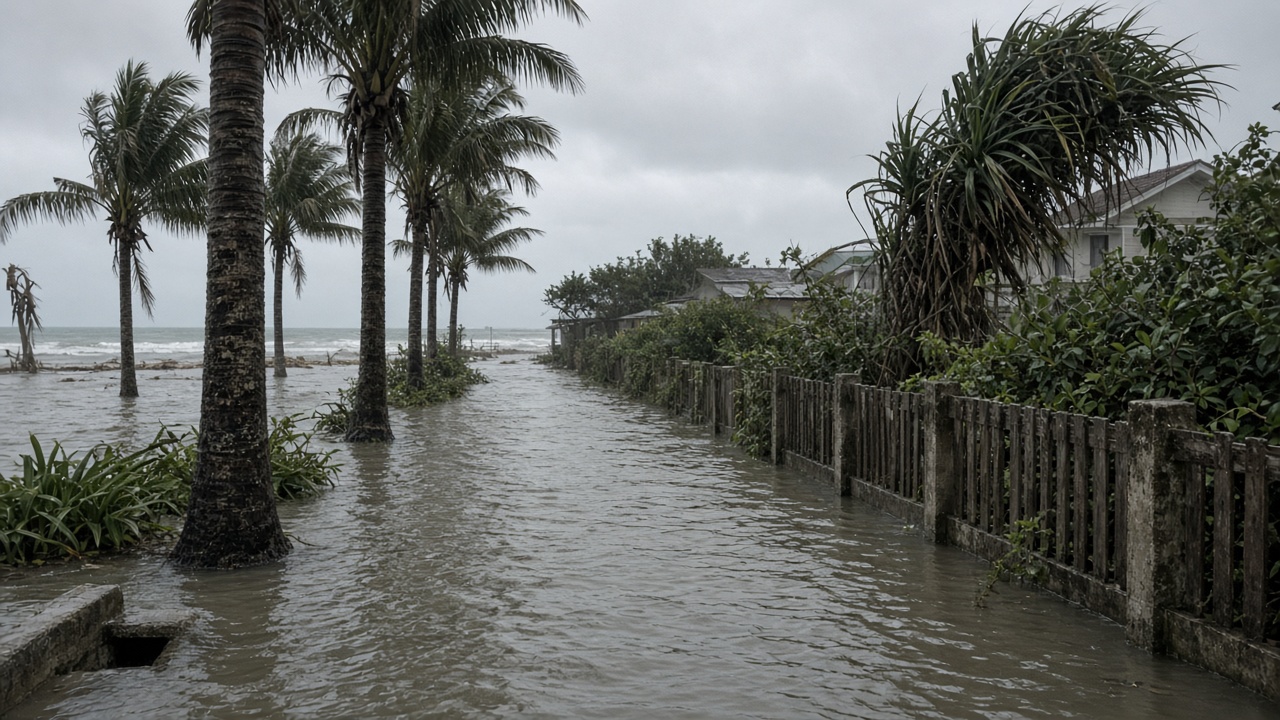
Pacific island leaders used the morning session to describe saltwater intrusion into taro plots and cemeteries washing into the surf. Caribbean ministers cited hurricane reconstruction debts that leave no fiscal room for seawalls. African coastal states emphasized mangrove restoration as cheaper than concrete, but said they still needed satellite monitoring they cannot afford alone.
The United States and European Union aligned on open-data pledges for tide gauges and ice-sheet modeling, while stressing that adaptation grants must include anti-corruption safeguards—a message directed as much at domestic taxpayers as at recipients. China’s representative emphasized South-South cooperation and technology transfer without accepting new binding finance targets in the declaration itself.
Legal statehood on the table
The fourth pillar acknowledges a question that lawyers once treated as hypothetical: if a nation’s territory is submerged, do its exclusive economic zone and U.N. seat persist? The International Law Commission has studied baselines and maritime boundaries; Thursday’s declaration encourages states to continue those talks without prejudging outcomes. For Tuvalu and Kiribati, the paragraph is existential; for large continental states, it is a footnote—but diplomats from The Hague said courts may cite the declaration as evidence of customary concern even if it is not a treaty.
Link to this week’s climate diplomacy
The meeting sits beside other General Assembly themes—artificial intelligence safety sessions and Ukraine war debates—but U.N. Environment Programme schedules show back-to-back sea-level panels through the afternoon, signaling that the secretariat wants momentum before COP follow-ups. Negotiators said the declaration’s value is coordination: a shared checklist ministers can reference when bidding for World Bank projects or when arguing that migration funding should include planned relocation, not just emergency shelters.
What comes next
Implementation now moves to technical agencies and regional development banks. Island diplomats said they will measure success by whether new bilateral deals appear within twelve months for elevation surveys and coral-reef barriers. Critics from civil society groups present in New York argued the text avoids naming fossil-fuel phaseout dates, calling it a diplomatic victory but a physical half-measure.
For readers tracking climate policy, the new fact is adoption itself: after the 2024 inaugural high-level meeting, the Assembly required a negotiated declaration by consensus, and Thursday delivered it—framing sea-level rise as a present-tense security and sovereignty issue, not a distant modeling exercise.