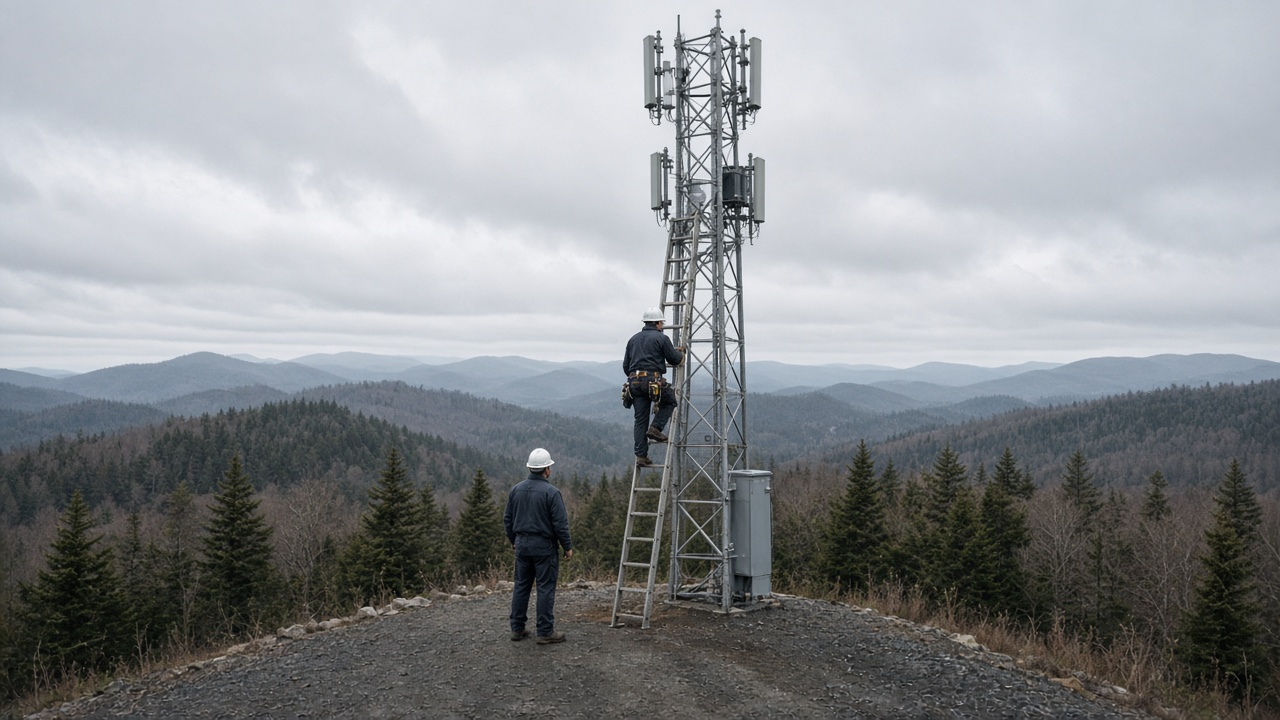
KT Corp. said Wednesday it completed a Chuseok maintenance window on rural 5G sites across Gangwon Province, returning highland corridors to full 5G service after a four-day program that left some towns on LTE fallback while crews swapped radios and backup batteries at remote towers.
What was offline and why
The Ministry of Science and ICT approved the window so tower climbers could work during lower traffic counts while Seoul families were away visiting hometowns. KT’s press room listed 312 sites in Pyeongchang, Jeongseon, and inland Sokcho routes where 5G carriers were briefly pinned to LTE anchors to keep voice service alive.
Yonhap quoted local officials who said ski-resort villages saw the most customer complaints about download speeds, though emergency calls remained routed normally. KT dispatched mobile diesel generators to two sites where grid maintenance coincided with the radio swap, preventing overnight hard outages.
Work completed on the towers
Technicians replaced aging massive MIMO panels, upgraded fiber splice enclosures against winter moisture, and tested backup batteries that had degraded during July heat waves. KT said the program was budgeted before Chuseok but timed to the holiday to minimize commuter disruption on weekday routes that reopen Thursday.
Gangwon’s provincial digital office coordinated with county fire departments so helicopter landing zones near ridge-line towers stayed clear while cranes lifted equipment. Farmers using agricultural IoT sensors on apple orchards reported brief telemetry gaps; KT offered tariff credits only where outages exceeded published maintenance SLAs.
Customer-facing impact
Retail stores in mountain towns said mobile POS terminals defaulted to wired broadband where available; others accepted cash when LTE throughput throttled during peak evening hours. KT’s customer app pushed county-level banners explaining the maintenance map, a transparency step the science ministry has urged carriers to standardize.
Competitor SK Telecom and LG Uplus did not run parallel outages in the same counties this week, giving KT crews exclusive crane access on several ridgelines. Regulators said coordinated blackout calendars remain voluntary but may become mandatory if overlapping maintenance returns.
What happens next
KT plans a post-window drive-test report to the ministry by October 1, including before-and-after throughput on intercity buses along the Yeongdong Expressway. For residents returning from Chuseok travel, the practical test is whether 5G icons reappear on phones before Friday commutes resume.
Junho Kang’s technology lens: the story is less about peak gigabits than reliability—rural Korea still depends on holiday maintenance windows to keep mountain networks winter-ready without surprise midweek drops when commuters need stable links.
Winter readiness
Gangwon counties budgeted extra snowplow dispatch radios that rely on the upgraded 5G backhaul; emergency managers said LTE fallback was acceptable for four days but not for January blizzards. KT’s field teams logged thermal readings on cabinets to prioritize sites where heaters failed last winter.
Local ISPs renting backhaul from KT received SLA credits automatically when outage timers tripped, a contractual change negotiated after 2024 typhoon damage. Subscribers on KT’s direct mobile plans saw the maintenance banner in their account apps with estimated completion timestamps per tower ID.
Regulatory filing
The science ministry keeps a public spreadsheet of approved carrier maintenance; KT’s Chuseok filing listed crane permits and helicopter slots so rival operators could plan non-overlapping work. Transparency did not stop complaints, but it gave county offices a paper trail when tourists asked why Netflix buffered at pension stays.
Hikers on sections of the Baekdu-daegan trail said mobile maps refreshed slowly while LTE carried data, a reminder that voice-first fallbacks still matter where fiber backhaul is miles away. KT offered free Wi-Fi vouchers at two visitor centers as a goodwill gesture unrelated to formal SLA credits.
Small-business owners in Pyeongchang ski villages said reservation tablets reconnected to 5G before guest check-ins resumed Wednesday afternoon, avoiding manual ledger backups they used during the LTE-only window.
KT shares ticked slightly higher in Wednesday trade as investors treated the maintenance completion as on-time execution rather than a surprise outage event, according to exchange filings.