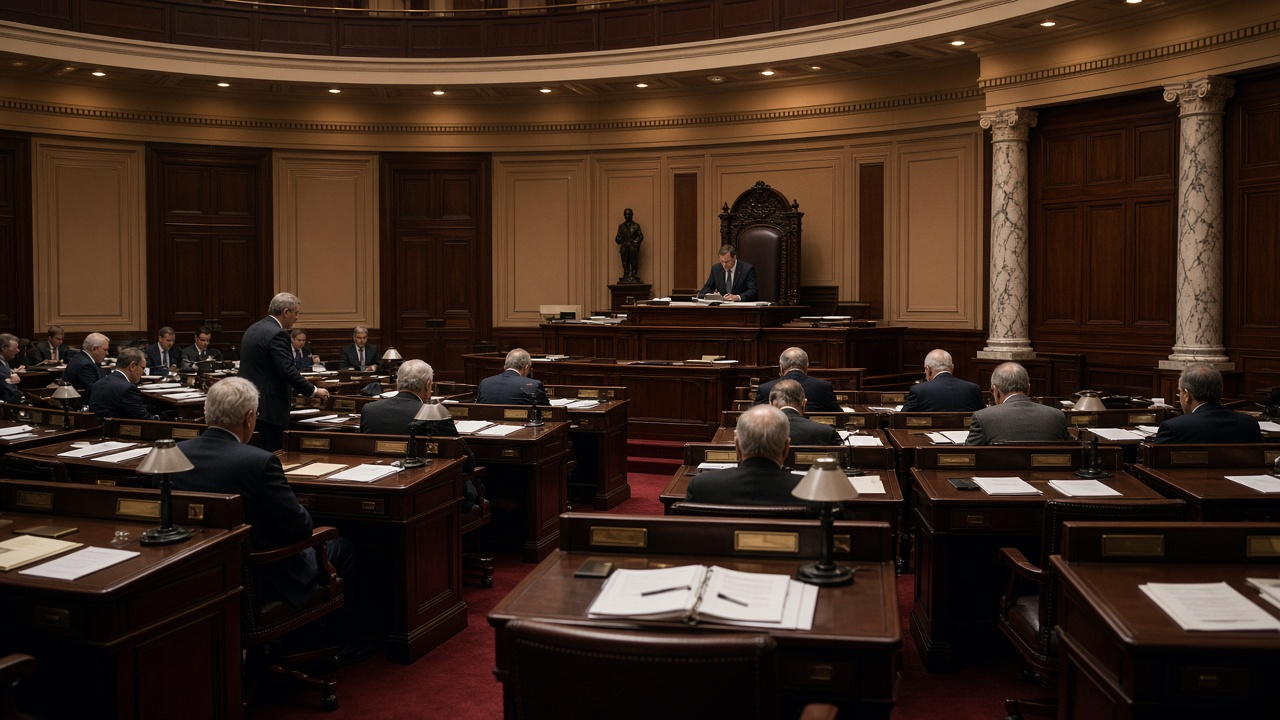
Senate rejects Iran war powers measure
The Senate on Sept. 24 rejected a House-passed war powers resolution that would have directed President Donald Trump to end U.S. hostilities with Iran, handing opponents of the war a symbolic defeat as the campaign entered its seventh month.
The vote was 49-50 on H.Con.Res. 89. Four Republicans—Susan Collins of Maine, Lisa Murkowski of Alaska, Rand Paul of Kentucky and Thom Tillis of North Carolina—joined most Democrats in support. Pennsylvania Democrat John Fetterman voted no, breaking with his party on a measure that had become a test of whether Congress would assert its role in the conflict.
The resolution needed a simple majority. It did not get one, and because it was a concurrent resolution, it would not have gone to the president's desk or carried the force of law even if it had passed. The House approved the measure earlier, but the Senate's rejection leaves Congress's posture unchanged: the war continues, and the president retains the authorities his administration says justify it.
A message vote with real costs
That procedural limit is the point and the problem. A concurrent resolution can express Congress's will, but it cannot compel a withdrawal, cut off funding or force a veto fight. Supporters hoped a bipartisan Senate majority would at least put Republicans on record. Instead, the tally gave GOP leaders a win and antiwar lawmakers a new data point for the campaign trail.
The four Republican yes votes are the exception, not the rule. Collins and Murkowski are familiar swing votes on foreign policy and military force. Paul has long argued that presidents of both parties exceed their constitutional war powers. Tillis's vote adds another break with Trump on war powers.
Fetterman's no vote was equally notable. The Pennsylvania Democrat has often diverged from his party on Israel, Iran and security issues, and his position gave Republicans cover to argue the resolution was not a straightforward partisan question.
For the White House, the outcome preserves the status quo. For Congress, it postpones a larger fight over the 2001 and 2002 authorizations for use of military force, the legal architecture that administrations have stretched to cover operations far beyond their original targets.
The war's seventh month brings familiar costs: deployments, munitions, fuel and a regional footprint that can widen without a new vote. The vote does not change any of that. It does tell lawmakers where their colleagues stand before the next supplemental spending request or defense authorization bill.
That is where the resolution could still matter. If the administration asks Congress for more money for Iran operations, the 49 senators who backed H.Con.Res. 89 can use the roll call to demand conditions, oversight or a narrower authorization. If gas prices rise or casualties mount, the vote becomes a ready-made attack line in midterm races. In military-heavy districts, the effect is concrete: families track deployment schedules, local suppliers watch contracts, and voters ask whether Congress signed off.
For now, the procedural math is simple. The Senate's Republican majority held. Four Republicans did not. One Democrat did not. The resolution failed 49-50. The war enters its seventh month with Congress still debating whether it should have a say.