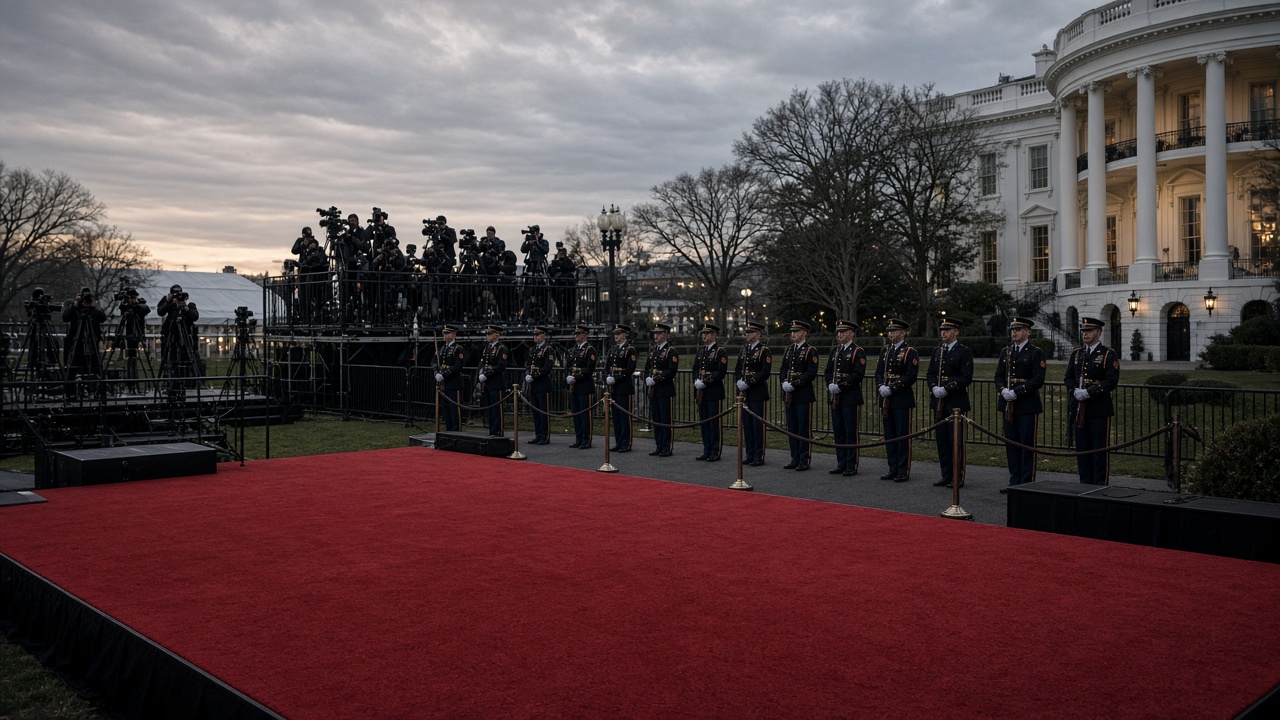
President Donald Trump's week of set-piece diplomacy — a General Assembly address, meetings with more than a dozen leaders and a state visit for China's Xi Jinping — ended Friday with a short list of outcomes and a longer list of items that did not move.
The one measurable result was a two-month extension of the US-China trade truce. Treasury Secretary Scott Bessent announced the rollover during Xi's visit, keeping tariffs lower and rare-earth shipments flowing past the November midterm elections. There was no deal with Iran, no Russia-Ukraine energy ceasefire and no new understanding with Beijing on artificial intelligence.
Closing his UN address, Trump said artificial intelligence should be renamed “superintelligence,” then added: “Let's see if I have any power. Maybe I do and maybe I don't. We're going to find out pretty soon.”
The calendar is doing the limiting
Republicans defend their congressional majorities on Nov. 3, and Reuters reported this week that Trump's foreign policy agenda has stalled with the Iran war dragging on and dividing his own political base. World leaders, the analysis said, are already positioning for a stretch when his influence could wane, with less than two and a half years left in his term.
That is the procedural constraint sitting under the pageantry: the White House can schedule a summit, but it cannot schedule a breakthrough. Trump pointed the Iran decision past the vote himself, predicting an agreement would come after the elections rather than before them.
What the truce extension buys, and what it defers
The truce — the Busan agreement reached in South Korea last October — was due to expire in November. Bessent said the two-month extension gives the two sides “more time to see what we can do on the economic front” and moves the deadline to around Jan. 10.
The money questions are deferred, not settled. Bessent said Beijing is meeting its pledge to buy 25 million tonnes of soybeans but lagging on a $17 billion commitment for other agricultural goods, and US officials say rare-earth deliveries are falling short too. Tariffs, Chinese purchases and technology restrictions roll into the next round of talks, with multilateral summits in Shenzhen and Miami before the end of the year.
Iran is the clock that will not move
The war Trump launched alongside Israel on Feb. 28 is approaching seven months. It has disrupted global energy supplies, spread to Yemen and the Red Sea shipping corridor, and fed the gasoline prices weighing on his approval ratings.
From the UN rostrum, Trump threatened to “annihilate the Islamic Republic” if diplomacy fails and pressed other countries to isolate Tehran economically. He also told reporters that US officials had held a “very good” three-hour meeting with the Iranian delegation on the sidelines of the gathering, and administration officials rejected the idea that his foreign policy has hit a wall.
Pushback got louder, and the paperwork got thinner
French President Emmanuel Macron warned at the same gathering against a global “return to the law of the jungle,” and Brazil's Luiz Inacio Lula da Silva objected to foreign interference in his country's October election.
Trump's effort to press Russia and Ukraine toward even a limited energy ceasefire gained little traction, and his Arctic arrangement with Denmark fell short of the ownership he had demanded over Greenland. A White House official, speaking on condition of anonymity, said Trump “is not concerned with posturing but about results,” and that some leaders' public comments did not match what they said in private.
The staff work left behind is thin for a week of this size: one two-month timer, one stalled war and a summit readout that leaned on ceremony. The next waypoints are on a calendar rather than a stage — the November midterms, the January truce deadline, and whether the Iran file is still open when Congress returns.