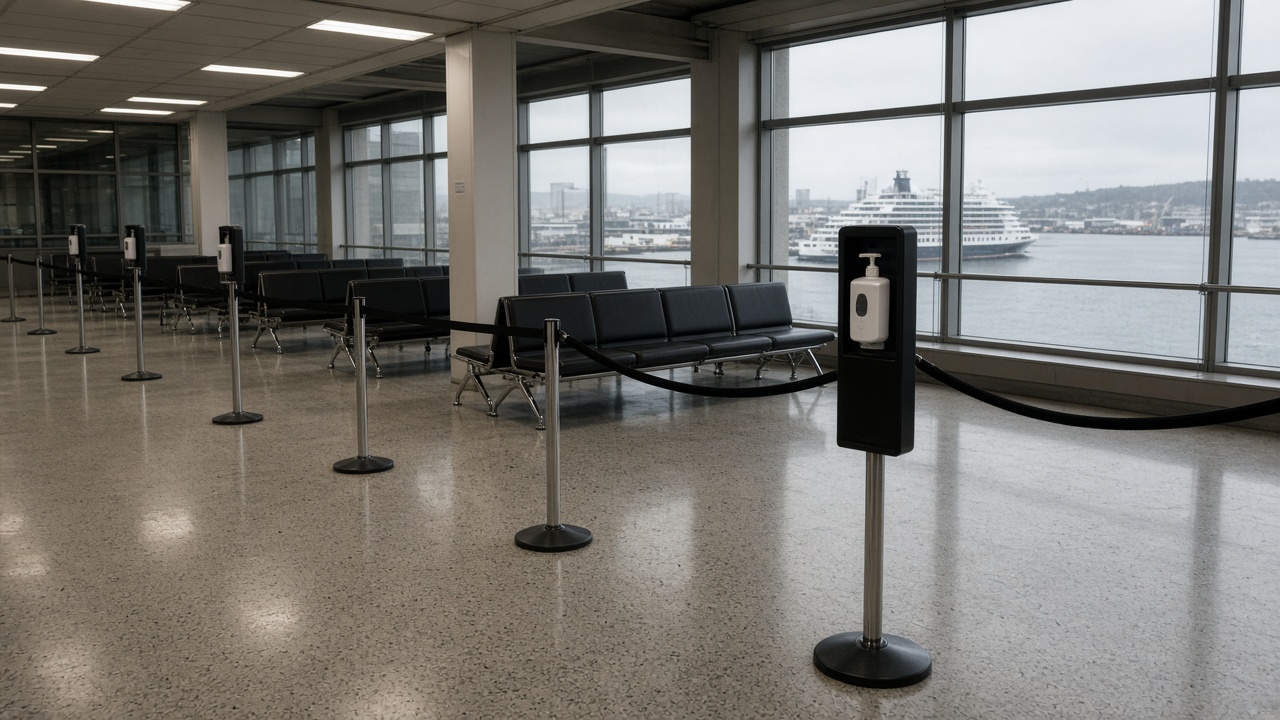
Yokohama’s international cruise terminal introduced expanded norovirus screening, hand-hygiene stations, and isolated waiting areas Thursday after Kanagawa Prefecture health officials logged forty-seven passengers with acute gastroenteritis on a turnaround voyage that berthed at Osanbashi Pier. Hana Inoue’s health desk tracks the response as a port-health logistics story—how terminals stage sick travelers without turning embarkation halls into rumor mills—because Silver Week return traffic still overlaps with typhoon-disrupted ferry schedules elsewhere in the Kanto corridor.
What officials confirmed
Prefectural bulletins described symptom onset timelines compatible with norovirus and said stool testing was underway at NIID-linked labs; they did not declare a confirmed outbreak strain in the initial English summary. Terminal operators added temperature checks at gangways, doubled cleaning cycles for high-touch rails, and set aside a ventilated seating zone for passengers awaiting medical interviews—steps MHLW infectious-disease guidance recommends when gastroenteritis clusters exceed routine cruise-season baselines.
Public advisories attributed case counts to the voyage manifest health office shared with Kanagawa; they did not name individual travelers or crew in materials Inoue reviewed.
Why cruise terminals differ from hospitals
Ports are choke points: thousands embark within hours, mixing buffet lines, shore excursions, and air-conditioned lounges where viruses spread before anyone reaches a clinic. Yokohama’s terminal cannot hospitalize forty-seven people on site; it must triage, document, and coordinate ambulances for dehydration cases while keeping unaffected passengers moving toward customs within SLA windows cruise operators negotiate with immigration authorities.
MHLW reminders emphasize that norovirus is often food- and surface-borne; clinical care for stable adults is fluids and isolation, not automatic hospital admission—freeing emergency rooms still managing heat and typhoon-delayed cases inland.
Operator coordination without naming targets
Shipping agents worked with prefectural nurses to reboard cleaning crews and replace self-service utensils with staffed stations for the next departure window—a operational cost operators absorb to avoid multi-voyage cancellations. Inoue treats unnamed-operator discipline as standard public-health attribution: counts and protocols from bulletins, not speculation about corporate negligence absent investigation findings.
What travelers should do
Wash hands before terminal food courts; avoid embarking while vomiting or febrile—operators can rebook under insurance riders without exposing gangway staff. If you sailed the affected voyage and symptoms persist beyond forty-eight hours, call prefectural hotlines before walking into crowded ERs.
Yokohama City port pages list terminal ventilation upgrades funded after prior seasons; this week’s checks are incremental, not a shutdown of Japan’s busiest international cruise calendar slot.
Surveillance limits
Forty-seven cases on one voyage does not by itself redefine national cruise policy; NIID aggregates seasonal norovirus curves separately from COVID-era reporting dashboards. Inoue’s measure is whether terminal staging prevented secondary spread among shore staff and whether lab results, when posted, match hygiene interventions already live—not whether a single headline beats last year’s totals.
Health desks will update if Kanagawa publishes confirmed genotypes or additional voyages trigger matching protocols; until then, the story is competent port triage after a countable cluster.