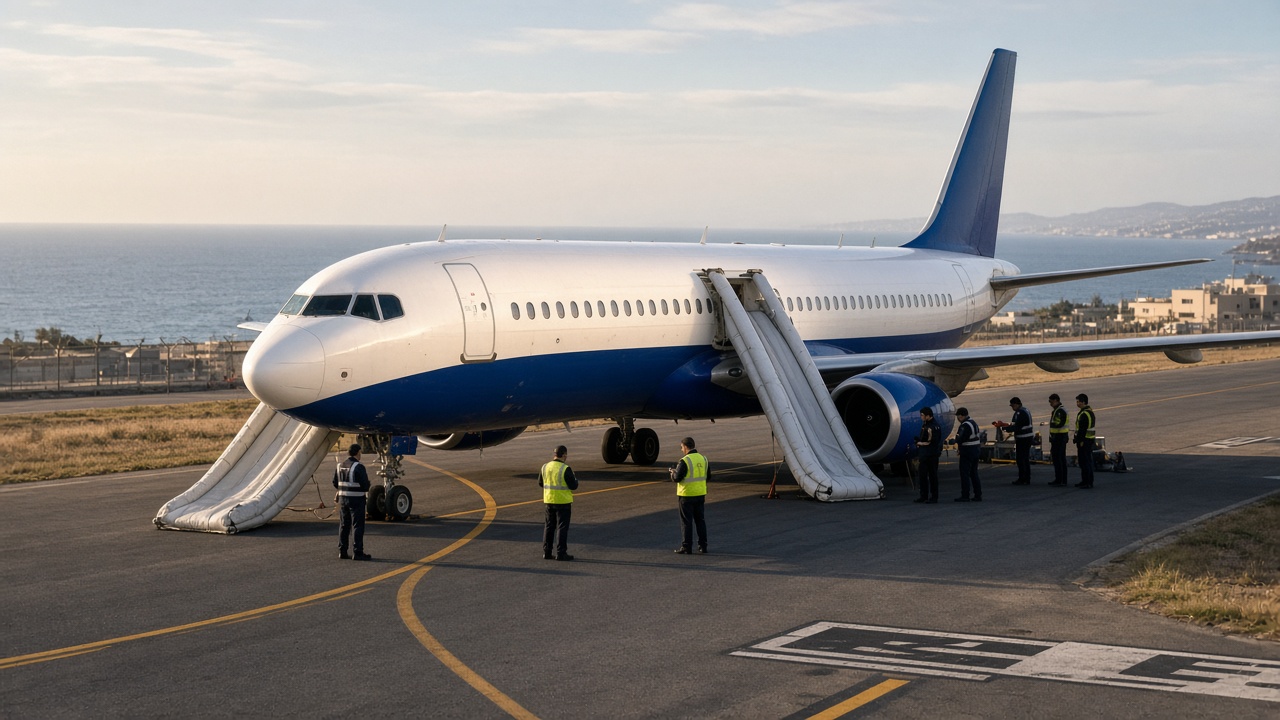
NAHA, Okinawa — Japan Transport Safety Board investigators began on-site work at Naha Airport on Sept. 25 after an ANA Boeing 737 operating flight NH1502 returned to the airport and passengers evacuated by emergency slide, according to the safety board and local reports.
The flight had 152 passengers and crew members on board when the crew received a right-engine oil temperature alert on Sept. 23. The aircraft landed back at Naha, then stopped on a taxiway, where passengers and crew used slides to leave the cabin. Three minor injuries were reported. No serious injuries have been cited.
The JTSB's on-site presence shifts the public focus from airline apologies to the mechanics of the event: what the engine indications showed, how the crew decided to evacuate, and how the slides performed on a taxiway rather than a runway or gate.
Why Naha is the focal point
Naha Airport is Okinawa's main air gateway, handling international and domestic traffic for the prefecture's islands. For travelers, an incident on a taxiway is not just an airplane story. It is a timetable story: same-day connections to Miyako, Ishigaki, and the Kerama Islands, plus bus and monorail transfers into Naha, can tighten when a runway or taxiway area is held for checks.
The airport is connected to central Naha by the Yui Rail monorail. Fares start around a few hundred yen and rise by distance; taxis cost more, especially with luggage. In late September, Okinawa remains warm and humid, and the peak summer fare season is easing, though weekend flights from Tokyo, Osaka, and Fukuoka can still be full.
What JTSB investigators typically do first is document the scene, interview crew, and secure flight data and cockpit voice recordings. They will also examine the right engine and its oil system, review maintenance records, and assess the evacuation sequence. Findings are not expected immediately. The board's role is to determine causes and recommend safety improvements, not to assign blame.
ANA has not been accused of wrongdoing. The airline is cooperating, and the safety board has not labeled the event as anything beyond an investigation. The three minor injuries — the type of scrapes, sprains, or bruises that can occur on slides — keep the case in the realm of aviation safety rather than a mass-casualty response.
What travelers should watch
For now, the practical advice is ordinary: check flight status before heading to Naha Airport, allow extra time for monorail or taxi transfers, and keep airline contact details handy if a connection is missed. The airport remains the island's busiest, and any prolonged investigation on a taxiway can affect gate assignments and ground flow even when runways stay open.
The JTSB's next public updates will matter less for dramatic detail than for method. If investigators find a sensor or oil-system fault, the case may feed into wider 737 maintenance guidance. If the evacuation itself becomes the focus, airlines may review slide procedures and crew decision-making. Either way, Naha's taxiway became a safety classroom this week.