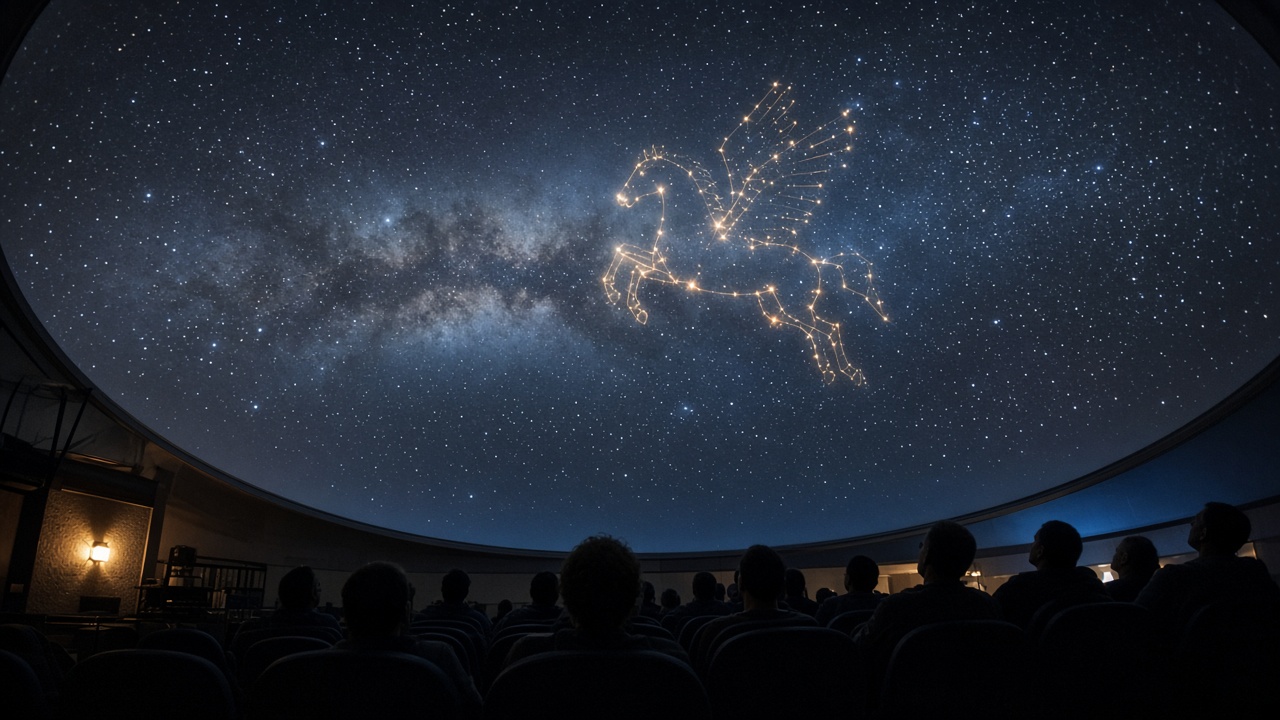
Taipei Astronomical Museum's Pegasus fulldome screening sold out for its second night of the Mid-Autumn Star Paradise holiday run, with the Sep 26 19:00 show filling the Shilin planetarium as families looked for an indoor evening during a hot long weekend.
The museum's holiday program runs Sep 25–28, according to the government's culture news service. Pegasus is the headline dome slot on Sep 26, a 19:00 screening that sits between daytime museum traffic and the backyard barbecues that dominate Mid-Autumn in Taiwan.
A four-day window
The sellout matters because the window is short. Mid-Autumn gives museums four days to capture audiences who are already in a holiday mood but not necessarily in a shopping mood. The astronomical museum is competing with streaming queues, mall promotions, and family reunions. A full dome on a Saturday night suggests that a science venue can still be a destination when the programming is tied to the season.
The museum's choice to put Pegasus at 19:00 is also a scheduling bet. An early-evening slot catches families before younger children get tired, and it leaves the rest of the night open for the barbecue and moon-viewing that define the festival. The dome becomes a prelude rather than a rival to the holiday's traditional rituals.
Who pays for the dome
The Taipei Astronomical Museum is a city-run institution, so the show is not a pure commercial release. Its operating costs come largely from public budgets, with ticket revenue covering part of the day-to-day expense. That makes a holiday sellout a useful signal for the museum's planners: it shows demand for fulldome programming at a time when the venue is asking the public to spend both money and attention.
Fulldome shows are not cheap to make or maintain. The projection system, the dome itself, and the production of a program like Pegasus all require specialized staff and equipment. A single sold-out screening does not pay for that infrastructure. But a sold-out run gives the museum evidence that holiday slots can fill, which matters when budgets are set and when the museum argues for more evening programs.
The audience, in turn, gets something that is hard to replicate at home: a constellation story projected across the entire dome, with the scale and sound that a planetarium can deliver. The museum's holiday series is not just a movie in a dark room. It is a shared physical experience, which is exactly what public science venues need to offer in a leisure market crowded with screens.
Heat and timing
The weather likely helped. The Central Weather Administration forecast daytime highs of 33–36°C on Sep 26 and issued an astronomical tide warning for the north coast to Changhua and Penghu through Sep 30. An air-conditioned planetarium at 19:00 is an easy sell when the afternoon has been oppressive and the evening is still warm.
The holiday also has a natural astronomy hook. Mid-Autumn is a moon-watching festival, and the museum can connect the season to the sky without forcing the connection. Pegasus is not the moon, but the dome gives visitors a way to look up at something larger than the barbecue smoke. The program turns a holiday about reunions into a holiday about the night sky, at least for one sold-out hour.
The second-night sellout does not mean the entire run is full. The public program lists the series through Sep 28, and availability for other sessions was not detailed. Families who missed Pegasus can still check the museum's remaining holiday schedule, but the 19:00 Sep 26 slot is gone.
What the sellout says
For the Taiwanese industry that supports museum programming, the signal is modest but real. Planetarium shows are part of the country's science communication and cultural production ecosystem, and holiday demand helps justify the staff, equipment, and production time that fulldome work requires. A full house on a Saturday night is not a blockbuster, but it is a proof of concept.
The museum's next task is to turn one holiday sellout into a habit. If audiences learn that the dome is a reliable holiday option, the venue can build repeat programming around lunar festivals, meteor showers, and school breaks. That would give the public more than a one-off event and give the museum a stronger case for the public money that keeps the lights on under the dome.
For now, the Pegasus screening has done what the Mid-Autumn Star Paradise series needed: it filled the seats, gave the audience a night-sky experience, and showed that a publicly funded science venue can compete for holiday leisure time. The question is whether the next window will be as easy to sell.