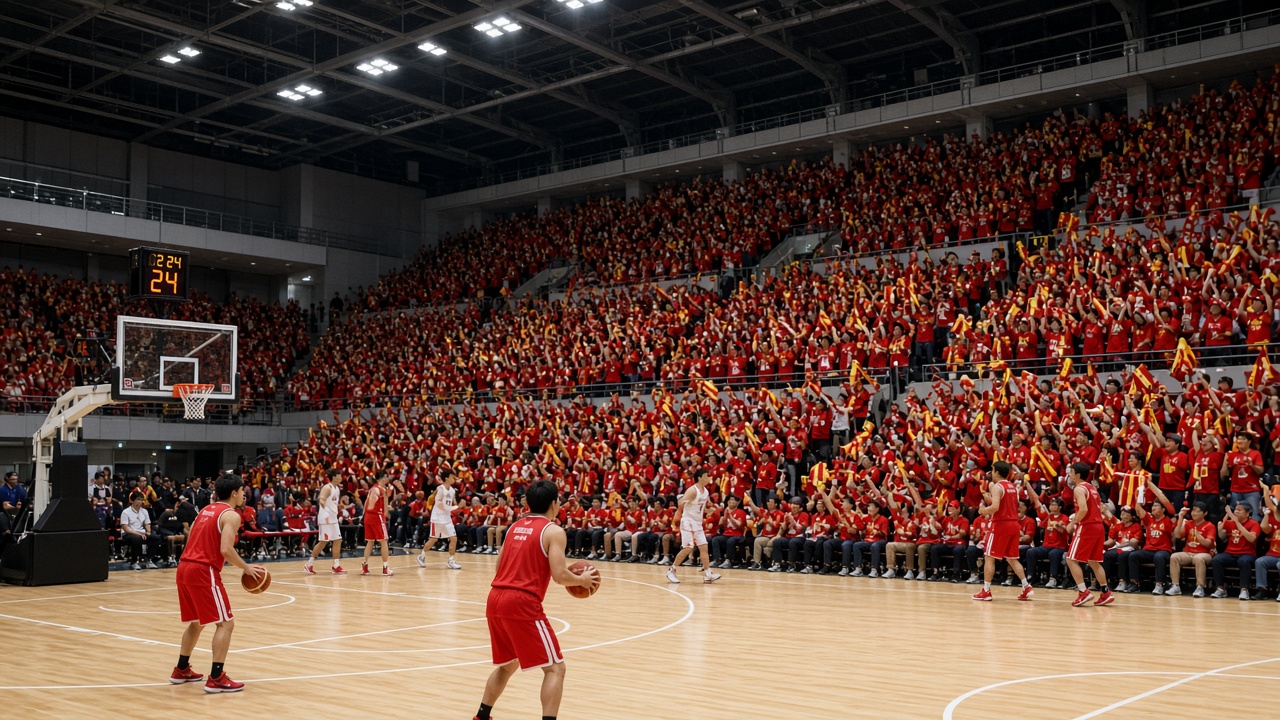
Okinawa Arena opened the B.League’s 2026-27 season with the largest opening-week gate in the building’s history, as the Ryukyu Golden Kings’ two-game home stand drew 19,616 fans, according to league attendance figures released after the weekend.
The opener drew 9,912 and the second game drew 9,704, both above the arena’s previous opening-week high. The league said the figures covered tickets scanned at the gate and did not include arena staff or media. It is a domestic basketball story at a moment when much of the Japanese sports conversation has centered on the Samurai Blue’s October squad; the B.League’s opening week instead measured how many people walked through the turnstiles in Okinawa.
A full arena and a split result
On the court, the Golden Kings split the two-game set. The home side used a third-quarter run to take the opener, then dropped the second game after a cold stretch from beyond the arc. The results left the club at 1-1, but the bigger number for the league was the gate. Okinawa Arena’s lower bowl was full before tip-off on opening night, and the club’s supporters kept the standing sections loud through the fourth quarter even as the second game slipped away.
Okinawa Arena’s basketball configuration is among the more intimate in the B.League’s top division by raw capacity, which makes a record gate a ticketing story as much as a basketball one. The building sits in Okinawa City, a short drive from Naha Airport and the urban corridor that serves both the Golden Kings’ fan base and the island’s visitor economy. The club has leaned into that geography: weekend home games are marketed as destination events, with early entry, local food stalls and shuttle connections from Naha.
Ticketing and the league’s local gate
The B.League has spent recent seasons pushing clubs to improve arena utilization rather than simply chase one-off sellouts. Opening week is the first test. In Okinawa, the club opened additional standing-room sections after the first allotment sold out, and the league’s ticketing partner reported a higher share of repeat buyers than in the previous season’s opener. Those details matter because B.League clubs keep most home-game revenue, while the league redistributes a portion through central rights and sponsorship pools. A record opening gate therefore feeds directly into the club’s basketball operations budget—player contracts, travel, youth academy and arena costs—not just a headline.
The Golden Kings’ player payroll operates under the B.League’s salary cap and club-license rules. Gate revenue does not change the cap, but it affects a club’s ability to spend up to it, particularly for imports and Japanese rotation players whose contracts run on annual cycles. A record opening week gives the front office more room to absorb midseason injury replacements or extensions. It also strengthens the club’s case when negotiating arena dates, sponsorship renewals and local-government partnerships.
Not the Samurai Blue window
The contrast with the national team calendar is deliberate. The Japan Football Association’s October window and the Samurai Blue squad announcement have dominated sports pages, and domestic basketball’s opening week can be lost in that coverage. But the B.League’s gate is a local indicator: it tests whether Okinawa’s arena can convert a championship-era fan base into a durable regular-season habit. The early answer is yes, at least for one weekend.
League officials framed the opening week as a baseline. The B.League’s 2026-27 schedule is more compressed around international windows, and clubs will have fewer home weekends before the winter break. For Okinawa, that puts pressure on the next few home stands to hold the attendance gains. The Golden Kings’ next home game is scheduled for early October, and the club said ticket demand for the first block remains ahead of last year’s pace.
The league will publish full opening-week attendance across all clubs later this week. Okinawa’s numbers will be among the first checked. If the club can repeat them in November and January, the record will look less like a season-opening spike and more like a new floor for the market.
For the arena itself, the weekend was an operational stress test. Concessions, merchandise and entry lanes were staffed for a sellout, and the building’s transit plan moved fans from nearby parking and shuttle stops in waves. Those systems will matter as much as the on-court product: the B.League’s club-license standards include game-day presentation, accessibility and fan safety, and a record crowd exposes weak points quickly. The Golden Kings said postgame exit times were within the club’s target range, though the second game’s late finish pushed some shuttle departures past the published schedule.
The local business angle is straightforward. A full arena brings spending to Okinawa City restaurants, hotels and transport operators on game weekends, and the Golden Kings’ schedule is built to capture weekend visitors as well as season-ticket holders. The club’s ticketing data showed a rise in buyers from outside Okinawa Prefecture, a trend that mirrors the island’s broader tourism recovery but also raises the stakes when travel disruptions occur. This week’s separate aviation-safety investigation in Naha has not affected the basketball schedule, but it is a reminder that the gate depends on more than the team’s win-loss record.