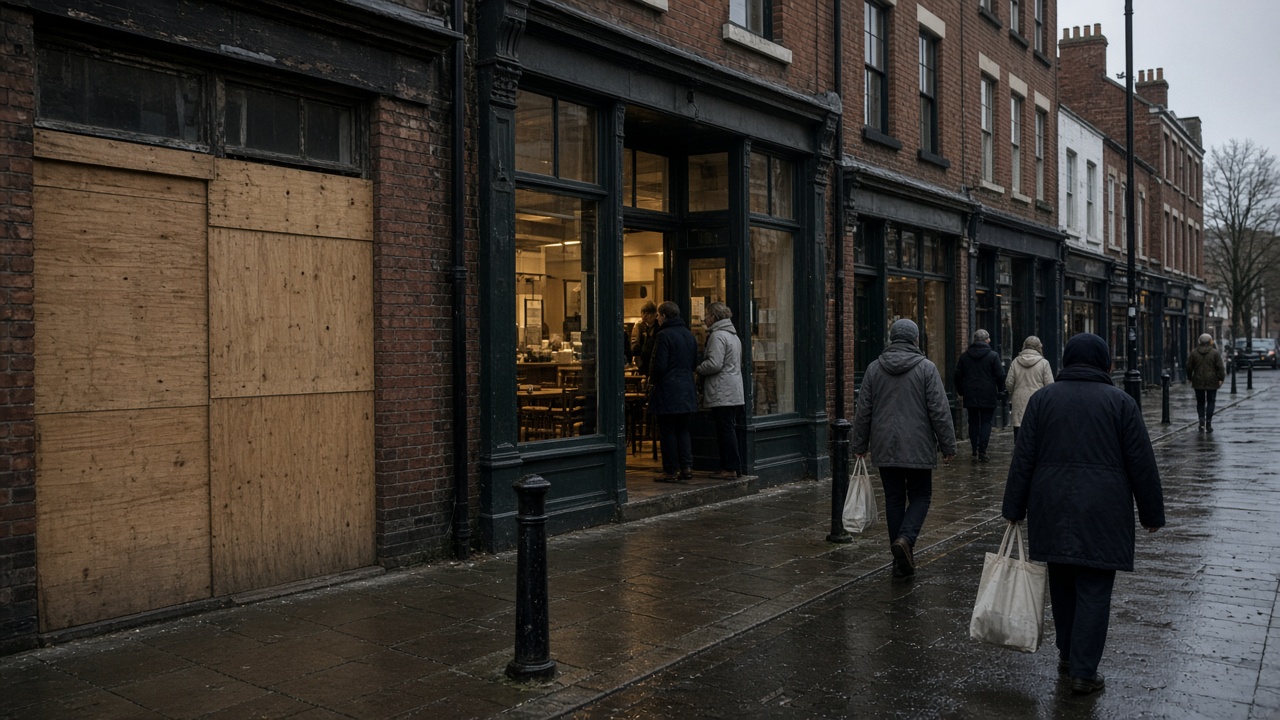
Prime Minister Andy Burnham has put a £210 million high streets and regeneration package at the centre of Labour's conference week, announcing the funding in Liverpool on the eve of the gathering and framing it as a UK-wide programme rather than a claim for any single region.
Burnham set out the plan on Saturday, the last full day before delegates arrive. According to BBC reporting, the package is split between £125 million for derelict buildings and £85 million for community takeovers of pubs and shops, with the second pot broken down further into £65 million for at-risk buildings and £20 million for co-operative and empty units. The money is expected to be administered through the housing and communities department.
The pitch, trailed in a Guardian interview, is that the government should be seen to be doing something tangible about the state of town centres before the conference season gets properly under way.
A pledge, not yet a statute
The distinction matters. An announcement on a Saturday before conference is a commitment to spend; it is not yet a line in a council's budget. What turns it into money on the ground is the machinery: the departmental settlement, the allocation formula, and the conditions attached to each pot.
That is where the coming weeks will be argued over. Councils will want to know whether the £125 million derelict buildings fund is new money or reallocated from existing regeneration budgets, whether bids are competitive or formula-driven, and how quickly capital can be released. The community takeover money raises its own questions: who holds the asset, what happens when a co-operative fails, and whether £20 million for empty units does more than seed a handful of pilot schemes.
Parliamentary scrutiny keeps to the same calendar as everything else. The housing and communities select committee can call ministers on the detail; the National Audit Office can examine whether the money was spent as promised. Neither happens in conference week.
Devolution in the room
The devolution argument is already running ahead of the conference floor. Angela Rayner and Louise Haigh have both been pressing the case that more powers — and more of the spending decisions — should sit with local leaders and combined authorities. A UK-wide fund administered from Whitehall sits awkwardly beside that argument, and the test will be how much discretion councils and mayors actually get over how the £210 million is used.
The same day brought the "Your First Home" scheme, a separate housing measure that will be argued on its own terms.
What to watch
Three things. First, whether the Treasury confirms the £210 million as new money at the next fiscal event. Second, the allocation formula — rural districts, coastal towns and the big cities will all want to know how their share is calculated. Third, the timetable: if the funds are not open for bids until next year, the closures the package is meant to slow will keep running through the winter.
Conference will give Burnham the headline. The order paper gives him the work.