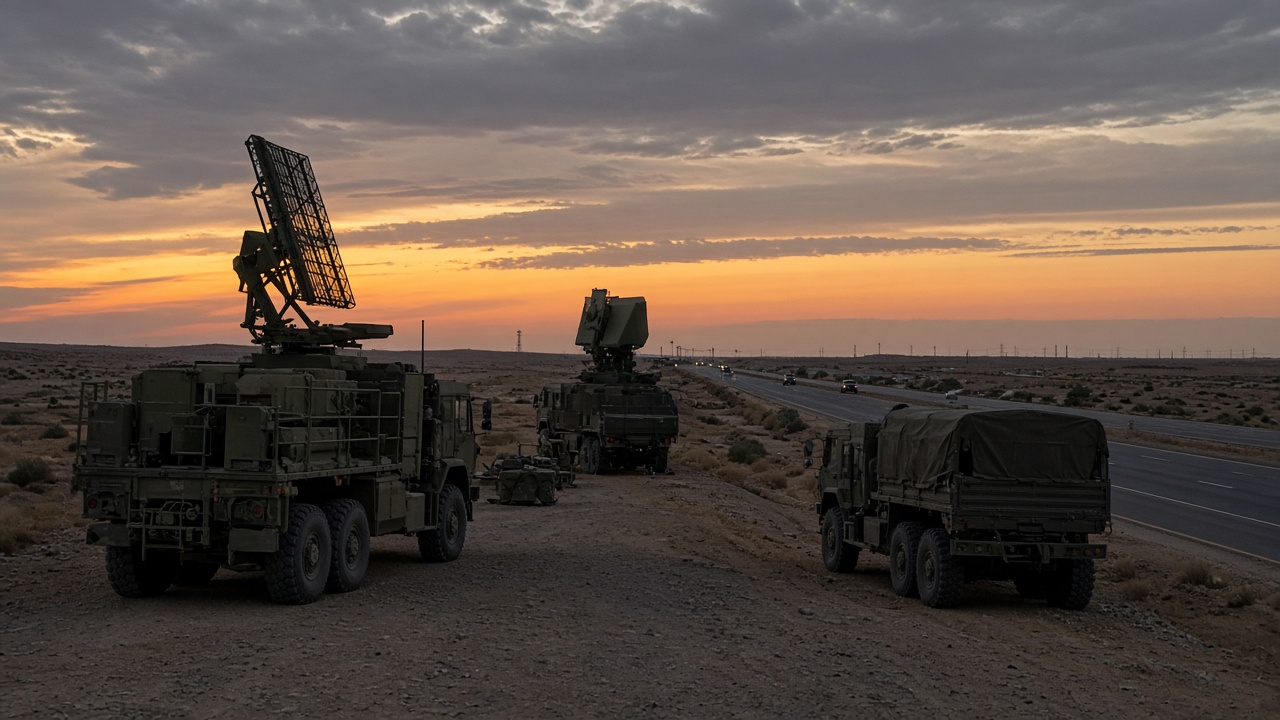
Yemen’s Saudi-led coalition said its air defenses intercepted four Houthi weapons in a single overnight burst: two drones headed toward the Riyadh area and two ballistic missiles aimed at Khamis Mushait, a southwestern city that hosts a major air base. Coalition spokesman Maj. Gen. Turki Al Malki reported the interceptions in statements carried by Saudi state media, capping a week in which renewed Houthi strikes have again reached deep inside the kingdom.
What the coalition reported
In posts on X early Saturday, the coalition said it was “monitoring and tracking” additional missile and drone threats without detailing further launches. Al Malki said defenders “intercepted and destroyed” two drones launched by the Houthi militia toward the capital region, and separately downed the pair of ballistic missiles targeting Khamis Mushait.
Qatar’s state news agency quoted Al Malki describing a second missile interception toward Khamis Mushait after an earlier announcement about the first missile and the Riyadh-area drones. Reuters, citing coalition statements, said the intercepts happened in the early hours of Saturday, September 26, local time.
Alerts on the ground
Saudi civil defense issued overnight alerts for Khamis Mushait and Abha, another southwestern city, according to Reuters. No comparable public alert was issued for Riyadh in the reporting reviewed, even though the coalition said drones were bound for the capital area. Coalition statements reviewed by news agencies did not report casualties or damage from the overnight salvo.
Khamis Mushait sits in Asir province near the Yemeni border and has repeatedly been a target during past cycles of cross-border fire. Riyadh, more than 800 kilometers to the north, has seen less frequent but high-profile drone attempts when regional conflicts widen.
Context inside the wider war
The Iran-backed Houthis control Yemen’s most populous regions and much of the north. Since July they have paired a declared naval blockade against Saudi shipping with missile and drone strikes on Saudi cities, energy infrastructure and vessels in the Red Sea, according to Reuters and Agence France-Presse. Analysts have linked the escalation to the broader Middle East war that has also choked traffic through the Strait of Hormuz, pushing exporters toward Red Sea routes that are themselves under pressure.
Hours before the intercepts, military chiefs from Saudi Arabia, Pakistan and Turkey met in Riyadh to review threats against the kingdom, Reuters reported. The three countries signed a Mecca joint defense pact in August stating that an armed attack on one would be treated as an attack on all. Saudi Defense Minister Prince Khalid bin Salman said Saturday that he and Pakistan’s army chief, Gen. Asim Munir, agreed to continue joint efforts against attacks on the kingdom under that framework.
What officials are watching next
Gulf Cooperation Council secretary general Jasem Mohamed Albudaiwi condemned the Houthi launches Saturday, AFP reported, as part of a broader diplomatic push against strikes that have spiked since a years-long truce collapsed in July. On Friday, the head of Yemen’s internationally recognized leadership council, Rashad al-Alimi, ordered a general mobilization against the Houthis—a move the coalition statements did not directly reference but that underscores how the Yemen front is entangled with the Iran war.
Coalition spokesmen have not said whether additional salvos followed the four weapons reported destroyed overnight. Shipping insurers, energy traders and airlines will be watching whether drone reach toward Riyadh and missile fire toward southwestern bases continues in the days ahead, especially as mediators still try to bridge U.S.-Iran talks over Hormuz and a parallel set of Qatari channels on the Yemen front.