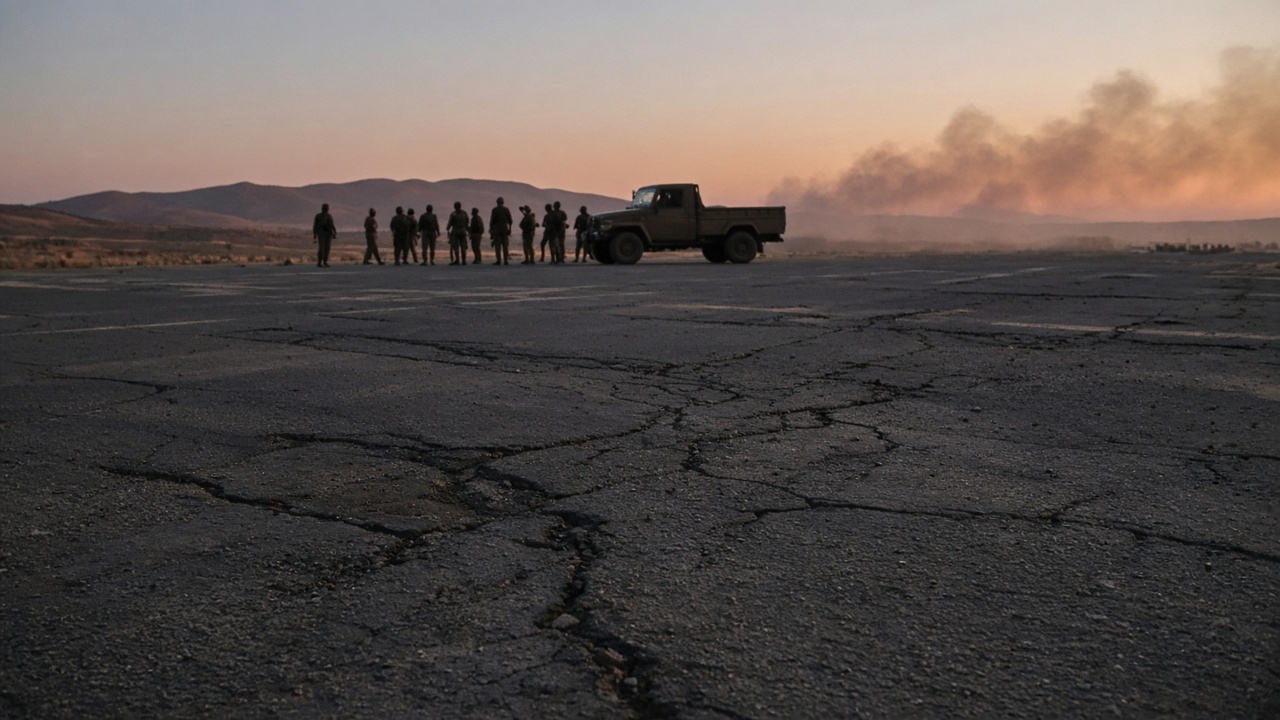
NAIROBI — Ethiopian federal forces and Tigrayan fighters are battling on new fronts in Afar and Amhara, according to Al Jazeera and Reuters, as the African Union and IGAD urged an immediate halt to an escalation that has put airports, aid corridors and regional mediation at risk.
The Saturday call came after reports that Tigrayan forces had taken control of airports in Mekelle, Axum and Shire. The status of those facilities and of commercial flights could not be independently verified. Ethiopia's federal government has not issued a detailed response to the airport reports, and Tigrayan representatives have not published a full account of their positions.
The fighting is no longer confined to Tigray's borders. Clashes and troop movements were reported in parts of Afar and Amhara, two regions that suffered heavily in the 2020–2022 war. The spread matters because those areas sit astride the main road and rail links between Addis Ababa and the Red Sea ports of Djibouti, and because they host displaced communities that depend on humanitarian convoys.
The AU and IGAD statements did not include a deadline or enforcement mechanism. The African Union has asked former Nigerian President Olusegun Obasanjo to re-engage with the parties. Obasanjo previously served as AU high representative for the Horn of Africa. His return would signal that mediators see a narrow window.
The federal government's earlier account, from Sept. 24, described the army as repelling a Tigrayan advance. Tigrayan leaders have rejected that characterization. Neither account has been independently verified. The competing claims matter for insurance, sanctions and aid access: if airports are contested, insurers may treat the region as a war-risk zone, and humanitarian flights could be suspended.
An alliance of seven armed groups opposed to Prime Minister Abiy Ahmed has been cited in regional reports as fighting alongside or coordinating with Tigrayan forces. The coalition's command structure and battlefield role remain unclear. Ethiopia's government has not confirmed the extent of that coordination.
What is exposed
The immediate exposure is civilian and logistical. Mekelle, Axum and Shire are gateways for food, medicine and fuel for millions of people in Tigray. If runways are damaged or seized, aid agencies may have to reroute convoys through contested roads. Airlines that serve northern Ethiopia will need to reassess war-risk insurance and crew safety. Border communities in Afar and Amhara face renewed displacement.
For the federal government, the spread of fighting raises questions about troop deployment and control over federal installations. For Tigrayan forces, holding airports could be a bargaining chip or a liability if infrastructure is destroyed. For the AU and IGAD, the test is whether Saturday's statements produce a pause or become another round of condemnations without use.
Diplomatic window
The AU and IGAD have called for an immediate halt, but neither has announced monitors or a joint verification team. Obasanjo's re-engagement, if confirmed, would put a familiar mediator back in the center of a crisis he helped frame during the previous war. A diplomat cited by Al Jazeera said the priority is to prevent the conflict from pulling in Eritrea and Sudan. The next 48 hours will show whether the calls translate into talks or whether the fighting expands toward transport corridors.
What is knowable Saturday evening: fighting has spread beyond Tigray; airports are reported to be under Tigrayan control; the AU and IGAD have called for a halt; and Obasanjo has been asked to re-engage. What is not knowable: how many civilians have been killed or displaced in the new areas, whether the airport seizures are complete, and whether either side has the command discipline to hold a ceasefire.
For now, the burden is on both sides to clarify positions and on mediators to verify them. Late is better than wrong attribution, especially when the assets at stake are runways, aid routes and the credibility of a peace process that has already collapsed once.