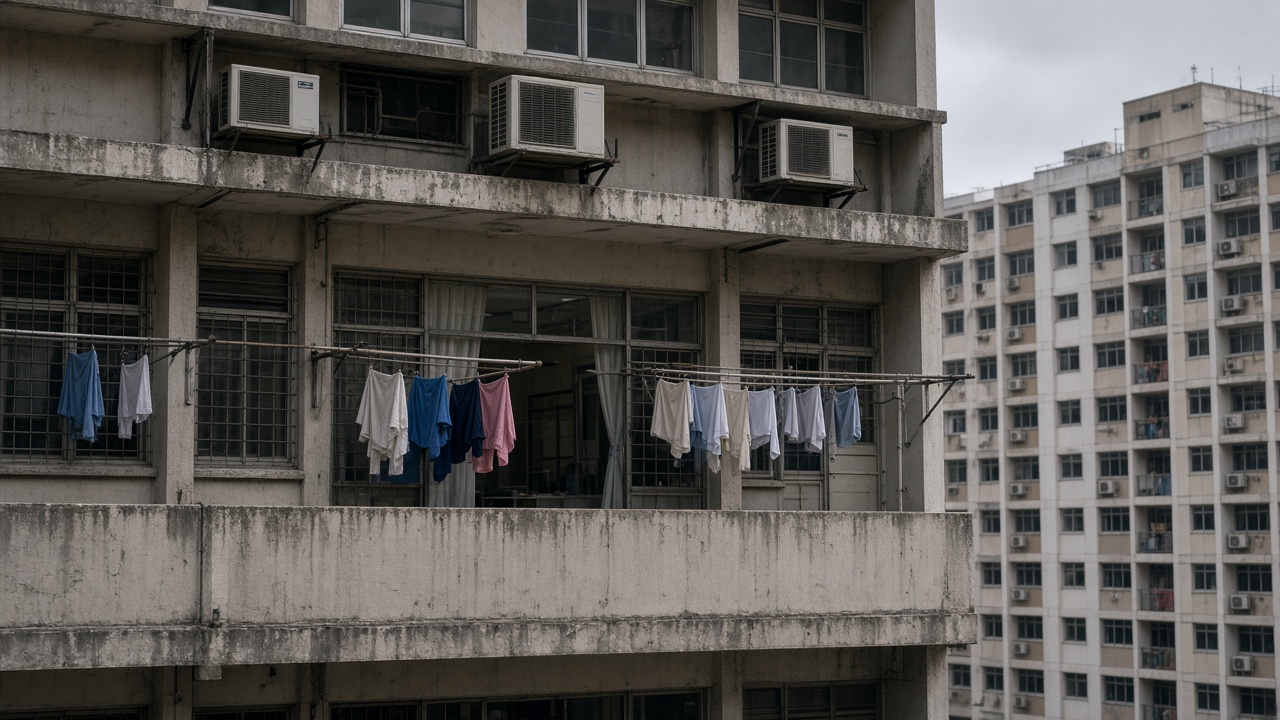
The Housing and Development Board is reviewing the jumbo flat conversion scheme after a Telok Blangah unit assembled from two smaller flats was listed for sale at S$2.18 million — a price more than 40 per cent above comparable resale flats in the area.
The listing covers 1,465 sq ft. According to CNA, the asking price sat roughly S$600,000 above comparable resale flats nearby. No resale application had been filed with HDB when the report ran on Sep 25, and the listing has since been cut to about S$2 million on PropertyGuru.
What the listing does and does not show
A listing is not a transaction. Until a resale application is lodged and an option to purchase is exercised, the S$2.18 million figure is what one seller hopes to get, not what the market has agreed to pay. Resale flat transactions are negotiated between buyer and seller, with financing typically anchored to a valuation, which means an asking price only becomes a market price when a buyer and a lender both accept it. That distinction matters for a review built on public feedback about pricing.
The unit itself is the product of a scheme that dates to 1993. It allows owners of adjacent three-room or smaller flats to combine them into a single larger home, subject to HDB's structural approval. The resulting jumbo flats are scarce, held mostly in older estates, and rarely appear on the resale market — which is why each one that does attracts attention well beyond its floor area.
The mechanics are straightforward on paper. Two owners of adjacent flats apply, HDB assesses whether the structural work is feasible, and if it approves, the two units become one on the register. What the scheme never did was guarantee that the resulting flat would stay affordable at resale. Conversion approval is an engineering decision, not a pricing one.
The review and what prompted it
HDB said it is reviewing the scheme in response to public feedback. The questions raised cluster around two areas: how converted flats are priced when they reach the resale market, and how the minimum occupation period applies to them.
The minimum occupation period is the window during which a flat must be occupied before it can be sold on the open market. For ordinary resale flats the rules are well understood. For jumbo flats created through conversion, the position is less obvious to buyers — particularly around how the period is counted when two units are merged, and whether the resulting flat should be treated like any other resale flat once it changes hands.
That is not a question a buyer can settle at the viewing. It sits with HDB, which administers both the conversion scheme and the resale process, and it is the kind of question that produces administrative change rather than a bill in the House.
Why it lands now
Resale prices have been a live political subject through this electoral term, and large flats draw scrutiny because they set the top of the market. A jumbo flat selling well above its neighbours is a visible data point; a jumbo flat merely listed well above them is a question about how the market prices scarcity, and whether policy should shape that pricing.
There is also a supply dimension. Converted flats are a fixed, small stock. HDB cannot build more of them under the current rules, and the owners who hold them decide when — and whether — to sell. For buyers, the appeal is size that the new-build pipeline does not offer. For sellers, it is a segment with almost no substitute supply. That combination gives sellers unusual bargaining power.
What happens next
No timeline has been set for the review. Changes to the conversion scheme would be administrative, handled by HDB rather than through legislation, so the next signal is likely to come from the board itself.
In the meantime, the Telok Blangah unit remains unsold on paper. If it transacts near the asking price, it becomes a comparable that future valuations and future reviews will have to reckon with. If it does not, the review will have been prompted by an asking price rather than a sale — and the gap between the two is where the policy question actually lives.