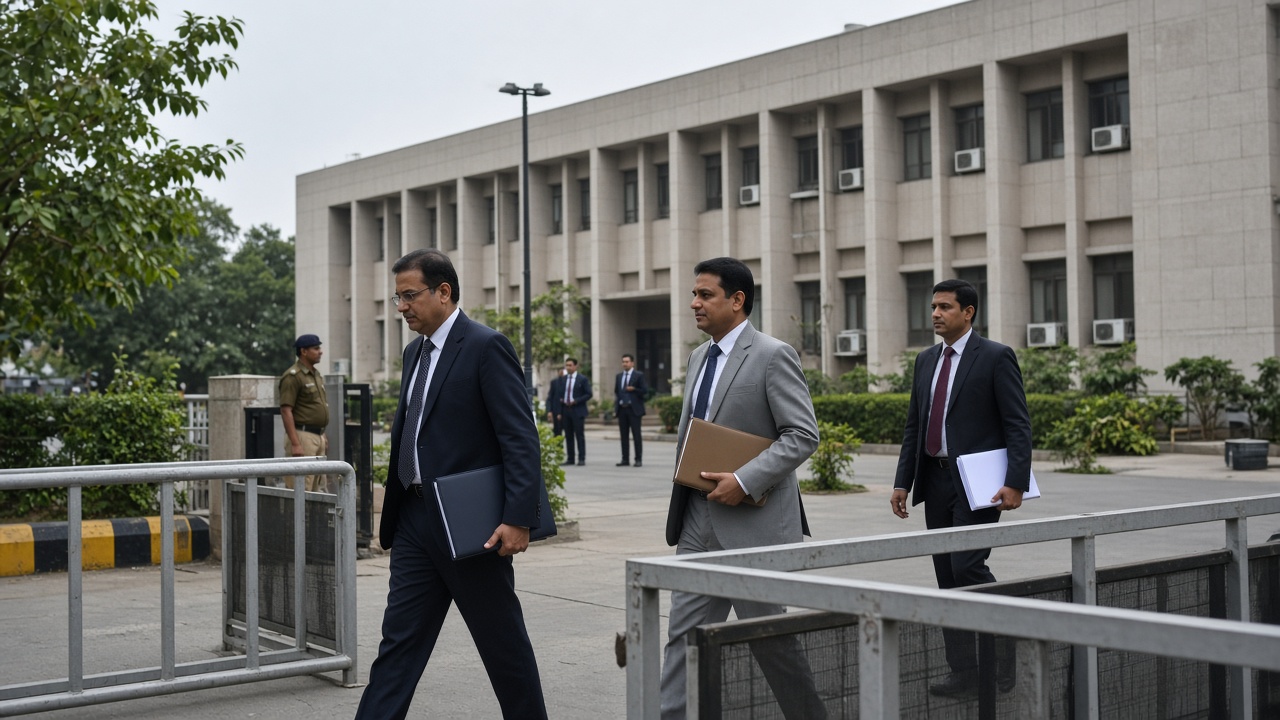
The Election Commission of India on Saturday ordered a committee-led review of the software used to update the electoral roll, after a report by The Indian Express detailed repeated dissent inside the poll body over changes that excluded millions of voters.
The order shifts the dispute from internal minutes to a formal technical inquiry. It also sets up a wider political fight over the integrity of the roll before assembly elections in several states next year. The commission said its actions were lawful. It added that flagged voters would face door-to-door verification.
What the dissent records
According to the Indian Express report, two election commissioners questioned Chief Election Commissioner Gyanesh Kumar more than 14 times over voter-roll updates. The objections focused on the scale of exclusions and the process used to mark electors for deletion or correction. The report said the commissioners sought explanations and, in some cases, recorded their dissent.
The commission has not released the full minutes. Its Saturday statement did not accept that any deletions were improper. Instead, it framed the software review as a way to strengthen accuracy and public confidence. Officials said the door-to-door verification will apply to flagged voters, not the entire roll.
Political stakes
Opposition parties seized on the report, alleging that the roll changes could benefit the ruling Bharatiya Janata Party. The allegations are contested, and the Election Commission has rejected any suggestion of partisan manipulation. Still, the charges give opposition camps a concrete demand: publish the dissent, explain the exclusions, and allow independent scrutiny of the software.
The group CJP has threatened protests on October 2 if the commission does not address the concerns. That date, Gandhi Jayanti, carries political weight. A street campaign could keep the issue alive through the festival season and into the winter session of Parliament.
What happens next
The immediate question is the committee's mandate. Will it audit only the code and data safeguards, or will it examine the decisions that led to exclusions? Who sits on it? Will its report be public? Those choices will determine whether Saturday's order settles the dispute or becomes another front in it.
For election machinery, the door-to-door verification is the operational test. It will consume staff time, require training, and create a paper trail at the booth level. If large numbers of flagged voters are restored, the commission will face questions about why they were flagged. If few are restored, opposition parties will question the process further.
The calendar is tight. State elections due in 2026 will require final rolls months in advance. Any audit that drags into that window will collide with the model code of conduct and the practical work of candidate selection. The commission has bought time with a review. It has not closed the argument.