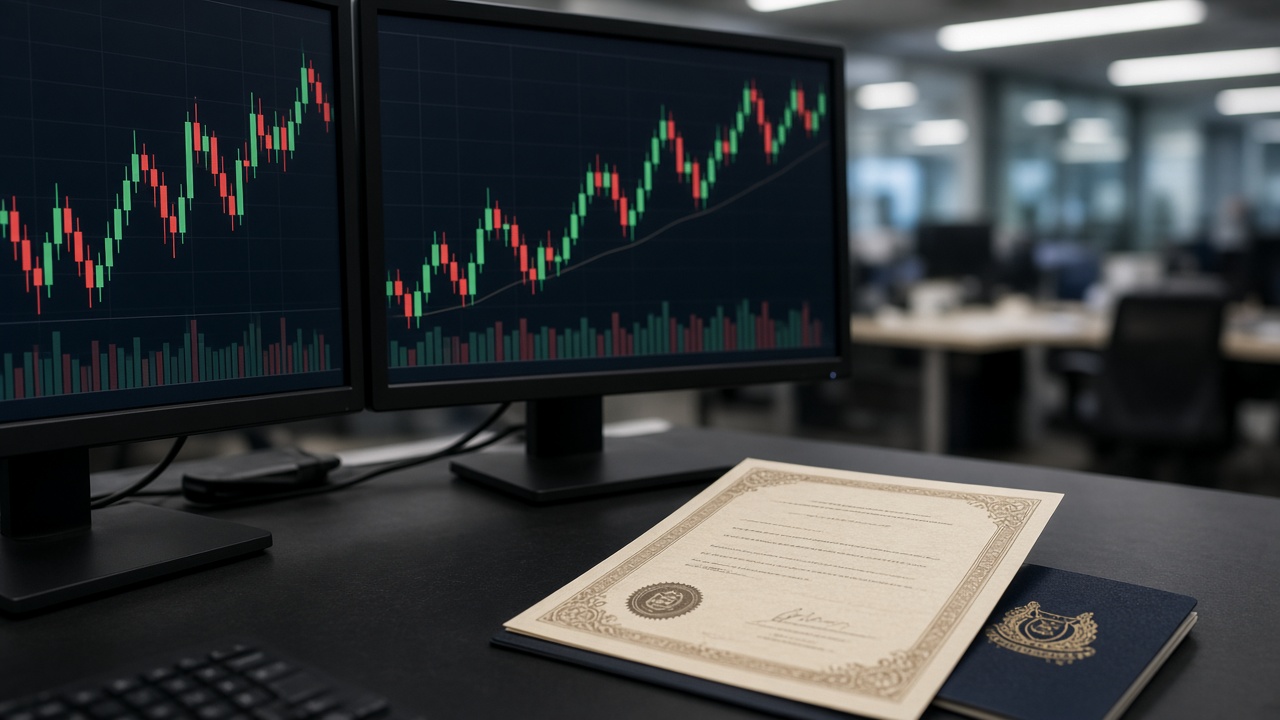
MetaOptics is setting up a Level 1 OTCQX American Depositary Receipt plan in the United States without issuing new shares, according to a Zaobao report on Sep 25. The Singapore-listed company will keep its primary listing on SGX Catalist, and its existing shares will continue to trade there. The move is plumbing, not fundraising: no fresh capital is being raised, and the Catalist float is not being diluted.
That distinction matters for Singapore investors. A Level 1 ADR programme is the lightest route for a non-US company to have its shares quoted in the US over-the-counter market. The receipts trade on OTCQX rather than on Nasdaq or the New York Stock Exchange. They are created when existing shares are deposited with a depositary bank, which then issues ADRs that represent a fixed ratio of underlying shares. Because the underlying shares already exist, the programme does not increase the company's issued share capital.
What actually changes
For MetaOptics, the plan opens a second quotation venue. US investors who prefer to trade in dollars during US hours can buy a US-listed receipt instead of routing an order to Singapore. The company gets a ticker in the US OTC market, a depositary relationship, and a path to a wider pool of specialist tech investors who may not have direct access to Catalist.
For existing shareholders, the changes are less dramatic. The shares on SGX Catalist remain the same shares. The company's disclosure obligations under the Catalist rules, its sponsor-supervised regime, and its Singapore announcements are unchanged. An ADR holder is not a separate class of owner with different voting rights; the receipt is a claim on the same underlying ordinary shares, subject to the depositary agreement.
What can change is market structure. A dual quotation can improve price discovery if it attracts new buyers and market makers. It can also fragment order flow if liquidity is thin on both sides. Catalist stocks already trade in relatively small volumes, so the key test is whether OTCQX quoting adds genuine depth or merely creates a second screen with wide spreads.
The Singapore angle
The policy question is familiar for any small-cap company trying to be seen in two time zones. Singapore's Catalist board is designed for smaller, sponsor-supervised companies. It offers a listing path with a continuing sponsor who vets disclosures. US OTCQX Level 1 is a different world: lighter than a full US exchange listing, but still governed by US securities rules and OTC Markets' tier standards. The company does not escape Singapore regulation by adding an ADR. It layers a US quotation on top.
That layering has costs. A depositary bank has to be appointed. A ratio has to be set and maintained. US broker-dealers need to make a market. The company may need to answer questions from US investors who are used to quarterly calls and US-style guidance, even though its primary disclosure cadence is set by SGX rules. Investor relations becomes a two-market job.
For Singapore retail holders, the practical impact is likely to be indirect. They will still buy and sell on SGX Catalist in Singapore dollars. If the ADR attracts US demand, the underlying Singapore price may benefit. If it does not, the company has spent money on a listing structure that adds little liquidity. The risk is not dilution; it is distraction and cost.
Market context
The report landed on a day when Singapore's benchmark Straits Times Index closed higher, around 5,710 to 5,711, up about 0.47 to 0.5 per cent, with an intraday range of 5,665 to 5,716, according to Business Upturn. The broader market tone was firm, but small-cap corporate actions like MetaOptics' ADR plan are judged over quarters, not sessions.
MetaOptics has not raised new capital, and it has not changed its primary listing. That keeps the SGX Catalist float intact. What it has done is start building the paperwork and counterparties needed for US OTC access. The work now is operational: appointing the depositary, setting the ADR ratio, and making sure the US quotation does not become a ghost ticker.
The questions Singapore investors should ask are simple. Will the ADR trade regularly? Will the underlying Catalist spread narrow or widen? Will the company's announcements reach US receipt holders at the same time as Singapore shareholders? If the answers are yes, the plan is access. If the answers are no, it is just another listing badge.