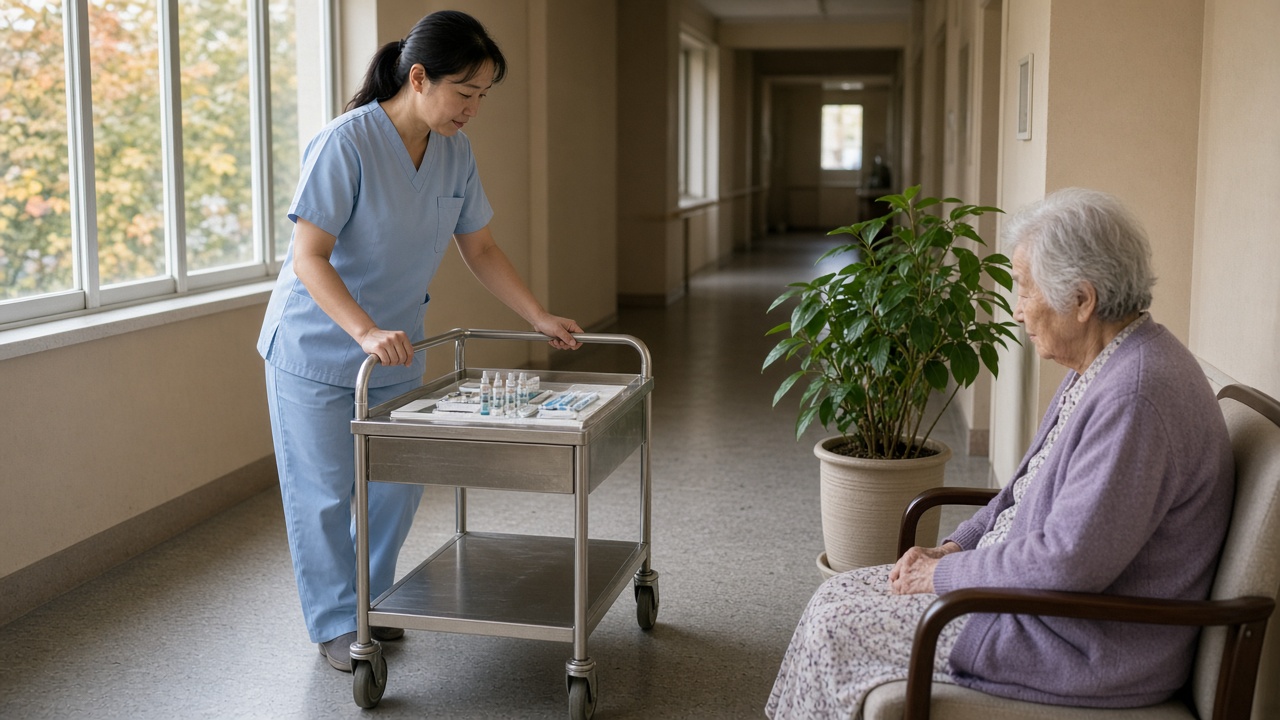
The health ministry is moving earlier than usual on influenza vaccine logistics for elder-care facilities in the Kanto region, according to MHLW’s health page. The shift is aimed at getting doses to nursing homes and related facilities before October’s admissions rush, when new residents arrive, families visit more often, and staff rosters turn over after the summer break.
For a waiting room in Tokyo, Kanagawa, Saitama, or Chiba, the practical effect is not a new vaccine. It is a scheduling change. Facilities that normally wait for the main autumn shipment are being told to prepare for early delivery, which means clinics, pharmacies, and facility nurses may need to run vaccination sessions sooner than they did in 2025.
What MHLW actually said
The ministry’s release pattern points to an expanded early shipment of influenza vaccine to nursing homes in the Kanto region. The agency frames this as a logistical measure for high-risk congregate settings, not as a change to who is eligible or how many doses are produced. That distinction matters. A shipment acceleration can change when shots are given without changing the total supply.
In absolute risk terms, the question is straightforward: how many residents in a facility will get influenza, and how many of those infections become hospitalizations or deaths? MHLW has not published a facility-level forecast in this release. What it has done is move the delivery date forward so that a 60-bed nursing home, for example, can start vaccinating before new residents settle into shared rooms and before staff return from holiday travel.
That arithmetic is illustrative, not a ministry estimate. But it shows why elder-care operators treat timing as a clinical issue. Influenza spreads through shared dining rooms, rehabilitation gyms, and transport vans. A two-week delay in vaccination can overlap with the first outbreak cluster.
Why October admissions matter
October is a heavy month for Kanto care facilities. Families often finalize placements after the summer, hospitals discharge patients who need rehabilitation, and some facilities admit residents ahead of winter. Each new admission brings a new exposure history. Even a facility with strong infection control can see its risk profile change in a single week.
The ministry’s early shipment is designed for that churn. If doses arrive in late September, facility nurses can vaccinate current residents before the admissions wave, then catch new arrivals as soon as they are medically cleared. That is different from waiting until late October, when an outbreak in one unit can force cohorting and cancel group activities.
For Kanto clinics, the operational signal is to check storage and staffing now. Influenza vaccine needs consistent refrigeration, and early delivery may arrive before a facility’s usual vaccination clinic dates. Pharmacies that compound or deliver to nursing homes may see earlier orders. Municipal public health centers may get more questions from families about where to get a shot.
What this means for a waiting room here
In a Tokyo waiting room, the visible change may be small: a sign asking patients over 65 whether they live in a care facility, or a receptionist checking whether a family member’s nursing home has scheduled its clinic. The less visible change is coordination. A facility cannot vaccinate residents in isolation. It needs a prescriber, a supply chain, and staff willing to be vaccinated themselves.
That last point is where MHLW’s logistics push can stall. Early doses do not guarantee early uptake. If care staff decline vaccination, the virus can still enter through the workforce. The ministry’s focus on shipment timing is necessary but not sufficient. The absolute risk for a resident depends on both resident coverage and staff coverage, plus how quickly a facility isolates a first case.
Kanto facilities may also face competition for appointments. If hospitals and clinics start their own influenza campaigns in late September to match the early supply, elder-care homes could find it harder to book vaccinators. That is a scheduling problem, not a supply problem, but it can cause the same delay.
The claim to watch
The claim to watch is not that Japan has “accelerated” influenza vaccination in a way that changes the vaccine itself. The claim is narrower: MHLW is moving early doses to Kanto nursing homes before October admissions. To check that claim, look for the ministry’s shipment notices, facility guidance, and any Kanto-specific distribution list. Then compare it with what local facilities actually receive.
For families, the practical question is simple: when will the nursing home offer the shot, and what happens if a new resident arrives after that date? For clinicians, the question is whether early delivery is paired with clear standing orders and enough staff to run the clinic. For the ministry, the test is whether an earlier shipment reduces severe influenza in the settings where residents cannot easily isolate.
The answer will show up in outbreak reports, hospital transfers, and vaccination coverage data later in the season. Until then, the Kanto care sector is working with a calendar shift: doses earlier, admissions rush ahead, and a winter respiratory season that does not wait for paperwork.