Hawker stalls in Category 2 under the new Safety Assurance for Food Establishments (SAFE) framework will be assessed on their year-round track record rather than the annual snapshot that produces the familiar hygiene grade, the Ministry of Sustainability and the Environment (MSE) told Parliament in an oral reply.
The distinction sounds administrative. For diners, it changes what a sign is telling them. An annual grade is a reading taken at one point in the inspection cycle. A track record is meant to show whether a stall has kept up its practices across inspections and follow-ups. Under SAFE, MSE said Category 2 stalls would be handled on that record-based basis.
What Parliament was told
The oral reply answered a parliamentary question on the SAFE framework, the new safety assurance system for food establishments. MSE's answer focused on how the framework treats Category 2 stalls and why that differs from the annual snapshot grades that have long been displayed at food shops and hawker stalls.
In practice, the annual grade is a compliance photograph. It can be clean, middling or poor. It can also be outdated by the time a diner reads it. A track record is cumulative. It asks whether a stall's hygiene performance holds up over time, not only on the day an inspector visits.
That does not mean SAFE replaces every grade with a single score. The reply's focus was Category 2 stalls, and it did not present the change as one method that replaces every existing grade.
Why the difference matters at the stall front
Singapore's food hygiene grades are a public shorthand. Diners use them when choosing a stall, especially at lunchtime when queues form fast and decisions are quick. A letter grade is easy to read. A track record is harder to compress into a glance, which is why the QR display in SAFE's rollout matters.
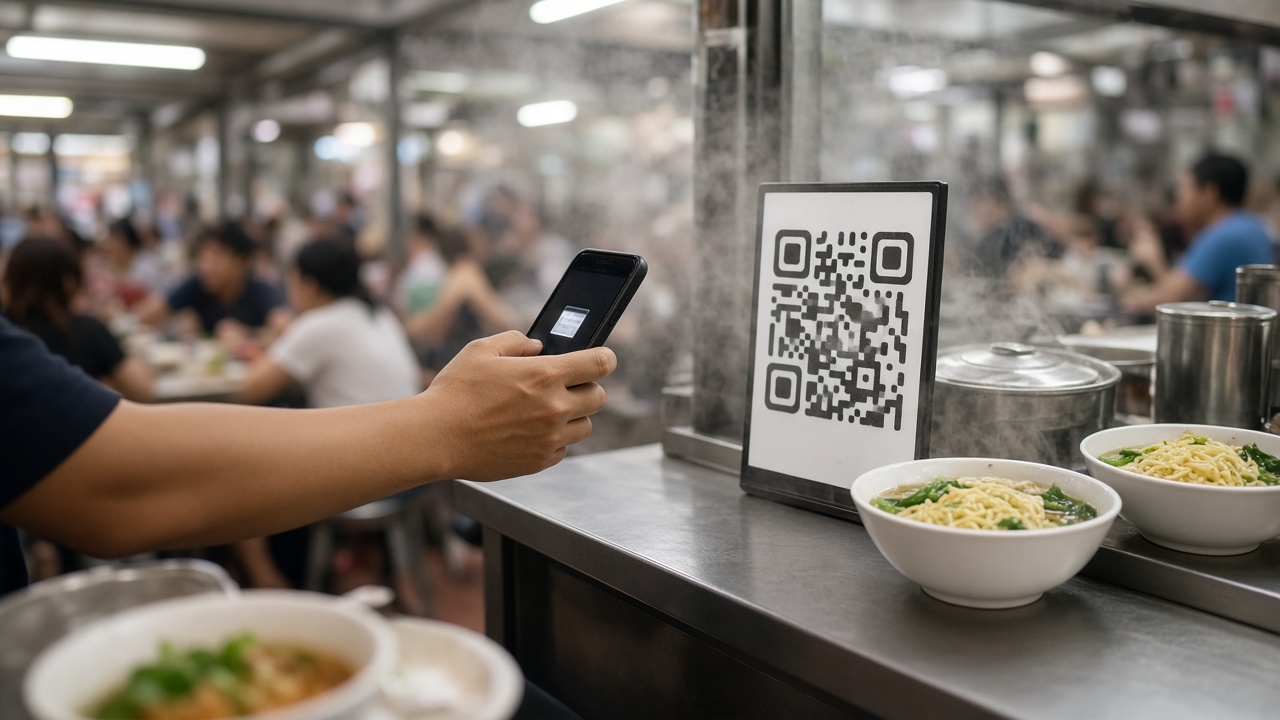
From phase one, the public-facing element is expected to include QR codes. That gives diners a way to look beyond the sticker or placard. But it also shifts some effort to the diner: the information is available only if someone scans it. For older customers, tourists or anyone without a phone at the table, the annual grade may remain the more visible cue.
For stallholders, the change may reward consistency. A hawker who has maintained hygiene practices across months has something to show beyond a single inspection. A stall with a strong annual grade but a patchy record may not look as clean once the record is visible. The MSE reply did not publish stall-level outcomes or claim that track records eliminate food safety risk.
The evidence question
The absolute risk to a diner still depends on the usual things: how food is stored, how it is cooked, how often surfaces are cleaned and whether handlers follow basic hygiene. A grade, a track record or a QR page is a signal. None of them is a guarantee.
That is the useful way to read the parliamentary reply. MSE was not saying that Category 2 stalls are automatically safer or more dangerous than others. It was explaining the basis of assessment: track record instead of annual snapshot. Whether that produces better hygiene over time is the outcome to watch, not an assumption to make from the framework's name.
The reply also leaves practical questions for phase one. How many stalls will fall into Category 2? How often will records update? Will diners see a simple summary or a full inspection history? MSE's answer set out the principle; the rollout will test how legible it is at the counter.
What to watch after Jan 19
The first test is whether QR display becomes common enough to matter. If only a minority of stalls carry it, the annual grade will continue to dominate. The second is whether track records are updated quickly enough to reflect recent problems. A record that lags is no better than an old snapshot.
The third is whether the framework changes behaviour. If stalls with weaker histories improve before problems become repeat violations, the track-record approach will have done its job. If the record simply becomes another label that diners ignore, the annual grade will remain the only thing they see.
For now, Parliament was told the distinction plainly: SAFE's Category 2 stalls are assessed on a year-round record, while the annual grade remains a snapshot. Diners who want the fuller picture may soon have to scan for it.