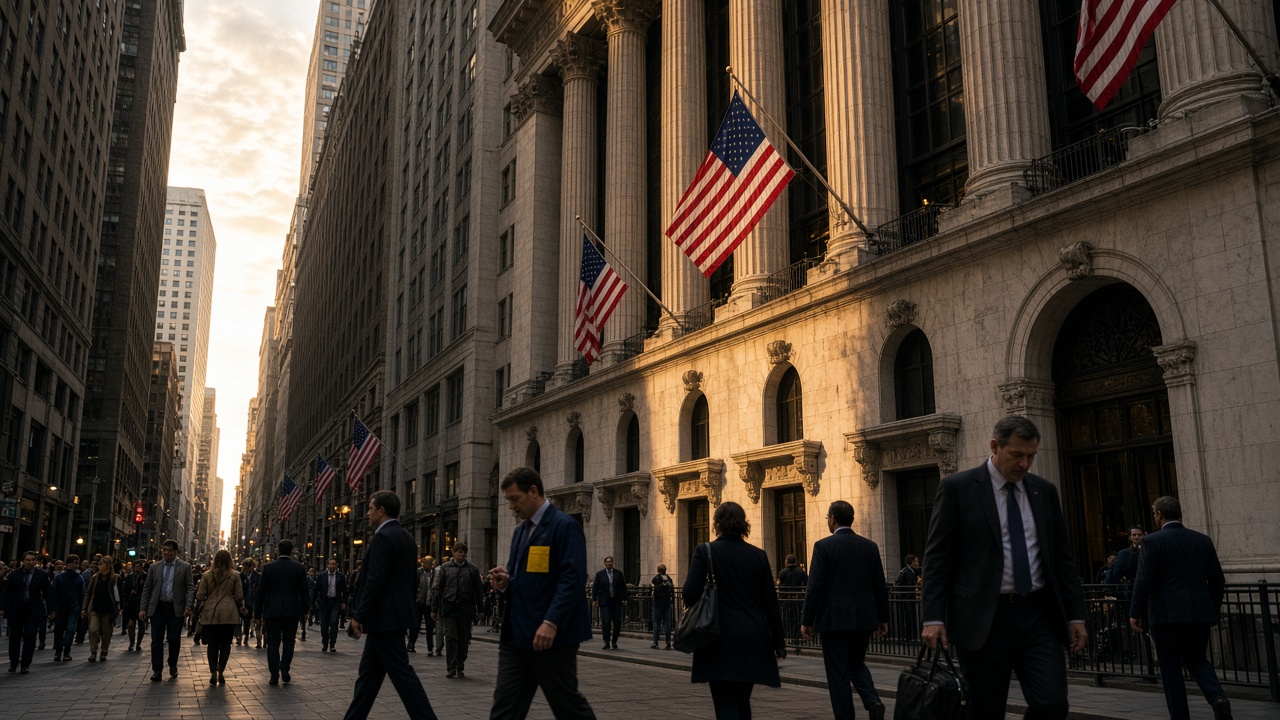
U.S. stocks finished higher Friday, and the S&P 500 did enough this week to end a three-week losing streak. The benchmark closed at 7,743.41, up 39.28 points, or 0.51%. The Dow Jones Industrial Average rose 478.64 points, or 0.93%, to 51,828.62. The Nasdaq Composite added 129.34 points, or 0.48%, to 27,068.71.
The session was not a quiet drift. It was a retreat in oil prices and a fresh bid in rate-sensitive shares. Brent crude fell about 3.4% as traders reacted to hopes for U.S.-Iran negotiations in New York. The 10-year Treasury yield eased from its roughly 5.20% weekly peak, giving equity investors one less reason to sell into the close.
Thursday had been a flat truce session, with the S&P 500 around 7,704. Friday's gain pushed it to 7,743.41 and turned the week positive. That matters because the prior three weeks had been a grind lower. A single session does not fix the trend, but it does change the tone going into the weekend.
Oil retreat opens the door
The mechanism is straightforward. Lower crude prices reduce pressure on inflation expectations, especially when the move is tied to a possible diplomatic path rather than weaker demand alone. When oil falls, the market can price a softer headline inflation path. When the 10-year yield eases, the discount rate applied to future earnings stops climbing. That combination tends to help equities, and it helps long-duration growth names most.
The catch is that the oil move is built on hopes, not a signed agreement. U.S.-Iran talks in New York may or may not produce a durable de-escalation. If the talks stall or if supply concerns return, crude can retrace the drop quickly. The equity rally would then lose one of its two supports, leaving yields and earnings to carry the load.
Dow leads, Nasdaq lags
The Dow's gain was the standout among the major averages. Its 0.93% rise was nearly double the S&P 500's percentage move and well ahead of the Nasdaq's 0.48%. That order matters. If the session had been only a megacap technology rally, the Nasdaq would likely have led. Instead, the Dow's outperformance suggests the bid was broader, or at least that investors were willing to buy beyond the AI-linked names that have driven so much of 2026.
AI-linked companies still helped. Reports pointed to artificial-intelligence names as part of the advance. But the Nasdaq's lagging gain says the AI trade was not the only engine. The market took the oil drop as permission to rotate, not as a reason to chase only the same leadership group.
Still, the street already has a lot of good news in the number. The S&P 500 at 7,743.41 reflects a week of relief on oil and rates. It does not reflect a confirmed Iran deal. It does not reflect a durable break in the 10-year yield's climb. It does not reflect an earnings upgrade cycle. Those are the next things investors would need to justify another leg higher.
What would break the story
The falsification list is short. First, Brent needs to stay lower or at least not reverse sharply. A quick rebound toward the week's highs would undercut the inflation-relief trade. Second, the 10-year yield needs to stay below the 5.20% area. A retest of that peak would pressure equity multiples, especially for growth stocks. Third, the talks need to show some signal of progress. If they collapse without a path forward, the oil bid can return.
There is also a breadth test. Friday's Dow-led advance is encouraging, but one session does not prove a durable broadening. If the next rally is again carried by a handful of AI names while the equal-weight market lags, the index can still rise while the average stock stalls. That kind of narrow advance is more fragile when oil or yields turn.
For now, the winning week is real. The S&P 500 closed at 7,743.41, the Dow closed near 51,829, and the Nasdaq finished above 27,000. The move was powered by a 3.4% Brent drop and a pullback in the 10-year from its weekly peak. The question for next week is whether that was a one-week reprieve or the start of a broader reset in inflation and rate expectations.
Investors will watch oil first, then yields. If both stay calm, the market's path of least resistance could remain higher. If either reverses, the three-week losing streak will look less like a memory and more like a warning.