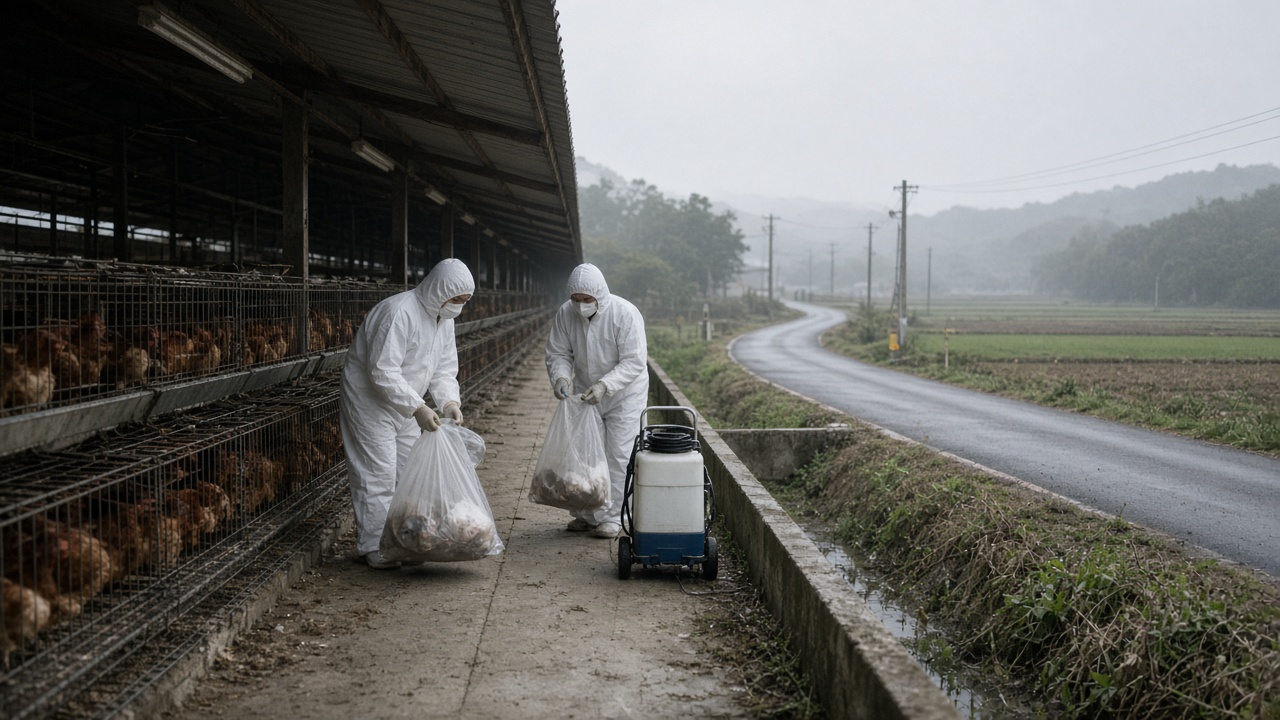
Taoyuan animal health authorities have confirmed H5N1 avian influenza at the Dajen farm and ordered the culling of about 2,500 chickens, the first local poultry outbreak in eight years, according to a UDN report on Sept. 26.
The visible response is the cull. The consequential response is the 3-kilometer surveillance ring around the farm. Inside that radius, animal health teams will check nearby poultry operations for clinical signs, review movement records, and test where the evidence points. The cull removes the virus from one site. The ring determines whether this is one farm or the start of a cluster.
For readers in Taoyuan, the practical question is not whether H5N1 is alarming in theory. It is whether the virus has already moved off the index farm. A single infected barn can be contained with depopulation, disinfection, and movement controls. A positive result at a neighboring farm changes the geography of the response, the number of birds at risk, and the length of the monitoring period.
What the agency confirmed, and what it did not
The confirmed subtype is H5N1. That makes this a different story from the H5N6 broiler-policy discussion reported separately on Sept. 25. The earlier item concerned rules and exemptions for broiler operations. This one is an on-farm outbreak with a cull, a contaminated site, and a defined surveillance perimeter. Merging the two into a single "bird flu" headline would obscure the different decision-makers and timelines involved.
City authorities have not described a human case linked to the Dajen farm. The public health guidance remains exposure-based: avoid direct contact with sick or dead poultry and wild birds, report unusual bird deaths to the local animal health office, and wash hands after any possible contact. Poultry and eggs should be cooked thoroughly. Those steps are not new. They are the standard cut points where avian influenza usually stops.
That distinction matters in a waiting room. A patient with fever and cough after handling poultry needs to mention that exposure to a clinician. A patient with no bird contact and a fever does not become an H5N1 suspect because a farm cull is on the news. Symptoms alone do not identify avian influenza. Exposure history does.
The 3-kilometer question
The surveillance ring around the Dajen farm is the part of the response that will produce the next real signal. Animal health teams will look for illness in nearby flocks, check how birds, feed, and equipment have moved, and sample where indicated. If the ring stays quiet, the outbreak can be closed as a single-site event after the standard monitoring period. If it does not, the response expands.
The cull itself is a blunt tool, but it removes the virus from the immediate environment. The harder work is biosecurity on the farms that remain. That means controlled entry, clean footwear and clothing, disinfection at the gate, and separation of wild birds from feed and water. In Taiwan's humid, densely farmed outbreak pattern, those measures are the difference between one farm and a chain.
For the general public, the absolute risk remains low. Reported H5N1 human infections globally have been rare and most often linked to close contact with infected poultry. The risk is concentrated among people who work directly with birds, not among shoppers buying cooked chicken or eggs. The risk calculus would change if a linked human case appeared or if the virus were found in mammals near the farm, but no such finding has been announced in the information released so far.
With Mid-Autumn cooking and gatherings underway, the kitchen advice is the same as the farm advice: buy poultry from normal channels, keep raw meat separate from ready-to-eat food, cook it through, and do not handle or butcher dead birds found in the field. Report them instead.
The next public updates should answer three questions. Did any nearby farm test positive? Did any worker or contact develop symptoms? Was the source traced to wild birds, feed, or movement between farms? Until those answers are in, the evidence supports vigilance at the farm gate, not alarm in the general clinic.