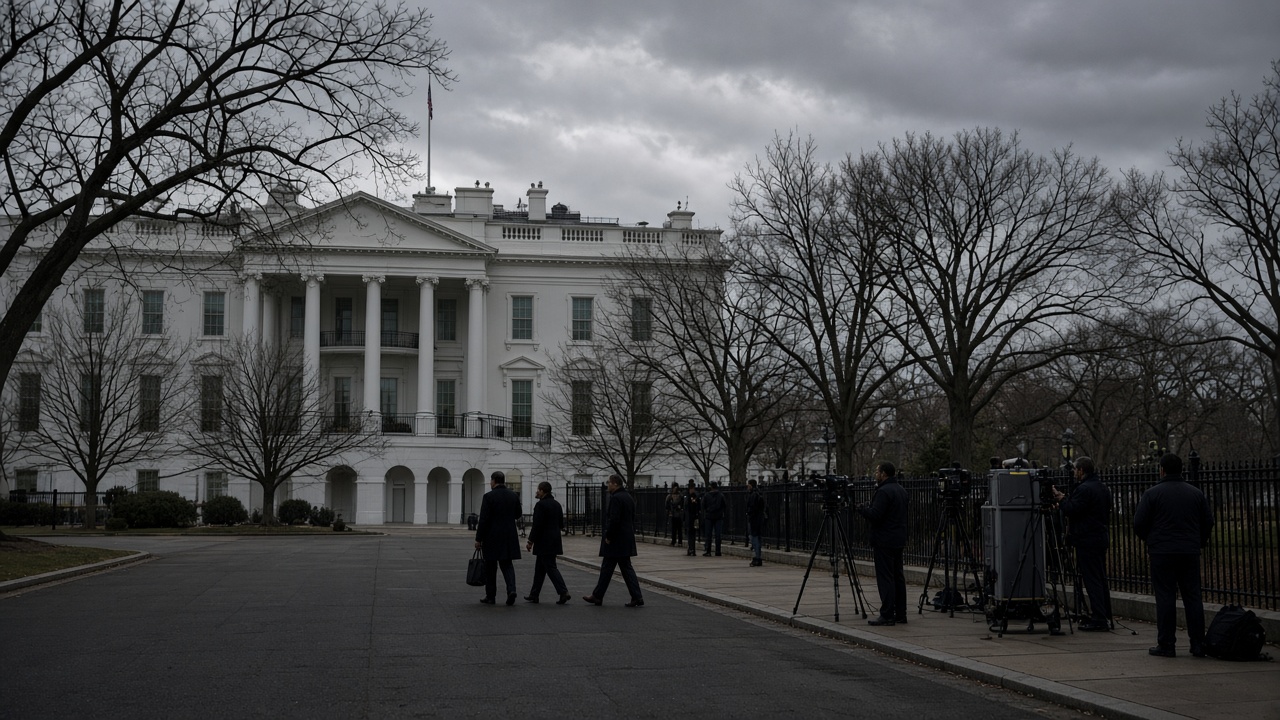
President Donald Trump's administration is canceling nearly $1 billion in spending that Congress already approved, the White House said Friday, targeting refugee services, minority business programs and health research grants through a budget maneuver opponents call a "pocket rescission."
What the White House canceled
The package totals about $810 million, according to summaries circulated with the announcement. The largest slice—roughly $567 million—would come from Health and Human Services programs that fund nonprofit services for refugees and unaccompanied minors. The administration argued that reduced illegal border crossings make those outlays unnecessary, a claim Democrats rejected as a pretext to shrink legal protection networks.
Other lines include about $70 million the White House described as "woke" international education initiatives, $28 million in HHS research grant funding, $9 million in debt relief tied to foreign climate programs, and $10 million from a minority business development initiative at the Commerce Department. Housing counseling nonprofits, academic exchange programs and migrant student supports also appeared on the cancellation list. The statement branded the spending as wasteful; congressional authors of the underlying appropriations said the cuts would hit vulnerable families and small firms.
The pocket rescission fight
Under the 1974 Impoundment Control Act, presidents can propose rescissions and withhold money while lawmakers review the request for up to 45 days. Trump's timing is the fight: with only days left before the fiscal year ends September 30 and the House out of session until after the November election, Congress has almost no practical window to pass legislation rejecting the cancellations. If lawmakers do nothing, the withheld funds expire with the fiscal year—achieving the cut without a vote.
The Government Accountability Office, Congress's investigative arm, has said the tactic is illegal because it circumvents the review period. The administration relied on a similar move last year to block $4.9 billion in foreign aid; the Supreme Court declined to restore those funds, citing deference to presidential foreign-affairs powers. This year's target is domestic, raising a different legal map and almost certain litigation from nonprofits and states.
Reaction on Capitol Hill
Lawmakers in both parties criticized the announcement. Democrats called the rescission an unlawful strip of bipartisan funding for education, health research and immigrant services. Some Republicans warned that unilateral cuts could complicate negotiations on a stopgap spending bill needed to avoid a partial shutdown when current funding lapses. Former congressional budget staff from both parties have urged leaders to close what they describe as a loophole in the impoundment law that makes pocket rescissions possible.
For program managers, the immediate question is obligation: grants that were not fully awarded before the fiscal year turn may never be spent. Refugee resettlement agencies said Saturday they were assessing which shelter and legal services contracts are at risk. Universities flagged exchange programs that recruit foreign faculty. The minority business development cuts land as the administration simultaneously promotes domestic manufacturing incentives elsewhere in the budget.
What happens next
Courts will likely be asked again to decide whether fiscal-year timing can nullify congressionally appropriated dollars. Meanwhile, appropriators returning to Washington face a calendar compressed by election politics and a president willing to test separation-of-powers limits on spending. Friday's rescission is less than 1 percent of discretionary domestic outlays, but it signals how Trump plans to wield impoundment authority when he disagrees with line items Congress wrote into law.