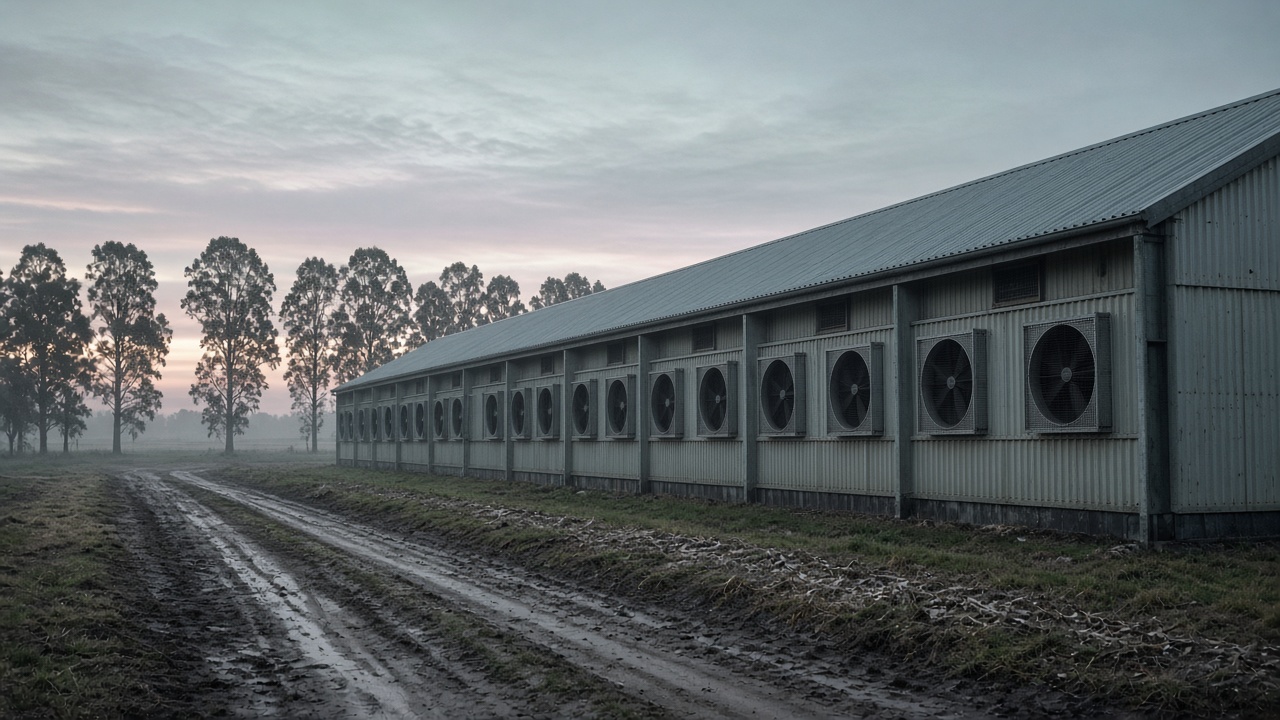
Victoria has delayed its next round of caged-egg welfare standards by 12 months and extended a poultry housing order into October, as the state works through a sustained H5 avian influenza outbreak.
The standards had been due to take effect in mid-2026. Under the revised timetable, producers now have until mid-2027 to meet the new requirements. The 2036 phase-out of conventional cages is unchanged, meaning the long-run direction of the policy has not moved — only the pace.
Why the timetable moved
The delay lands in the middle of an outbreak response. Roughly 200 H5 events have been recorded since July, a caseload that has kept veterinary teams, poultry producers and biosecurity staff working through detection, culling and movement controls.
Alongside the welfare deferral, the housing order covering poultry in affected areas has been extended to October. That order keeps birds indoors rather than ranging outside, a measure aimed at limiting contact between commercial flocks and wild birds that can carry the virus.
The combination matters for egg producers, because housing rules and welfare standards pull on the same infrastructure. A flock kept inside for months needs different ventilation, litter management and stocking arrangements than one with routine outdoor access. Producers planning upgrades for a mid-2026 deadline now have another year to phase the work, but they also have to keep operating under disease-control conditions in the meantime.
What is and is not changing
What has changed is timing. The mid-2026 standards shift to mid-2027. The housing order extends to October. The 2036 commitment to phase out conventional cages remains in place, so the industry is not being handed a permanent reversal of the welfare direction.
What has not changed is the outbreak itself. H5 avian influenza is a notifiable disease, and outbreaks in poultry trigger quarantine, destruction of affected flocks and restricted movement around the site. Those controls are separate from the welfare code, but they overlap in practice on farms that are already managing bird health, staff access and equipment movement.
For consumers, the near-term effect is likely to be felt through supply and pricing signals rather than a visible change on shelves. For producers, the practical question is sequencing: which capital works can wait 12 months, and which biosecurity upgrades cannot.
The wider policy picture
Welfare timelines in Australian egg production have been contested for years, with phase-out dates set at state level and producers arguing that transition costs land unevenly across farm sizes. Delays of this kind are usually framed as regulatory relief, but they also push investment decisions into a period of uncertainty about disease status.
The Victorian government has not tied the two issues into a single announcement, and the 2036 date remains the anchor for the cage phase-out. The immediate story is narrower: a 12-month extension on welfare compliance, a housing order running to October, and about 200 H5 events since July shaping both.