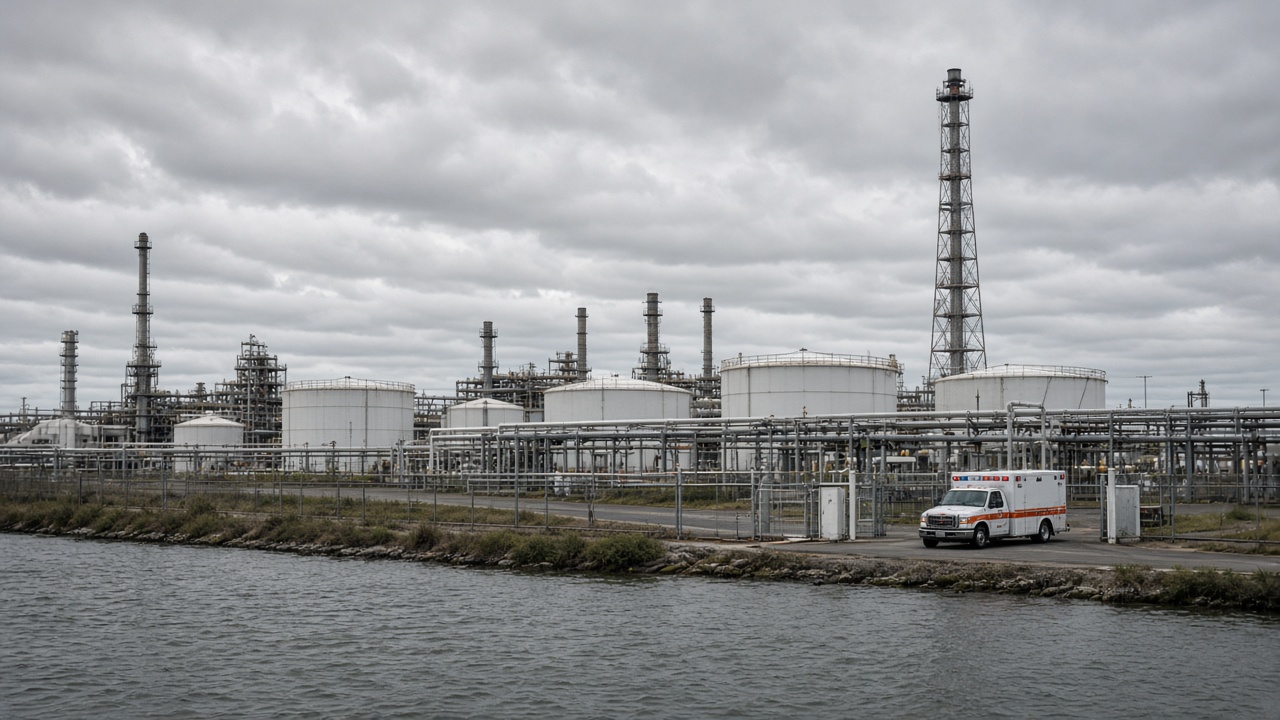
A gas leak at Viva Energy's Geelong refinery triggered the site's emergency alarm on Saturday, with workers moved into shelter and emergency services called to the Corio plant on the northern shore of Corio Bay.
The alarm is the part neighbours would have registered first: a warning tone across an industrial site that sits close to the suburbs of Corio and North Shore, a short distance from the bay's shipping channel. What gas was released, in what volume and for how long had not been confirmed in reporting available at the time of writing.
Where the plant sits
The Geelong refinery is Australia's largest remaining oil refinery and one of only two still operating in the country, turning crude into petrol, diesel and jet fuel. It occupies a long strip of land at Corio, hemmed by the Princes Highway, the rail line and the water — a position that has always made airborne releases a neighbourhood question as much as an industrial one.
What Saturday's alarm involved
According to Geelong Advertiser reporting, the leak prompted the refinery's emergency alarm and shelter arrangements on site, and emergency services responded. The scope of any shelter advice beyond the refinery fence line, and whether nearby residents were affected, has not been set out in the reporting available so far.
Viva Energy, which operates the site, had not published detailed comment on the release in the material available at the time of writing. That leaves the basic facts of the incident — the substance involved, the duration, the direction the plume took — unverified outside the company and the responding agencies.
Production and safety
Whether production was curtailed, and for how long, is also unresolved. Refinery units can be slowed, isolated or shut down in sections after an upset, so a release measured in minutes can still shape output for days and affect fuel supply arrangements across Victoria and beyond.
The site employs hundreds of workers and contractors, and its safety record is a live local issue in a city where the refinery is both a major employer and a fixed feature of the skyline. Saturday's alarm will be read in that context by people who live within earshot of it.
Who follows up
Workplace safety at the refinery sits with WorkSafe Victoria, while air and water emissions fall to EPA Victoria under the state's environment protection framework. Any investigation, improvement notice or monitoring requirement would ordinarily be expected to appear through those agencies' public channels rather than through the operator alone, and both are worth watching in the days after an incident of this kind.
For households in Corio, North Shore and the streets between the highway and the water, the questions that matter are straightforward: what was in the air on Saturday, whether anything carried past the fence, and what changes as a result. Those answers rest with Viva Energy and the two regulators — and they are the ones this story will follow.