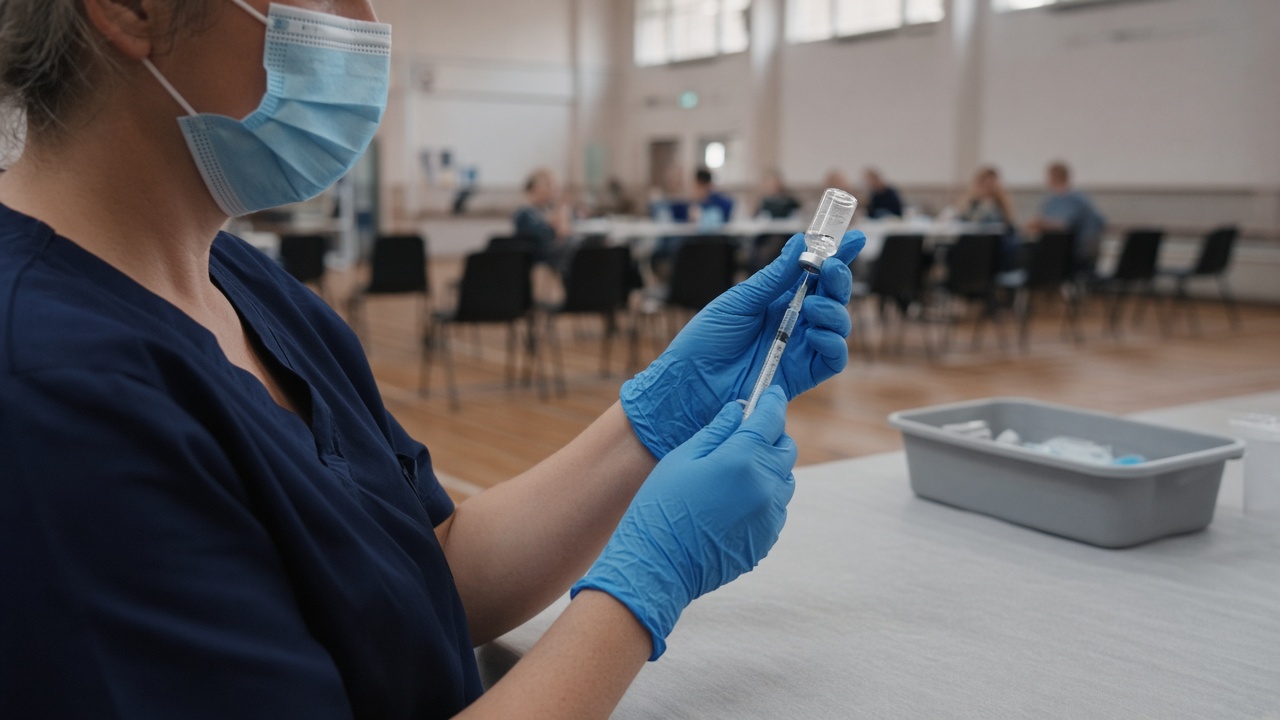
South Australian health authorities have now linked seven locations to a measles cluster centred on a single Adelaide public high school, after four students at Brighton Secondary were confirmed as cases. SA Health has stood up a vaccination clinic at the Brighton Masonic Hall, with the ABC reporting a session running from 2pm to 6pm on Friday.
The exposure list is the practical part of the alert. It tells anyone who was at one of the seven sites during a stated window to check their own vaccination status rather than wait for a cough or a rash. The state's year-to-date count has reached eight cases, 7NEWS reports.
What SA Health has confirmed
Four students at Brighton Secondary are part of the cluster. The department has published a list of exposure sites that takes in the school, Kmart Marion, Morphett Vale Stadium and a Costco outlet, among others. Each entry carries a date and a time window, because measles transmission is a matter of shared air rather than shared surfaces.
People who were at a listed site during a listed window are being asked to review their vaccination history and to watch for symptoms. The clinic at the Masonic Hall is aimed at the same group: the school community, close contacts and anyone caught by the exposure windows who cannot easily get to a GP.
Why a single case is treated as an outbreak
Measles is the most transmissible virus on the standard vaccine schedule. Estimates put its basic reproduction number between 12 and 18, which means one case in a room of unvaccinated people can produce a dozen or more infections. The virus also lingers in the air of a closed space for up to two hours after the infectious person has left, which is why health departments publish specific rooms and times rather than vague warnings.
Someone with measles is infectious from about four days before the rash appears until four days afterwards. Early symptoms look like a bad cold or flu — fever, runny nose, cough, sore, red eyes — and the rash typically follows three to four days later, starting at the hairline and spreading down. That window is the problem: the person is most likely to be out and about, at school or at a shopping centre, before anyone knows what they have.
Most people who catch measles recover. A minority do not. Complications include ear infections, pneumonia and, rarely, encephalitis. In roughly one in every 1,000 to 2,000 cases, an infection in childhood leads to a fatal degenerative brain condition years later. That is the absolute-risk ledger against which a two-dose vaccine — with a long safety record in Australia and a schedule that has been in place for decades — is weighed.
What eight cases means
Eight cases for the year is not a large number, and it is worth saying so plainly. Measles in Australia does not arrive out of nowhere; it is imported by travellers and spreads where vaccination coverage sits below the herd-immunity threshold. That threshold is high — commonly cited at around 95% two-dose coverage — because the virus is so contagious.
The relevant number, then, is not eight. It is the coverage rate in the postcodes around the school, and whether the four students and their contacts were vaccinated. SA Health has not detailed individual vaccination status, and it would be wrong to assume. What the department has done is act on the assumption that unvaccinated contacts exist, which is why the clinic exists at all.
What this means in the waiting room
For a parent in Adelaide, the practical questions are three. Was I at one of the seven sites inside the window? Have I had two documented doses of MMR, or was I born before 1966, when most Australians are treated as immune through natural infection? And if neither applies, can I get a dose this week?
Adults born in or after 1966 who have not had two documented doses are generally eligible for a free MMR vaccine. GPs hold most of the stock, and some pharmacies can vaccinate adults. Anyone caught by an exposure window who develops fever or a rash should call ahead before walking into a clinic, so the waiting room itself is not exposed.
The Brighton cluster is small and, on the evidence so far, containable. Containment depends on the next fortnight of reporting rather than the first alert. Public health units will be watching the incubation clock for everyone exposed at those seven sites.