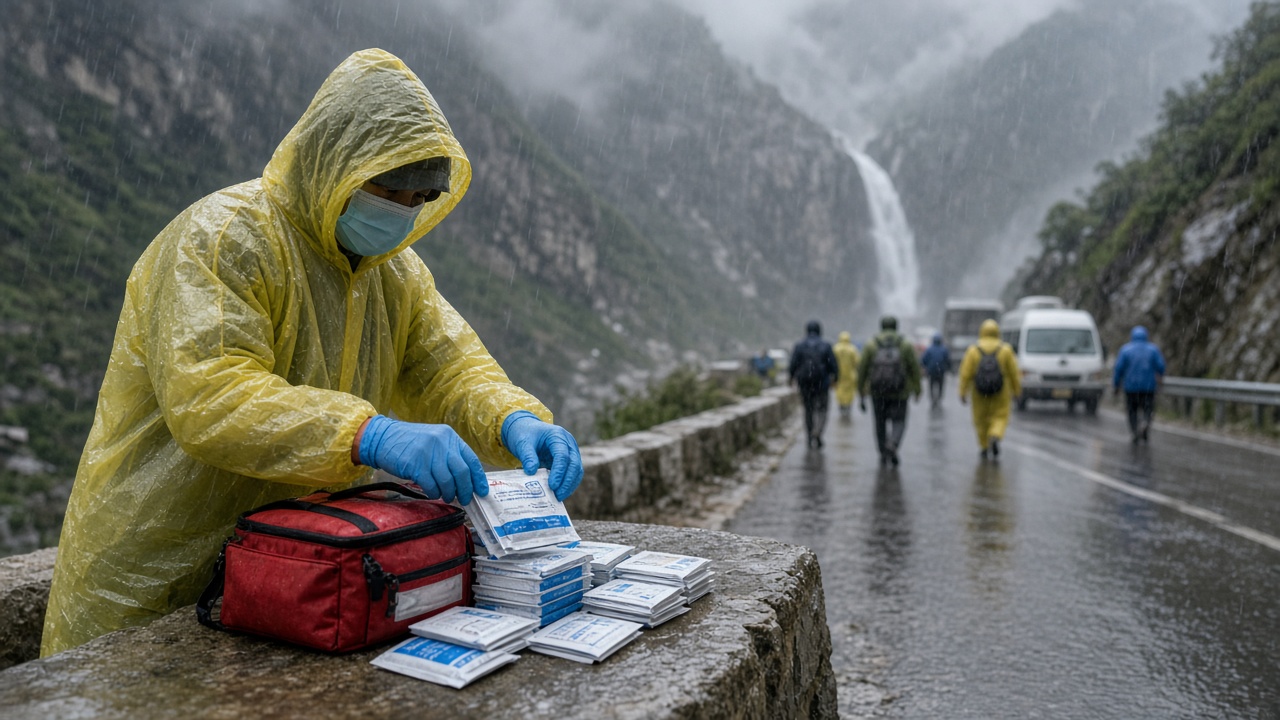
Uttarakhand’s Char Dham and Adi Kailash yatra routes are suspended after the latest spell of rain, with the Yamunotri leg among the stretches where movement has been halted at roadblock points. The health response has followed the same logic as the barricades: keep simple supplies close to where people are waiting. Medical teams on the route are stocking oral rehydration salts (ORS), basic medicine kits and referral slips at checkpoints, rather than assuming pilgrims can reach a clinic or pharmacy in a landslide-hit window.
The trigger is not a new pathogen. It is a transport and sanitation problem. The Daily Jagran reported on September 26 that rain havoc across seven states had killed at least 15 people in Uttar Pradesh, flooded parts of Chhattisgarh and put Bihar on alert, while Uttarakhand halted its yatras. When a pilgrim route closes, the risk profile changes: people sit in wet cold, food and water sources get interrupted, and toilets or safe disposal may be unavailable. Diarrhoeal illness, dehydration and exposure-related complaints become more likely, even without an outbreak.
Why ORS at a roadblock
ORS is not a cure for every stomach upset. It is a measured mix of salts and sugar that replaces fluid lost through diarrhoea, vomiting and sweating. In a waiting crowd, that distinction matters. Most people with mild dehydration can be managed with ORS and continued feeding. A smaller number—those with persistent vomiting, blood in stool, confusion, very low urine output or severe weakness—need clinical assessment and may need intravenous fluids. The roadblock kit is meant to separate those groups early, not to keep everyone out of hospital.
The absolute-risk framing is straightforward. For any one pilgrim, the chance of severe dehydration during a rain delay is low. But across hundreds or thousands of people held at multiple points, even a small percentage translates into a meaningful number of people who need help at the same time. The health system’s constraint is not the cost of an ORS packet; it is the time it takes to move a patient down a slushy, landslide-prone road. Pre-positioning supplies at the barricade shortens that first step.
What medics are watching
At checkpoints, the clinical priorities are predictable. Children and older adults dehydrate faster. Pregnant women and people with diabetes, heart disease or kidney disease need earlier referral. Anyone with fever and diarrhoea, or with symptoms that persist beyond a day, should not be managed with ORS alone. In mountain rain, hypothermia can also mimic weakness and confusion; a wet, shivering pilgrim who is not thinking clearly needs warmth and assessment, not just a drink.
The source of the water matters as much as the packet. If taps, streams or stored water are contaminated after flooding, ORS does not make that water safe. Boiling, chlorine tablets or other treatment remain necessary where supply is doubtful. Handwashing and safe disposal are harder when routes are blocked, which is why public health teams often pair ORS distribution with soap, water treatment and messaging about symptoms that require a referral.
The limits of a kit
No health official can stock enough ORS to substitute for reopening a road or restoring a clean water line. The kits are a bridge. They buy time for pilgrims who are mildly unwell and help identify those who are not. They also reduce the burden on district hospitals that may already be handling rain injuries, landslide trauma and routine emergencies.
The Uttarakhand suspension is a safety decision, and the health prep is its companion. The India Meteorological Department’s seasonal numbers have improved in some regions after the late-September depression, but local intense rain remains possible. For pilgrims, the useful advice is unglamorous: follow district orders, do not attempt blocked stretches, carry ORS if you can, treat uncertain water, and seek help for warning signs rather than waiting for the road to clear.
That is what the claim looks like in absolute terms. ORS at a Yamunotri roadblock will not prevent every rain-related illness. It can prevent a small number of mild dehydration cases from becoming severe while the route is shut—and in a narrow, wet window, that is the kind of measure that matters.