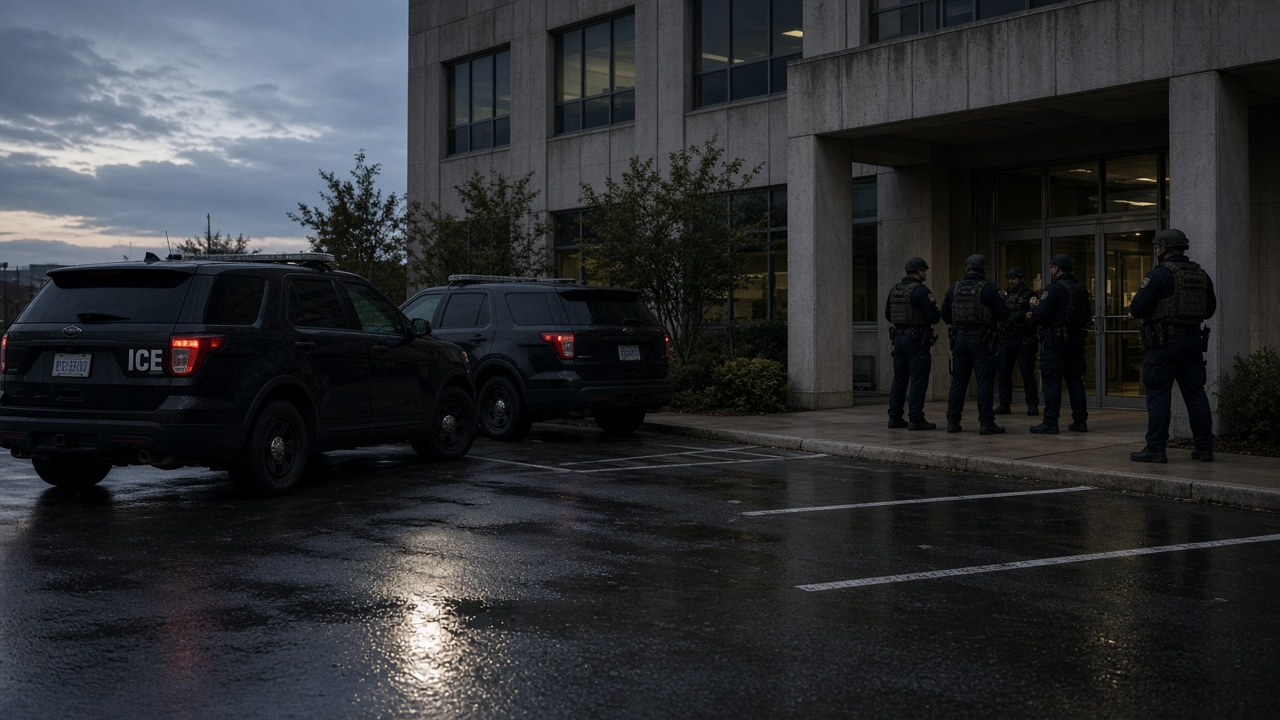
The Department of Homeland Security denied Saturday night that Immigration and Customs Enforcement had been ordered to halt arrests of undocumented immigrants who lack criminal convictions, insisting that “no one is off the table” after a day of conflicting signals inside the agency.
The statement followed a Daily Wire report that ICE field offices nationwide had been told to focus only on people with criminal records and to stop so-called collateral arrests—detentions of others encountered during an operation targeting someone else. Fox News correspondent Bill Melugin, citing nine ICE and DHS sources, said verbal guidance to prioritize the “worst first” had circulated earlier in the week before leaders labeled the episode a miscommunication.
What changed on Saturday
By Saturday evening, Melugin reported, revised written guidance went to field offices reaffirming that enforcement policy had not changed. President Donald Trump told Fox News that ICE may still arrest and deport anyone in the country illegally, including collaterals picked up during other operations.
DHS reposted the Daily Wire story on X with a one-line rebuttal: “This is false. No one is off the table.” The department added that anyone unlawfully present remains subject to arrest and deportation.
ICE sources who spoke anonymously to multiple outlets expressed alarm that a perceived softening might last through the November midterms. One agent quoted by Anadolu wondered whether Trump had been briefed on the earlier verbal orders and hoped the president would “put an end to it” if he learned details.
Why the confusion matters politically
Immigration enforcement is central to Trump’s second-term agenda. DHS has publicized large monthly arrest totals—more than 50,000 in August, according to figures the department shared with conservative outlets—and staged high-profile operations in cities it calls sanctuaries.
Any hint of a pause on non-criminal arrests would have cut against that branding, especially as Democrats campaign on stories of workplace raids and family separations. Republicans, meanwhile, have pressed the administration to keep pressure on employers who hire unauthorized workers.
The White House did not publish a formal policy memo on Saturday; the corrective guidance circulated internally. That leaves state and local partners—and defense lawyers—guessing whether Saturday night’s message will stick once weekly arrest statistics resume.
Operational questions for field agents
Collateral arrests have been a flashpoint since the first Trump term, when civil liberties groups argued that sweeping up bystanders without individual warrants violated due process. Supporters say collaterals are inevitable when agents enter job sites or homes pursuing fugitives with outstanding removal orders.
If Saturday’s clarification holds, agents should expect continued authority to detain anyone they confirm lacks legal status, even when the original target is a convicted offender. If new prioritization memos emerge, they will likely emphasize serious felonies while still allowing collaterals—matching Melugin’s description of the “miscommunication” rather than a formal retreat.
What Congress and courts may ask next
House and Senate Judiciary committees have scheduled fall oversight hearings on ICE detention capacity and use of military bases for processing. Lawmakers will want sworn testimony on whether any field office actually stood down on non-criminal arrests between Thursday and Saturday.
Federal judges overseeing class actions on detention conditions may also demand declarations clarifying nationwide policy, since inconsistent guidance can strengthen claims that enforcement is arbitrary. For now, DHS’s public line is unified: the reported pause never happened, and agents should operate as if every unauthorized immigrant remains a valid target.