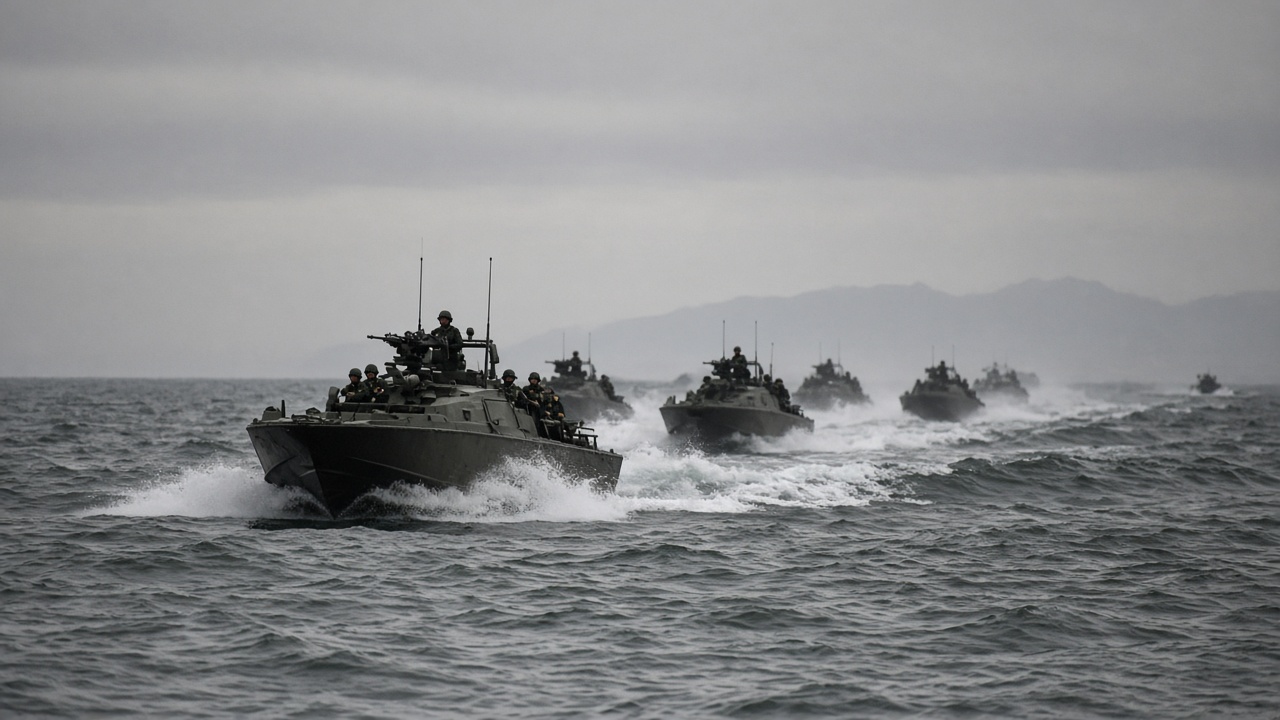
Iran’s Revolutionary Guards Navy said on Sunday that it seized an advanced United States military underwater vehicle operating in the Strait of Hormuz, identifying the craft as a REMUS 600 autonomous drone and adding that technicians were trying to extract data from it. The announcement landed hours after Foreign Minister Abbas Araghchi insisted Tehran had not received any formal reply through Qatari mediators to its proposal for reopening the waterway within seven days, despite President Donald Trump’s public rejection of the plan on Saturday.
What Tehran claims was recovered
State-linked outlets quoted the Guards’ naval branch as saying the vehicle was captured during operations in Hormuz, where Iran has kept commercial traffic largely shut since fighting with the United States and Israel escalated earlier in the year. The IRGC did not publish imagery of the REMUS on Sunday, and the Pentagon had not issued an independent confirmation of the seizure by late afternoon in Washington. Analysts who track unmanned maritime systems said the REMUS 600 family is widely used for mine-hunting and seabed mapping, making any intact capture a potential intelligence prize for Tehran even if the mission was routine.
The Guards also repeated that the strait remains closed and that they would act against what they called unauthorized passages, language that matches weeks of warnings to tanker operators and navies transiting the choke point that normally carries roughly a fifth of global oil consumption.
Diplomacy stuck between microphones and mediators
Araghchi told Iran’s IRNA news agency that officials had heard Trump’s comments but were waiting for “definitive positions” from intermediaries before deciding their next step. Trump told reporters at the White House on Saturday that he was “rejecting their deal” and argued Iran wanted to reopen the strait immediately because it was “losing so badly.” Oman and Qatar have carried messages between the capitals since the war paused and restarted through the summer.
The Iranian proposal, outlined at the United Nations General Assembly in New York, ties any reopening to relief from the U.S. naval blockade on Iranian ports, waivers on oil sanctions and the release of frozen assets Tehran values at about $12 billion. Washington has pressed the opposite sequencing: open Hormuz first, then negotiate broader terms. Treasury Secretary Scott Bessent said Sunday that Turkey, Oman and the United Arab Emirates had halted flights by Iranian carriers and that banks in Turkey and the UAE had stopped transactions with Iran under what the administration calls “Operation Economic Outcast.”
Why the strait still dominates the war
Even with Trump asserting “total control” of Hormuz, insurers and ship managers report that crossings remain sparse compared with pre-war levels, keeping Brent-linked benchmarks volatile across Asian and European trading floors. Iranian President Masoud Pezeshkian told Al Jazeera this week that Tehran no longer trusts talks with Washington after prior rounds ended in strikes and sanctions, while still insisting diplomacy is preferable to further escalation.
China’s leadership has urged a return to the June understanding brokered in Islamabad, but U.S. officials quoted in American media have suggested Trump may resume bombing after November’s midterm elections if no bargain emerges. Against that backdrop, a claimed capture of U.S. hardware in the strait is less a technical curiosity than another signal that neither side is ready to give up bargaining power at sea.
What comes next
Mediators are expected to keep shuttling messages in the coming days, yet Sunday’s dual track—public seizure claim plus private waiting game—underscores how fragile the channel remains. Shipping desks will watch for any U.S. naval statement on the REMUS, while energy markets continue to price in the possibility that a single incident in Hormuz could widen the conflict without a negotiated off-ramp.