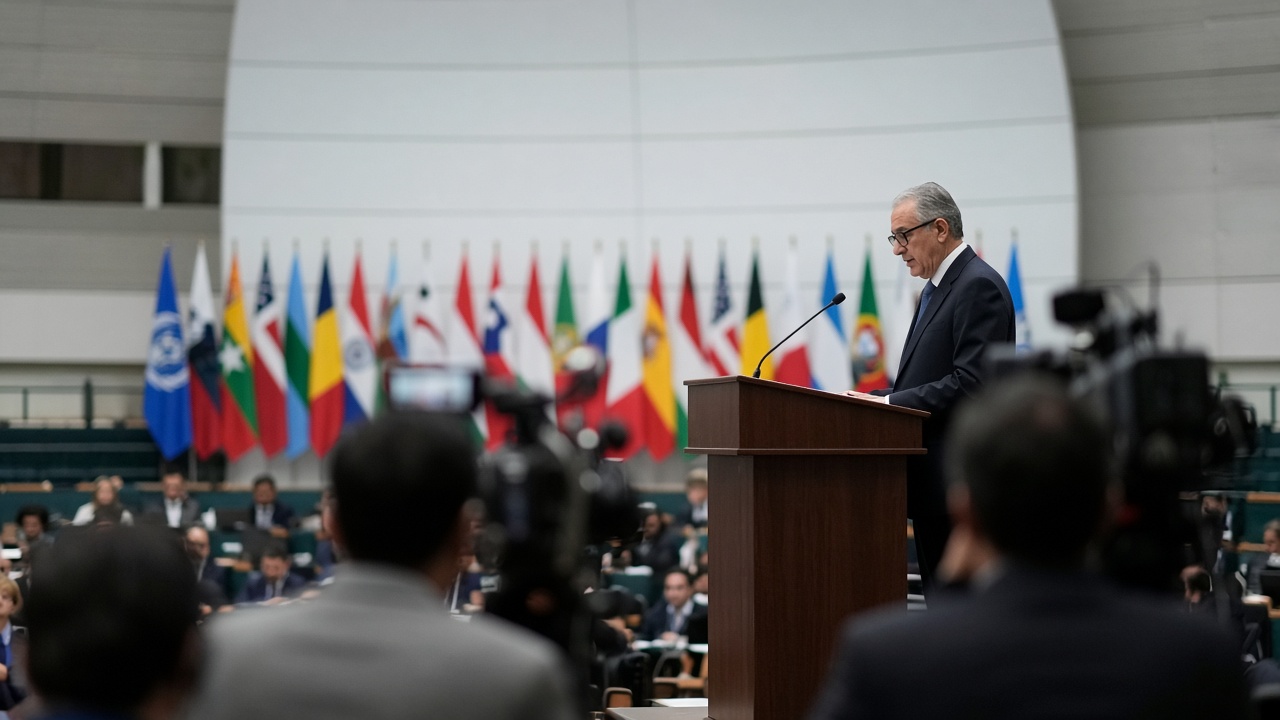
External Affairs Minister S. Jaishankar told the United Nations General Assembly on Saturday that India will exercise its right to defend itself against terrorism, sharpening New Delhi's message to Pakistan without naming Islamabad directly in the national statement.
The UN speech
Delivering India's address at the General Debate of the 81st session in New York, Jaishankar said a "serial practitioner of terrorism" had misrepresented facts before the Assembly a day earlier and sought to normalize terrorism while claiming immunity from consequences. "That will not stand," he said. He added that friendship and goodwill cannot coexist with terrorism, and that understandings premised on tolerating attacks would be questioned.
The remarks followed Pakistan Prime Minister Shehbaz Sharif's Friday speech, in which he referenced the four-day military confrontation between India and Pakistan in May 2025 and again raised Kashmir. Sharif credited U.S. President Donald Trump with what he described as timely intervention to halt that fighting. India's delegation had already answered Sharif in a Right of Reply on Friday night, when First Secretary Petal Gahlot warned that continued terrorism would have consequences and rejected Pakistan's characterizations of Kashmir.
Beyond the India-Pakistan exchange
Jaishankar used much of his time to connect security at home to pressures on the Global South. He warned that countries far from major wars still pay prices in food, fuel, fertilizer and finance—the "4F crisis" he said many developing economies face. On the Gulf conflict, he called attacks on commercial shipping and seafarers in international waters unacceptable and urged restraint and uninterrupted energy flows.
On Ukraine, he repeated India's call for an end to a war now in its fifth year and backed initiatives aimed at peace, while stressing the need to protect seafarers and grain and energy supplies even as diplomacy continues. India and Liberia launched a Group of Friends on the safety and security of shipping and seafarers at the UN on September 25, a move Jaishankar's language on Saturday appeared to reinforce.
Development and reform
The minister paired security warnings with a development narrative, citing progress on health, nutrition, education, drinking water, electricity and digital public infrastructure, and noting Indian projects across dozens of countries. He argued for reformed multilateral institutions that reflect contemporary power and demographics, a standard Indian demand at UNGA week.
For domestic audiences, the terrorism lines land in a week when Sharif also warned that any diversion of Indus waters would be treated as an act of war—a separate flashpoint India has watched closely as regional water politics intensify. Jaishankar did not dwell on rivers in the national statement, but his insistence that perpetrators must change course keeps the door open to further diplomatic and security responses New Delhi has used after major attacks.
What comes next
UNGA sidelines will continue to host bilateral meetings on trade and technology, but India's public line is set for the session: zero tolerance on terrorism, skepticism toward anyone who asks the world to look past state-linked violence, and a demand that distant conflicts not be paid for by the poorest economies. Jaishankar left no ambiguity that India sees self-defense as an active right, not a rhetorical footnote.