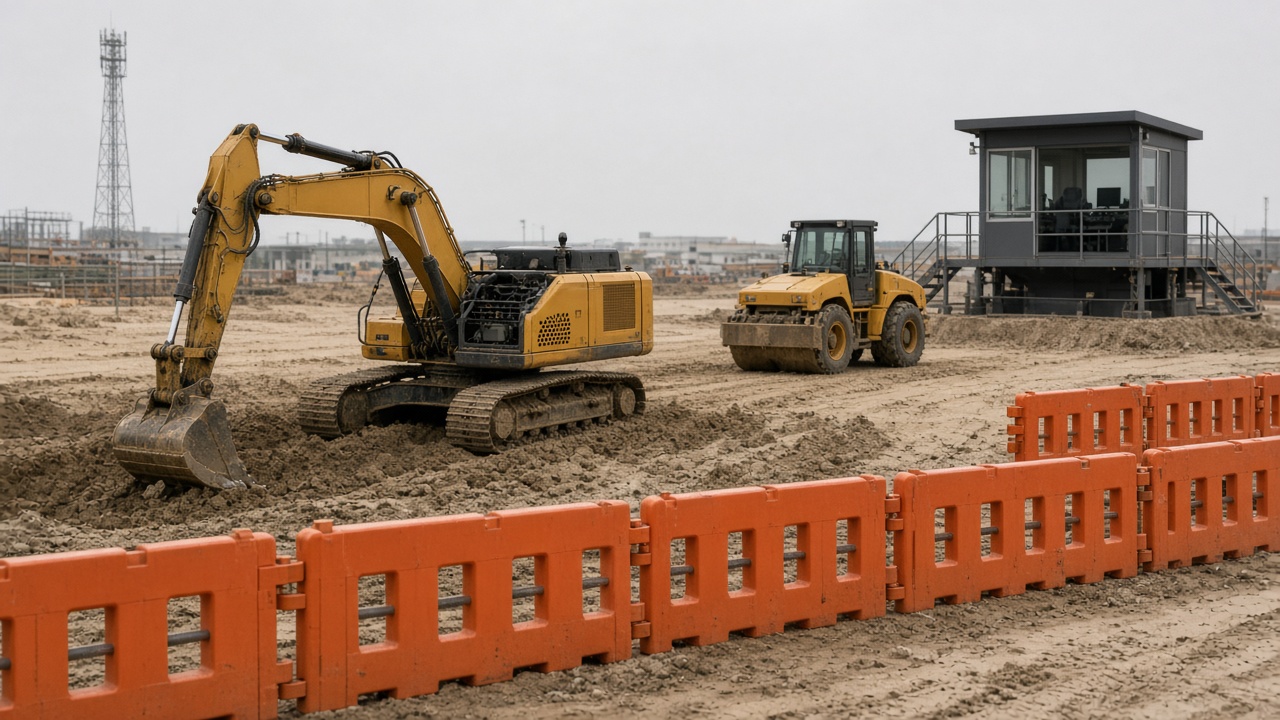
JTC is testing autonomous excavators and compactors at its Bulim construction yard in Jurong, working with Japanese contractor Kajima, as Singapore tries to move remote-controlled earthmoving from demonstration to everyday sites. The trial is deliberately contained: a sandbox where machines dig, move and level under supervision while operators sit away from the cab. The Straits Times reported that phase one runs to early 2027 and that JTC aims for deployment on live projects as early as 2028.
The first fleet focuses on excavators and compactors, two machine types that dominate early works on most Singapore projects. Remote operation matters because it changes the labour equation. Instead of one skilled operator per machine, a trained operator could oversee multiple units from a console, though not every task is equally automatable. JTC and Kajima are aiming to halve the number of skilled operators needed for some works, according to ST. That is not the same as halving the workforce. It means fewer people exposed to dust, heat, vibration and the blind spots around a swinging boom.
Phase two adds bulldozers and trucks
The second phase will add bulldozers and trucks to the test. That is where the engineering gets harder. Excavators dig, but trucks haul and bulldozers grade, and coordinating autonomous machines is more difficult than automating one digger. Site traffic, loading zones, stockpiles and human workers still moving around create edge cases. The Bulim yard lets JTC and Kajima test those interactions before contractors carry the risk on a live project.
The trial sits under a construction technology sandbox highlighted by Chee Hong Tat, as reported by ST. For JTC, the value is not only the machines. The agency manages industrial land and a large pipeline of projects, so a successful sandbox gives it evidence to write autonomous machine requirements into tenders. For Kajima, the Bulim yard can become a regional reference. For smaller Singapore contractors, the question is whether the systems arrive as leased services, retrofits or locked-in packages from large vendors.
Why Jurong and Bulim
Bulim is an industrial area in Jurong, close to JTC's existing land and construction ecosystem. A controlled yard is the right place to start because autonomous earthmoving depends on predictable ground, marked zones and a clear chain of command. Public roads, live utility works and occupied buildings would raise the stakes immediately. The sandbox gives agencies a place to observe how these machines behave before they appear near public infrastructure. That regulatory view matters as much as the hardware.
The operator question
Remote operators are the bridge between the current site and the automated one. Singapore's construction sector already relies on migrant workers for many site roles. Automating the cab does not remove the need for skill; it moves the skill to a control room. Operators still have to read ground conditions, judge bucket loads and react when a trench edge collapses. Training and certification will decide whether remote operation widens the pool of workers or creates a new bottleneck.
Safety and liability
Autonomous machines do not remove liability. They shift it. If a remote operator is controlling three excavators and one of them clips a worker, the investigation will look at the software, the site plan, the training and the supervision ratio. The sandbox has to produce data on near misses, not just completed digs. That is the part contractors will read closely before signing up.
What to watch
Three things matter after the Bulim trial. First, whether phase one meets its early-2027 milestone without cutting corners on safety. Second, whether phase two with bulldozers and trucks stays inside the yard or moves to active sites. Third, whether the 2028 target holds across different ground conditions, from soft Jurong fill to tighter city plots. Singapore's construction sector has tried automation before. The difference now is that JTC controls both the test bed and a large pipeline of industrial projects. That gives the agency use to standardise. If the trial works, the sound of a Jurong worksite may be less about who is in the cab and more about who is watching the screen.