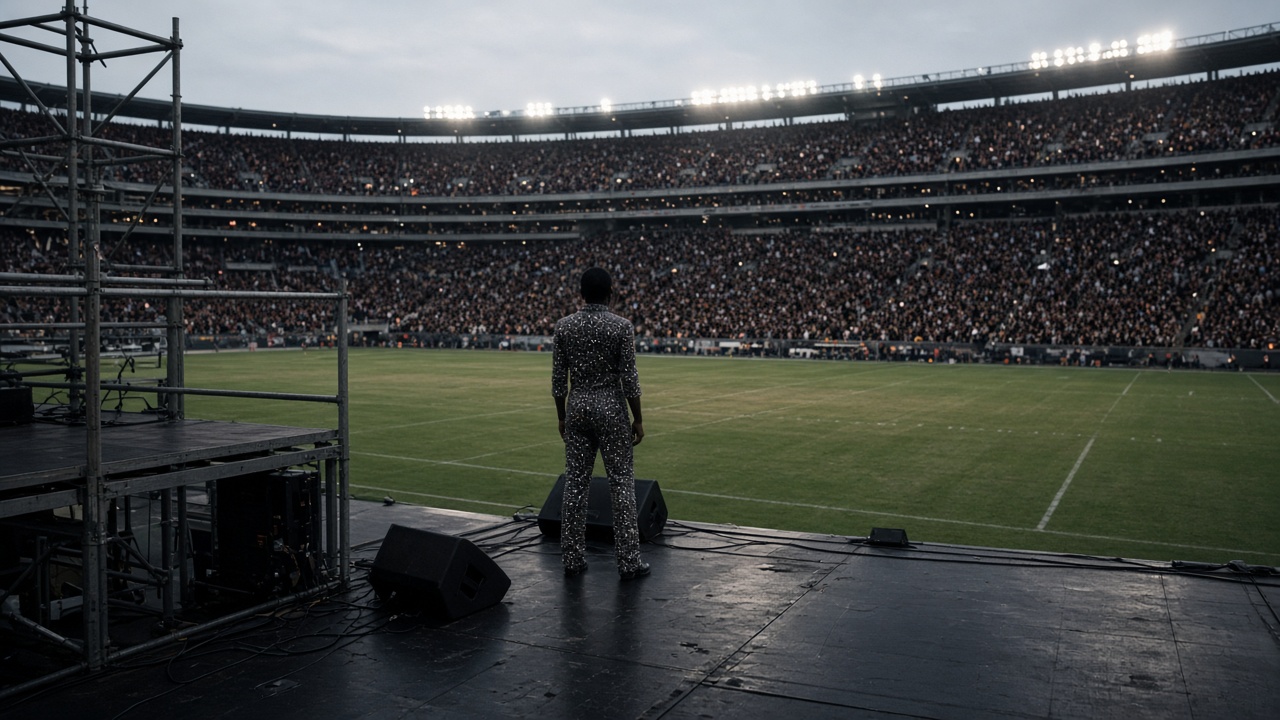
Kylie Minogue opened the AFL grand final with a 20-minute pre-game set that put Loco-Motion in front of a crowd of 100,023. By the time the night ended, the match had produced its own closing act: Brisbane kicked four goals in roughly four minutes to beat Fremantle 14.12 (96) to 12.17 (89).
The booking was not a halftime show. The AFL placed Minogue in the pre-match window, the slot before the first bounce, and built its broadcast around that segment. The entertainment was part of the match-day production, not a standalone concert with its own ticket. That matters for the question of who paid: the league owns the grand final production, and the audience paid through the match ticket and the broadcast rights that carry the grand final to homes around Australia.
Twenty minutes, one obvious hit
Minogue's set ran about 20 minutes, according to recap coverage, and Loco-Motion gave the AFL the one song that could make a pre-game crowd move before the football took over. The choice was a piece of scheduling as much as performance. A pre-game set has to finish on time; it cannot run into the coin toss, the anthem or the first bounce. A halftime show has a longer break but also a harder job: it must hold a crowd that has already watched a half of football and is waiting for the third quarter.
The AFL chose the earlier window. For Minogue, it was a short, high-visibility Australian stadium appearance. For the league, it was a controlled entertainment product that could be sold to broadcasters and sponsors without touching the match clock.
What the audience got
The crowd got a compact pop set and a match that will be remembered for its finish. Brisbane's late burst turned a tight grand final into a three-peat. Fremantle, chasing a first flag, led or stayed close for much of the night, but the Lions found four goals in the closing minutes. The final margin was seven points. The crowd of 100,023 saw both the pre-game spectacle and the collapse that followed.
That is the trade-off of grand final entertainment. The AFL buys a name, gets a fixed window and hopes the music becomes part of the day's memory. Sometimes the sport swallows it. Minogue's Loco-Motion was the opening beat; Brisbane's four-goal rush was the finish. The league paid for the first. The players delivered the second.
The business of the pre-game slot
For an artist of Minogue's profile, the pre-game slot is not a full concert and not a headline festival set. It is a television moment. The AFL controls the stage, the timing and the crowd. The artist gets reach: a grand final broadcast, a national audience and a song that can travel as a clip. The league gets a cultural name attached to its biggest day and a segment that can carry sponsorship messages.
The no-halftime-show decision also keeps the match as the main event. A halftime performance would have extended the break and created another production block. By using the pre-game window, the AFL kept the interval for analysis, ads and recovery. Minogue's job was to warm the crowd. Brisbane's job was to finish it.
The economics are straightforward even if the numbers are not public. The AFL sells the grand final as a broadcast and ticketed event. A pre-game act is a production cost inside that event. The return is attention: a named artist can draw viewers early, give sponsors a hook and create social clips. Minogue's fee, like most grand final entertainment deals, was not disclosed in the match reports and recaps reviewed. What is visible is the window: 20 minutes, pre-bounce, no halftime segment.
Minogue's Australian connection also matters for a local edition. She is a Melbourne-born pop star whose career began in the Australian music and television industry. Loco-Motion was her first major hit and remains a shorthand for her catalogue. For an AFL crowd in Melbourne, the song is familiar enough to work in a stadium and broad enough to carry a television segment.
By the final siren, the pre-game set had done what it was booked to do: fill the window, give the broadcast a pop moment and send the crowd into the first bounce. The match then produced a finish that no entertainment booking could match. Minogue opened with Loco-Motion. Brisbane closed with four goals. The AFL paid for the first; the scoreboard paid off the second.