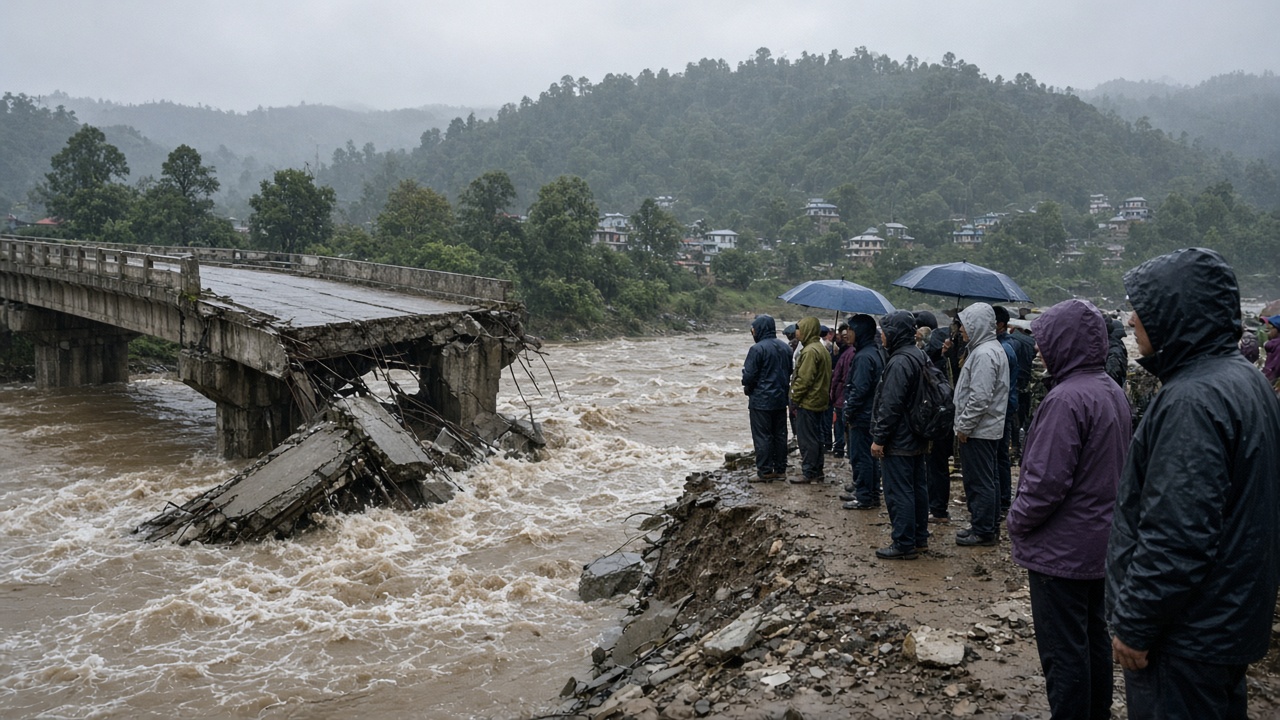
At least 21 people are dead and five remain missing after four straight days of heavy rain triggered landslides, flash floods, and river surges across Nepal, authorities said Sunday. Prime Minister Balendra Shah warned on social media that the danger has not passed, even as crews struggle to reopen highways into Chitwan and other districts cut off by fresh slides.
What the disaster agency reported
The National Disaster Risk Reduction and Management Authority said landslides accounted for 14 deaths and all five missing persons, while floods killed four people and pounding rain claimed three more. Five injured survivors were still in treatment Sunday evening. The agency counted 747 affected families, 143 homes destroyed, and 51 others partially damaged.
The rainfall followed a low-pressure system that moved out of the Bay of Bengal and parked over the Himalayas from September 24 through September 27, according to the authority’s weather summary. That pattern mirrors the setup that fed last month’s Bhotekoshi flash floods, which have left more than 1,450 people dead and thousands still unaccounted for along the Tibet border.
Rivers and roads under stress
Officials issued a high alert for communities along major river basins after landslides blocked several channels. The authority said debris dams on the Marsyangdi and partial blockages on the Kali Gandaki raised the risk of sudden downstream surges. Along the Narayani River in central Nepal, water crossed the nine-meter warning mark and entered the danger band Sunday morning, prompting evacuations for settlements downstream.
Baglung district officials confirmed four additional deaths from a separate landslide, national media reported. More than a dozen national highways remained impassable, including routes into Chitwan that serve as a cross-country transit hub. Flooding from the Narayani and Saptakoshi rivers inundated hundreds of houses in Nawalparasi West and Saptari districts, forcing families into temporary shelters.
Power cuts compound the response
Shah said flooding and tower collapses had disrupted 1,013.2 megawatts of electricity on the national transmission network, while hydropower projects totaling 318 megawatts were forced offline. Utility crews cannot fully assess damage until waters recede and access roads reopen, leaving hospitals and relief warehouses on backup supplies in several provinces.
International aid groups that surged after the August Bhotekoshi catastrophe said they were repositioning search teams and shelter kits toward the newly affected districts, but aviation slots remain tight because of cloud cover along the Kathmandu valley approaches. The government has not requested foreign military lift assets, two diplomats briefed on contingency planning said, but neighboring India has placed border district disaster units on standby.
What happens next
Forecasters expect intermittent showers through midweek as the low-pressure cell weakens, which could keep saturated slopes unstable. Shah urged residents in slide-prone ridges to move before nightfall when evacuation becomes harder. Parliamentarians from opposition parties demanded an accelerated early-warning rollout for secondary rivers, arguing that August’s death toll should have forced faster gauge installations on tributaries feeding the Narayani basin.
Recovery from the earlier border floods will now overlap with this week’s damage assessments, stretching forensic teams and DNA collection capacity. For families still searching for relatives from August, the new storms add another layer of uncertainty about when identification work can resume in the hardest-hit northern valleys.