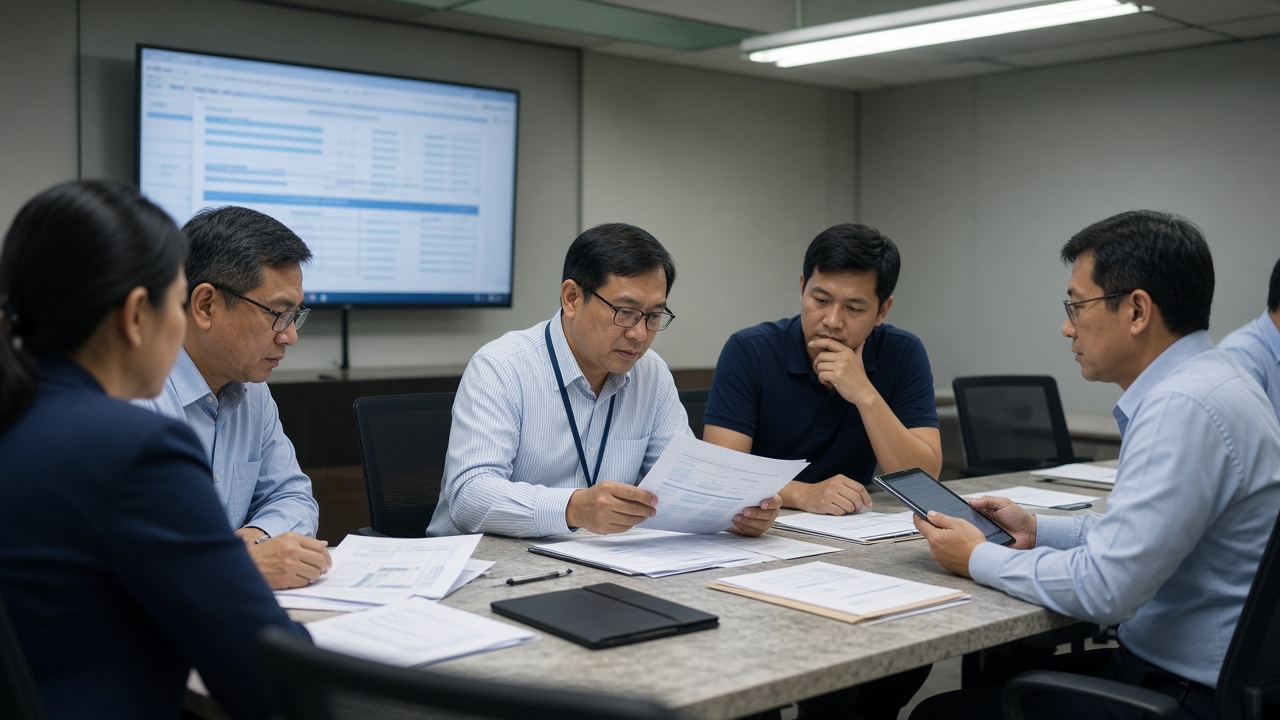
Singapore’s nuclear energy preparations are moving from the general to the particular. The government is reshaping its teams and stepping up hiring of specialists, with an external review of the country’s capabilities due in 2027. The work is being described as readiness, not a decision to build a plant. That distinction matters for how the issue will move through Singapore’s political and administrative system.
The latest signal came from Channel NewsAsia on 26 September, which reported that government teams are being reorganised and that specialist hiring is accelerating. The same report pointed to local training as part of the effort. Those are civil-service measures. They do not change the legal status of nuclear power, and they do not by themselves commit Singapore to a nuclear programme.
What the 2027 review is for
An external capability review next year is a stocktake. It is expected to assess whether Singapore has the people, processes and technical judgment to evaluate nuclear technologies and, if needed, regulate them. That is a different question from whether a reactor should be built. Capability reviews can conclude that gaps remain, that more hiring is needed, or that some options are not ready. They can also shape the next set of budget and manpower decisions.
For a small state with no nuclear power programme, the bench matters. Nuclear regulation, safety assessment, waste management and emergency planning are specialised fields. They take years to build. If Singapore waits for a plant decision before training people, it will be too late. The current hiring and team changes are an attempt to avoid that trap.
No vote yet
For now, the action is not on the Order Paper. It is in ministries, agencies and the public service. A nuclear power programme would eventually require legislation, a regulator with statutory powers, budget lines and parliamentary scrutiny. None of that is the same as a hiring round. The 2027 review is therefore best understood as a pre-decision gate: it determines whether Singapore can credibly assess the options, not whether it has chosen one.
That also shapes the politics. If the government later moves toward a formal programme, the question will shift from capability to consent. MPs will ask about siting, safety, cost and liability. Town councils and grassroots organisations may face questions if a site is ever proposed. The mechanism is not only technical. It is representative.
Why local training is central
The report notes local training alongside specialist hiring. That combination suggests a two-track approach: bring in experienced people now, while building a domestic pipeline for the longer term. External experts can advise, but they cannot substitute for resident regulators and engineers who know Singapore’s grid, land constraints and emergency planning systems.
Hiring is also a signal to the market. When the public service recruits nuclear specialists, universities and research institutes notice. Training programmes, scholarships and secondments tend to follow. The result can be a small but influential cluster of expertise that informs policy even if no plant is built.
What to watch before 2027
Several markers will indicate whether the readiness work is deepening.
First, headcount. If the government publishes clearer numbers for nuclear-related roles, that will show how far the build-out has gone. Second, institutional design. A dedicated office, agency or regulator would be a stronger signal than a dispersed team. Third, budget. Training and safety assessment need recurrent funding, not just a one-off study. Fourth, legislation. Any move to create a nuclear regulator or licensing regime would put the issue before Parliament.
The 2027 review itself will be a test of credibility. If it is conducted by respected external experts and its terms of reference are clear, it can provide a useful baseline. If it is opaque, it will not settle the question of whether Singapore is ready.
The wider energy context
Nuclear readiness is unfolding alongside other energy and climate decisions. Singapore has limited land, depends on imported fuel, and is exploring a range of low-carbon options. Nuclear is one option among several. The government has been careful not to pre-empt the outcome. That caution is politically useful: it avoids committing to an unpopular or expensive path before the technical case is clear.
But caution also has a cost. Without a visible decision, the public may not know what is being prepared for. The hiring and team changes are a clue. They suggest the government wants to keep the option alive and to be able to evaluate it seriously. Whether that becomes a programme depends on the 2027 review and on what ministers choose to do with it.
For now, the story is administrative. The people are being hired. The teams are being reshaped. The calendar has a date. The vote, if it comes, is later.