
At 2 pm on 25 September 2024, the Taxation Administration handed the July-August uniform invoice draw to SET iNEWS. Cameras rolled on the familiar ritual: numbered balls, hosts in suits, a drum that could belong to a game show. When the special prize appeared, the eight-digit winner was 38039158. Anyone holding a receipt or carrier record with that string for purchases in July or August 2024 had just become eligible for NT$10 million in cash.
Foreign visitors often treat the scene as local color, the quirky cousin of night-market games. Taiwanese colleagues treat it as bookkeeping. The same slip that might fund a vacation is also the proof that a shop recorded the sale for business tax. The lottery is not a side promotion stapled onto retail. It is how the state pays shoppers to enforce a tax that is already baked into the price.
The draw is public, timed, and repetitive on purpose. When every odd month brings another televised drum, merchants know customers will compare serial numbers. That rhythm is cheaper than sending auditors into every night market stall, and it scales with the same receipts that fund the prizes.
The number on a September afternoon
Uniform invoices cover most taxable sales on the island. Each bimonthly period closes, then winning numbers spill out in tiers: a NT$10 million special prize, a NT$2 million grand prize, a NT$200,000 first prize, then partial matches down to NT$200 on the last three digits. The July-August 2024 draw added a parallel cloud-invoice ladder with 30 separate NT$1 million numbers, 16,000 two-thousand-dollar winning numbers, 100,000 eight-hundred-dollar winning numbers, and 1,950,000 five-hundred-dollar winning numbers on top of the paper receipt game.
Matching rules cascade from the first-prize strings. Hit all eight digits and you take the headline award. Match only the tail and the prize steps down through NT$40,000, NT$10,000, NT$4,000, and NT$1,000 before the NT$200 sixth prize. The structure keeps hope alive on ordinary purchases: even a breakfast receipt can carry three digits that matter.
The Ministry of Finance publishes the list within hours. Convenience-store chat groups light up. Office workers flatten creased register slips on desk scanners. The Fiscal Information Agency later counted 113 electronic-invoice winners in the four headline tiers alone, sharing more than NT$226.8 million among them. The lower tiers paid out more than NT$2.6218 billion. Add the headline tiers and the period's cash awards cross NT$2.84 billion before smaller winners finish claiming.

Invoice number 38039158 will stand in for the whole machine in this story. You do not need to know what was bought. You only need to see what the state sees: a dated, numbered record tied to a registered seller.
A tax hidden in the total
Taiwan's business tax law treats most list prices as tax-inclusive. The rate band runs from 5 percent to 10 percent unless a sector gets its own schedule, with the Executive Yuan setting the collection rate inside that band. What you pay at FamilyMart already embeds the levy. The register receipt is the documentary evidence that the seller recognized the revenue.
Profit-seeking businesses must issue uniform invoices when they sell goods or services. Business-to-business sales use triplicate forms with a deduction copy for the buyer's return. Sales to individuals use duplicate invoices that hide the tax line but still feed the same reporting system. Skip the invoice and the transaction can vanish into a cash drawer even though the customer still paid tax-inclusive prices.
Regulations spell out when each format applies and what must appear on the face, from serial numbers to seller registration details. None of that is optional branding. It is the paperwork layer that makes the lottery numbers meaningful to tax officials and to neighbors comparing digits at lunch.
That gap is old. It is also measurable. When customers walk out without asking for proof, merchants can understate totals. When they ask, the sale leaves a serial number the tax office can match against filings. The receipt is less a courtesy than a tether.
Duplicate invoices for retail buyers hide the tax line but still enter the seller's books. Triplicate invoices for business buyers spell out tax separately so the purchaser can claim input credits. Either way, the serial number eventually meets the same lottery drum.
When the receipt was born with a prize
On 12 December 1950, Ren Xianqun, chief of finance for the Taiwan Provincial Government, drafted two linked rules: one standardizing profit-seeking enterprise invoices, another creating interim cash awards on those invoices. Both took effect on New Year's Day 1951. The Ministry of Finance museum states plainly why the lottery arrived the same day as the form: hope of winning pushed the public to request receipts, which helped prevent evasion and increased treasury revenue.
The printing plant that produced the first forms worked under wartime urgency. Museum records describe officials insisting on the original schedule so the decree would not slip. Each invoice had to show the seller's business administration number, address, and telephone alongside amounts and tax categories, turning a scrap of paper into a identity card for the sale.
Early invoices carried more than numbers. Patriotic slogans printed in the 1950s turned small purchases into propaganda slips. By 1975 the finance ministry added a mailing entry route to the lottery, then canceled it in January 1998 when postcards cost too much for the compliance they bought. Later rule changes added computer-printed forms and anti-forgery ink after tampering with winning numbers became a recurring enforcement problem, then electronic invoices after amendments on 31 December 2013.
The hope of winning the lottery prompted the general public to request receipts from profit-seeking enterprises, which, as a result, helped prevent tax evasion and increased the tax revenue of the national treasury.
Three percent buys a citizen audit
Today the engine sits in Article 58 of the Business Tax Act. The Ministry of Finance writes detailed award rules, but the funding principle is statutory: three percent of annual business tax revenue is set aside to pay invoice prizes. The law lists the purpose in the same breath: prevent evasion, maintain control of tax sources, promote uniform invoice use.
Collections grew as the economy did. Net business tax revenue was NT$283.9 billion in 2011 and NT$623.7 billion in 2024 before slipping to NT$615.9 billion in 2025. Three percent of the 2024 figure is roughly NT$18.7 billion, a ceiling for prizes in a year when a single two-month cycle already paid more than NT$2.84 billion. The draw calendar keeps pressure steady: on the 25th of every odd month, officials pull numbers for the previous bimonthly period, turning shopping seasons into recurring compliance deadlines.
The chart is the quiet part of the story. A richer economy means a larger prize budget without raising the three-percent rate. It also means more invoices in circulation, which is the point.
Between 2011 and 2024, net business tax collections rose from NT$283.9 billion to NT$623.7 billion before easing to NT$615.9 billion in 2025. The prize set-aside moves with that line. Merchants feel the pressure through customer behavior rather than through a new headline rate.
What one two-month draw pays out
Return to July-August 2024. The Fiscal Information Agency reported that cloud and printed certification copies together paid more than NT$2.84 billion. Most of that mass sits in small wins: second through sixth prizes still totaled more than NT$2.6218 billion. The headline electronic-invoice tiers, special through cloud millionaire, went to 113 winners splitting more than NT$226.8 million.
Seventy-two of the 113 top electronic-invoice winners stored tickets on digital carriers. That share matters for where the system is heading. Carriers feed the Ministry of Finance's e-invoice platform directly, trimming lost paper and making each purchase easier to audit.
The Fiscal Information Agency's table of carrier types shows mobile barcodes leading the count, with membership cards and donation codes trailing behind. Each path ends in the same ministry database, which is why the cloud ladder can add extra millionaire slots without changing the underlying tax rate.
Cloud invoices and the second lottery
Amendments in 2013 opened electronic uniform invoices; later rules defined cloud invoices stored on approved carriers without printing a certification copy. To push adoption, the ministry layered a second prize table on cloud-only numbers: extra million-dollar sets, 16,000 two-thousand-dollar winning numbers, and 1,950,000 five-hundred-dollar winning numbers in the July-August 2024 period alone. Regulations on cash-register invoices even warn that lost blank forms can lead to false prize claims, a reminder that the lottery only works when serial numbers stay honest.
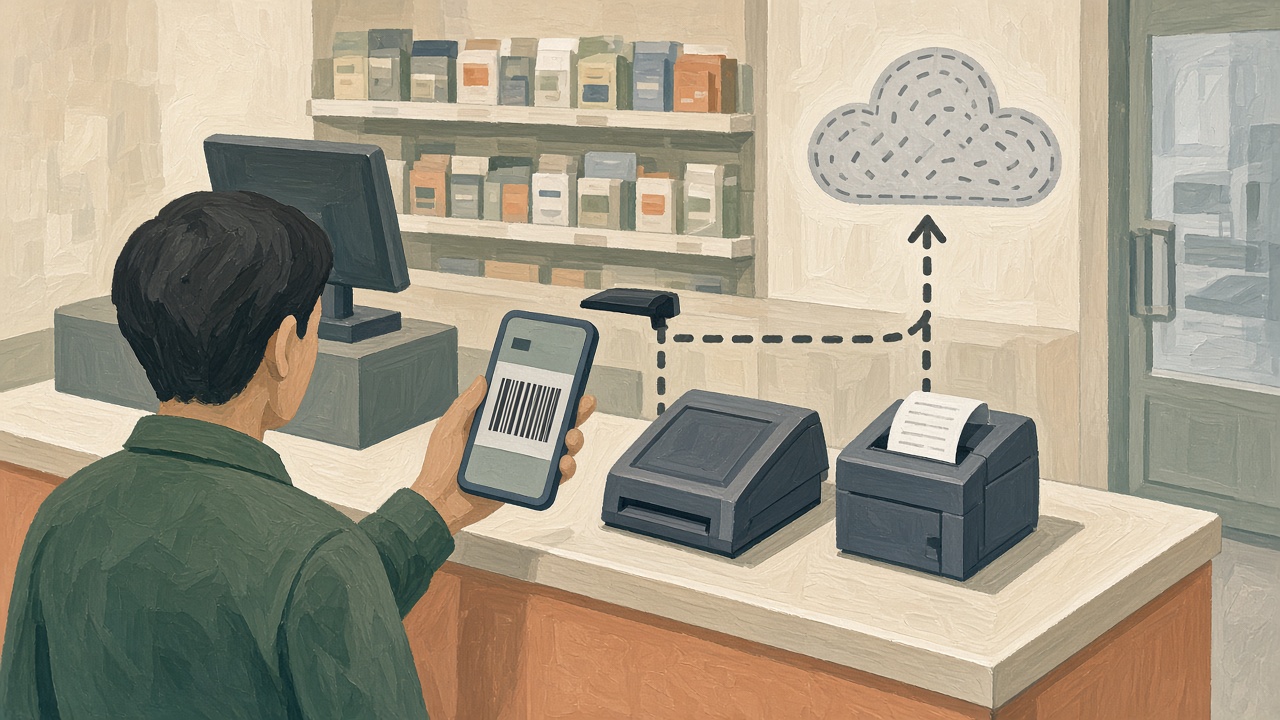
The cloud path does not replace the paper habit. It digitizes the same bargain: the state trades a chance at cash for proof that a seller reported the sale.
When the Taxation Administration commissioned SET iNEWS for the July-August 2024 draw, it was broadcasting more than luck. It was reminding sellers that buyers watch numbers, and that carriers upload those numbers straight into ministry systems. Invoice 38039158 was one line in that feed.
The jar on the kitchen counter
Critics call the setup a regressive lottery. They are half right about the math. List prices already include business tax whether or not you win NT$200 on the last three digits. A convenience-store coffee does not get cheaper because your invoice missed 38039158. The Ministry of Finance does not describe the prizes as a refund. It describes them as a reward for helping hold the line on evasion.
Fairness arguments rarely stop the draws. Participation is voluntary in the narrow sense that you could refuse the receipt, but you still pay the tax-inclusive price. Most shoppers take the slip because the expected value of a free lottery ticket beats the inconvenience of asking. That is the behavioral bargain Ren Xianqun wrote into the 1951 rules, still visible on SET iNEWS decades later.
That distinction is why the jar of folded receipts persists in Taipei kitchens next to the rice cooker. The slips are lottery tickets, yes. They are also the citizen side of a reporting chain written into law since 1951, funded by three percent of the tax they protect, and renewed every odd month on television.
Number 38039158 was one draw's headline. The next period's string is already printing at tax-inclusive checkouts across Taiwan, waiting for someone to ask, fold, scan, or store it. The prize may be unlikely; the audit trail is not.