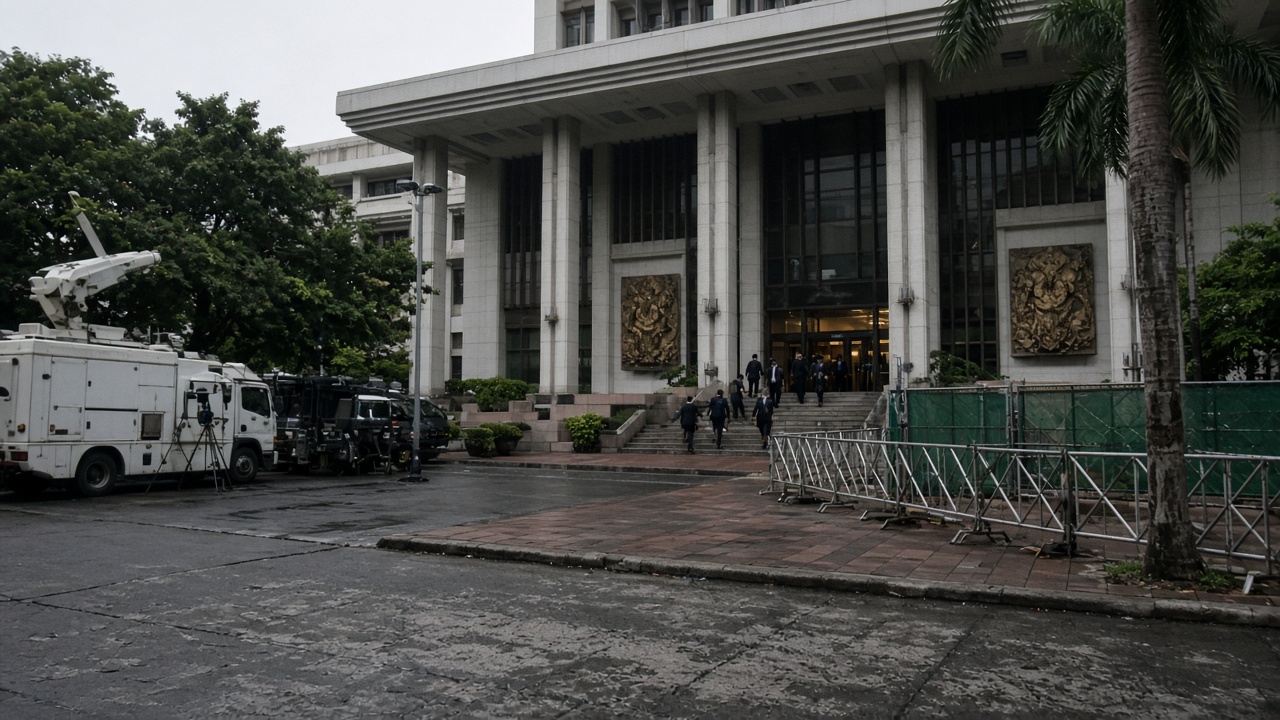
Thailand’s Constitutional Court will read its judgment at 2 p.m. Monday in Bangkok on whether barcodes and QR codes printed on February’s general-election ballots breached the constitution’s requirement that voting stay direct and secret. Prime Minister Anutin Charnvirakul’s seven-month-old government, every seat in the House of Representatives, and the Election Commission’s credibility all ride on how far the nine judges go beyond the technical dispute over ballot design.
What the court is deciding
The case, accepted on a 6–3 vote after the Ombudsman referred nationwide complaints, asks whether unique identifiers on party-list barcodes and constituency QR codes could trace individual voters and expose their choices. Petitioners say that possibility alone violates Sections 85 and related secrecy guarantees even if officials never matched codes to names. The Election Commission insists advance voting on February 1 and the February 8 poll used direct, secret ballots and that the codes were administrative tools, not voter fingerprints.
Witness hearings on August 26 included Election Commission secretary-general Sawang Boonmee, printing contractors, and a demonstration of how ballot papers were stored. Former commissioner Somchai Srisutthiyakorn, speaking to Thai media ahead of the ruling, said outcomes could span dismissal, a partial rerun, or full annulment of the nationwide result—each with different consequences for MPs’ status and cabinet continuity.
Monday’s schedule and the holiday clash
The court’s office said oral statements, deliberation and voting would begin at 9:30 a.m., with the ruling delivered at 2 p.m. and streamed on the court’s online channels. That timetable held even after the cabinet declared September 28–29 special public holidays because of severe flooding in Bangkok, arguing the hearing calendar had been set months ahead and shifting it would disrupt dockets booked through October.
Analysts outlined scenarios from a clean dismissal—leaving Anutin’s coalition intact—to a finding that voids all or part of the February poll, which would strip MPs of their mandates and force a fresh nationwide election in caretaker conditions. Partial remedies could order the commission to fix specific procedures without resetting the entire parliament.
Why the barcode fight matters beyond Bangkok
Thailand’s last contested election cycle already strained institutions; a rerun would reopen coalition bargaining while flood response drains fiscal and administrative bandwidth. Foreign investors watch constitutional rulings for precedent on whether electoral machinery can be unwound months after a peaceful transfer. Diplomats in Bangkok have quietly flagged the case in cable traffic because a voided poll would delay pending trade and infrastructure approvals tied to the current cabinet.
Whatever the court announces at 2 p.m., the commission and parties will have hours—not weeks—to interpret compliance orders before evening news cycles set the political narrative. Opposition groups have promised street mobilization if the petition is dismissed outright; government whips say they are ready to defend the February result in parliament if the court backs the EC. Until the judgment is read, no party has a reliable whip count for a snap election that is not yet legally ordered.