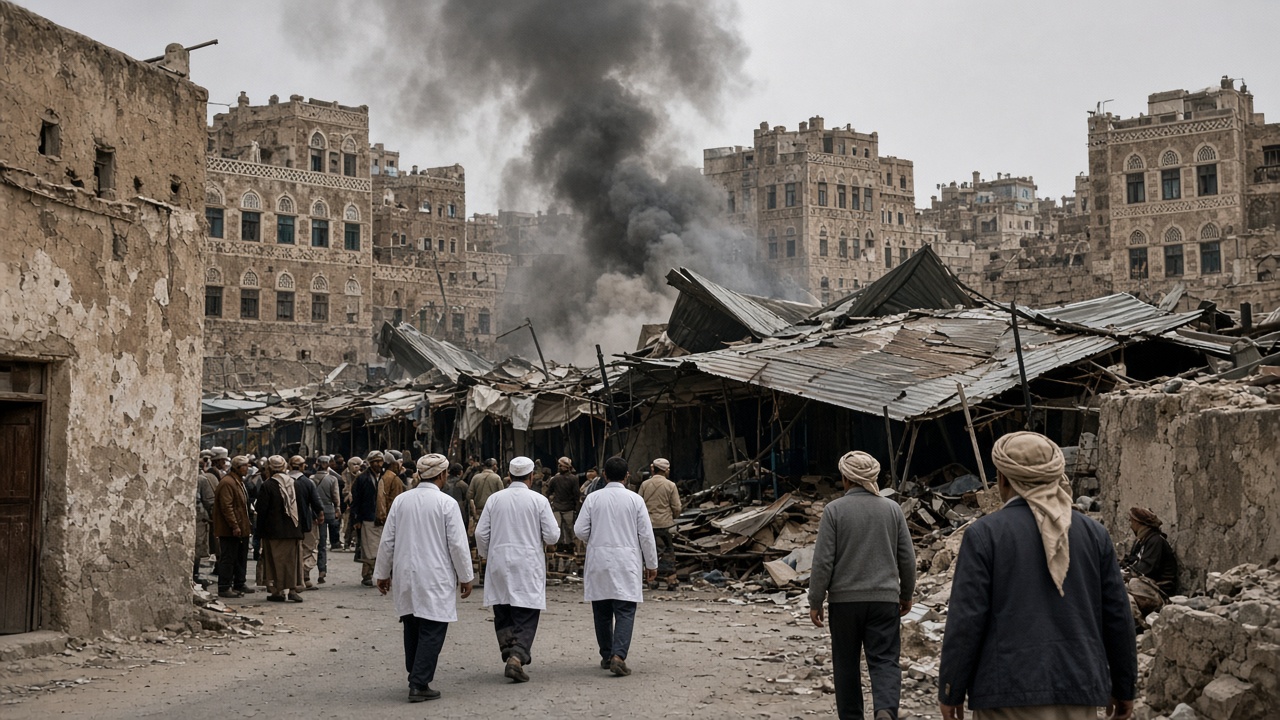
A market strike in Yemen’s Taiz governorate killed at least seven people on Sunday, Houthi-run health officials said, as the World Health Organization reported that nearly 700 people have died across the country since fighting escalated again last month.
Esam al-Asbahi, a spokesman for the Houthi-affiliated health authority, said government-aligned forces hit shops in the Taiziyah district market. Saudi-backed Yemeni officials have not issued a matching account of the incident, and front-line claims in the civil war are often impossible to verify independently.
Red Sea coast battles drive the toll
The WHO figure captures the human cost of renewed clashes along Yemen’s Red Sea coast, where forces aligned with the internationally recognized government have tried to roll back Houthi gains made in recent weeks. Aid groups say hospitals are overwhelmed and supply lines are fraying in several governorates.
Displacement camps that were already crowded before August have taken in tens of thousands more families, according to U.N. agencies. UNICEF and other relief bodies have warned that children account for a large share of the newly displaced, many of whom sleep in schools or unfinished buildings without steady water.
Sunday’s market deaths landed in Taiz, a long-contested highland governorate where front lines have shifted for years without a durable settlement. Traders who survived the strike described a brief lull in shelling before the blast, a pattern residents say has made it impossible to plan restocks of grain and fuel.
How Sunday fits the wider war
The Yemen war pits Iran-backed Houthis against a coalition that includes Saudi Arabia and the United Arab Emirates. A 2022 truce expired without a full peace deal, and periodic flare-ups have continued even as global attention shifted to conflicts elsewhere in the Middle East.
Health workers in Houthi-held areas have repeatedly warned that airstrikes and artillery are hitting civilian infrastructure. Government supporters counter that the Houthis use populated areas as cover. Neither narrative resolves the immediate question for traders in Taiziyah: whether it is safe to reopen stalls that feed the governorate’s mountain towns.
What monitors are watching next
U.N. mediators have urged both sides to protect civilians and reopen humanitarian corridors. With the WHO tally still climbing, relief officials say they need secure routes for food and medicine into Taiz and the western coastal strip.
Regional diplomats are also tracking whether outside powers that arm the rival camps will press for a new pause. European and Gulf envoys have renewed calls for a return to U.N.-brokered talks, though none have announced a fresh round of negotiations.
For now, Sunday’s strike is a reminder that even localized market violence can add to a national death count that aid agencies already describe as catastrophic. WHO officials said they are working with local partners to verify hospital records before publishing a final breakdown by governorate, a process that could take days as communications links fail across the front.