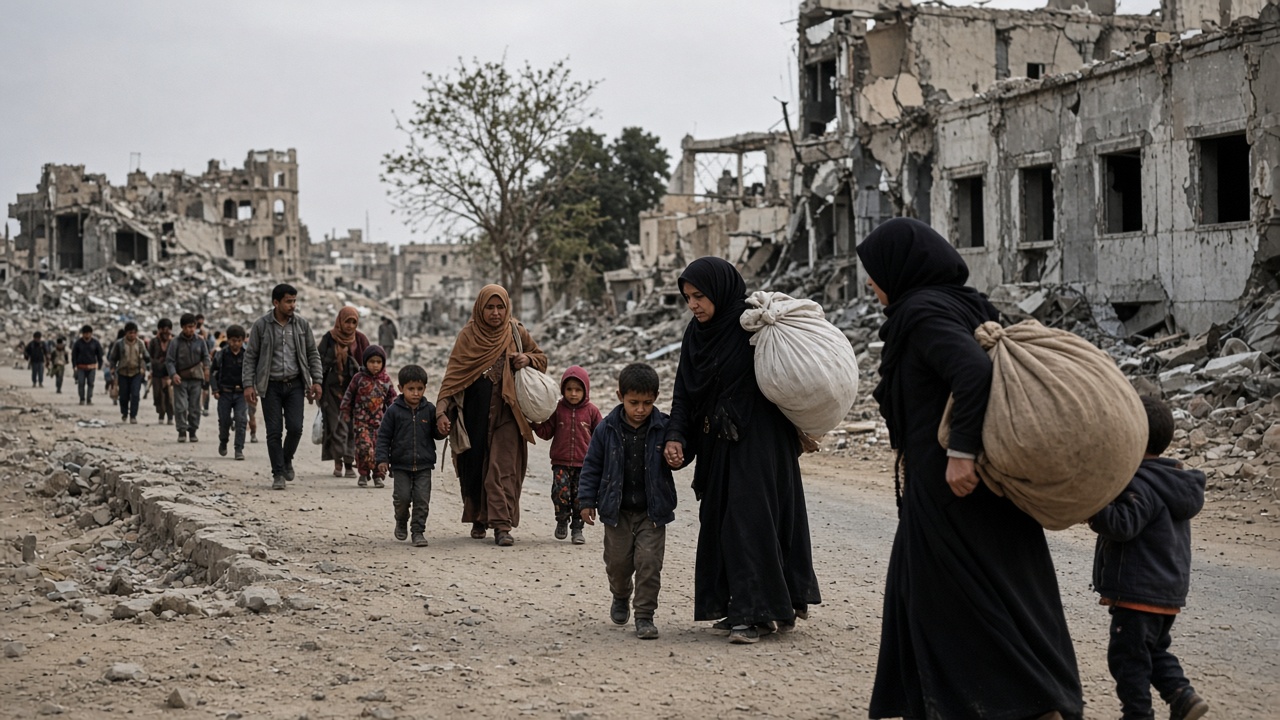
Fighting in southwestern Yemen has uprooted more than 130,000 people in the past three weeks, most of them from or within Taiz governorate, according to Akhil Iyer, UNICEF’s representative in the country. The tally landed on Sunday as Yemen’s internationally recognized government said its forces had widened air and ground strikes against Houthi positions around Taiz city, and as the Saudi-led coalition reported new missile and drone intercepts over the kingdom’s capital region.
What changed on the ground
The government’s Military Media Centre said operations in the last 24 hours had killed or wounded dozens of Houthi fighters, including field commanders, in districts ringing Taiz. Independent verification of battlefield claims is limited, but humanitarian agencies say the tempo of movement matches a sharp rise in civilian flight from the governorate.
Iyer told reporters that displacement is concentrated in Taiz, where front lines have shifted repeatedly since early September. UNICEF said it had verified that at least 15 children were killed and 14 injured across Yemen since the start of the month, with three children still reported missing. Those figures do not capture every incident in active combat zones, the agency cautioned, but they mark an acceleration compared with earlier weeks of the wider regional war.
Spillover toward the Gulf
The conflict’s reach beyond Yemen’s borders showed up again early Saturday when coalition spokesman Brig. Gen. Turki al-Malki said air defenses destroyed two ballistic missiles and two drones launched by the Houthis toward Riyadh and Khamis Mushait. Saudi authorities have not reported casualties from those intercepts, but the attempted strikes keep pressure on Gulf capitals that host U.S. and European military assets tied to the campaign against Iran and its proxies.
France confirmed Friday that it would send troops to help guard the oil terminal at Yanbu on Saudi Arabia’s Red Sea coast, stressing that the deployment was defensive and not a entry into Yemen’s ground war. Yanbu sits at the western end of the East-West Pipeline, which can move millions of barrels per day when fully operational. A drone attack attributed to an Iraq-based group had already damaged portions of that pipeline network, underscoring how Yemen’s fighting interacts with energy infrastructure hundreds of kilometers away.
What aid agencies are watching
UNICEF and other UN bodies have warned for months that Yemen’s health and nutrition systems were brittle before the latest escalation. Iyer’s displacement estimate suggests families are moving faster than agencies can register them for shelter, clean water, and pediatric care. Many displaced households are reportedly living with host communities or in informal sites without full services.
Negotiations aimed at pausing the wider U.S.–Israel war with Iran have absorbed diplomatic bandwidth in New York and the Gulf, but Yemen’s local battlefields have not stood still. Houthi leaders continue to frame strikes on Saudi territory as retaliation for the coalition’s campaign, while the recognized government in Aden portrays the Taiz offensive as reclaiming territory lost to the group over years of stalemate.
What happens next
Humanitarian officials said Sunday they would try to pre-position supplies along routes out of Taiz, but access depends on security guarantees both sides rarely grant for long. Military spokesmen on each side promised further operations, suggesting displacement could climb again before any localized pause takes hold. For families already on the move, the immediate question is not which capital wins the argument at the United Nations, but whether the next convoy out of Taiz can reach a camp with functioning clinics and schools.