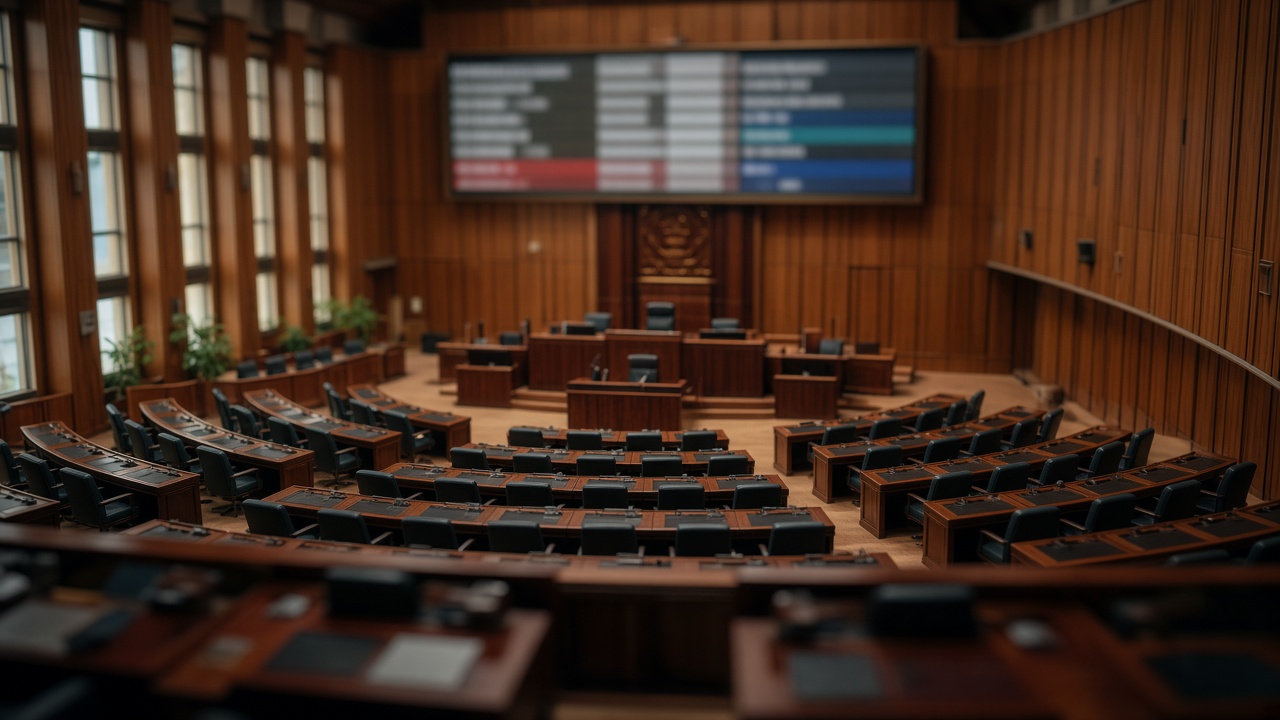
The ruling Democratic Party said Monday it will convene an extra National Assembly session this week to move a semiconductor subsidy bill toward plenary debate before October’s supplementary budget vote, escalating a standoff with the People Power Party over audit triggers and domestic equipment quotas. Floor leaders told Yonhap they want the bill’s tax credits and loan guarantees on the calendar while chipmakers finalize U.S. and Mexico investment pledges tied to Lee’s recent trips.
Bill contents in dispute
The draft extends R&D super-credits for advanced packaging lines, creates fast-track environmental reviews for fab expansions in Yongin and Pyeongtaek, and ties part of subsidies to purchases from Korean tool vendors rather than wholly imported lines. Opposition lawmakers argue the local-content rules distort competition and could invite World Trade Organization challenges; the government counters that taxpayers should see domestic job creation when underwriting memory giants.
A controversial clause would empower the Board of Audit and Inspection to review subsidy recipients if export revenue misses targets for two consecutive years—a guardrail ruling-party members pitched after prior scandals involving mis-stated investment timelines. PPP leaders called that clause a political weapon and vowed filibuster threats unless it is removed.
Budget linkage
Trade ministry officials want chip subsidies authorized before supplementary budget lines allocate cash to municipal infrastructure supporting fab buses and power substations. Without legislative cover, they said some 2026 fab milestones could slip, a talking point Samsung and SK hynix lobbyists repeated in background briefings though neither company filed formal comments Monday.
Fiscal conservatives in both parties note Korea’s debt trajectory and ask whether new credits should wait until U.S. tariff negotiations settle. Ruling-party economists replied that delaying subsidies risks losing tool delivery slots to Taiwanese rivals expanding abroad.
Political timing
The extra session lands as DMZ security hearings compete for airtime and as Han Dong-hoon’s opposition bloc pressures the government on probe transparency. DP strategists hope a pro-jobs chip vote blunts security critiques before local election positioning heats up. PPP strategists aim to paint subsidies as corporate welfare unless audit triggers stay.
Foreign embassies watch for localization rules that might affect their equipment exporters; U.S. officials have privately urged clarity on how credits apply to American toolmakers with Korean joint ventures.
What happens next
Committee chairs must publish amended text by Wednesday for a possible Thursday plenary slot. If PPP boycotts, DP lacks unilateral quorum for contentious votes—a scenario that would push chip credits into November and embarrass a president who campaigned on tech sovereignty.
For voters in Yongin apartment complexes watching fab construction dust, the fight is not abstract: subsidies shape traffic plans, school seats, and power bills. The Assembly’s extra session is where those trade-offs get priced, not in summit MOU footnotes.
Industry lobbying and public hearings
Chip equipment makers packed committee galleries last week demanding clarity on whether refurbished import tools qualify for credits; MOTIE aides promised guidance memos before the plenary vote. Environmental groups submitted petitions on water recycling at fabs, seeking binding targets absent from the current draft. DP leaders said they may accept opposition amendments on audit triggers if PPP drops blanket obstruction, hinting at a narrow compromise path.
Market analysts told clients that failed votes would not immediately crater Samsung or SK hynix shares—both have balance-sheet cash—but could delay municipal bond issues for power lines, hurting construction jobs ruling-party lawmakers need in Gyeonggi swing districts.
Timeline pressure
DP floor leader staff said they will keep the Assembly open late Thursday if needed to beat a Friday holiday adjournment, a schedule gamble that depends on PPP attendance. Foreign investors scanning Korean political risk feeds treat chip-law delays as secondary to DMZ headlines, yet bond traders said failed votes could widen provincial infrastructure spreads tied to fab zones.
Civil society groups want public comment windows on environmental waivers; DP negotiators offered forty-eight hours of online testimony, a concession PPP members said is inadequate but better than no hearing. The week’s outcome will show whether tech subsidies are must-pass legislation or bargaining chips in a broader security-and-budget standoff.