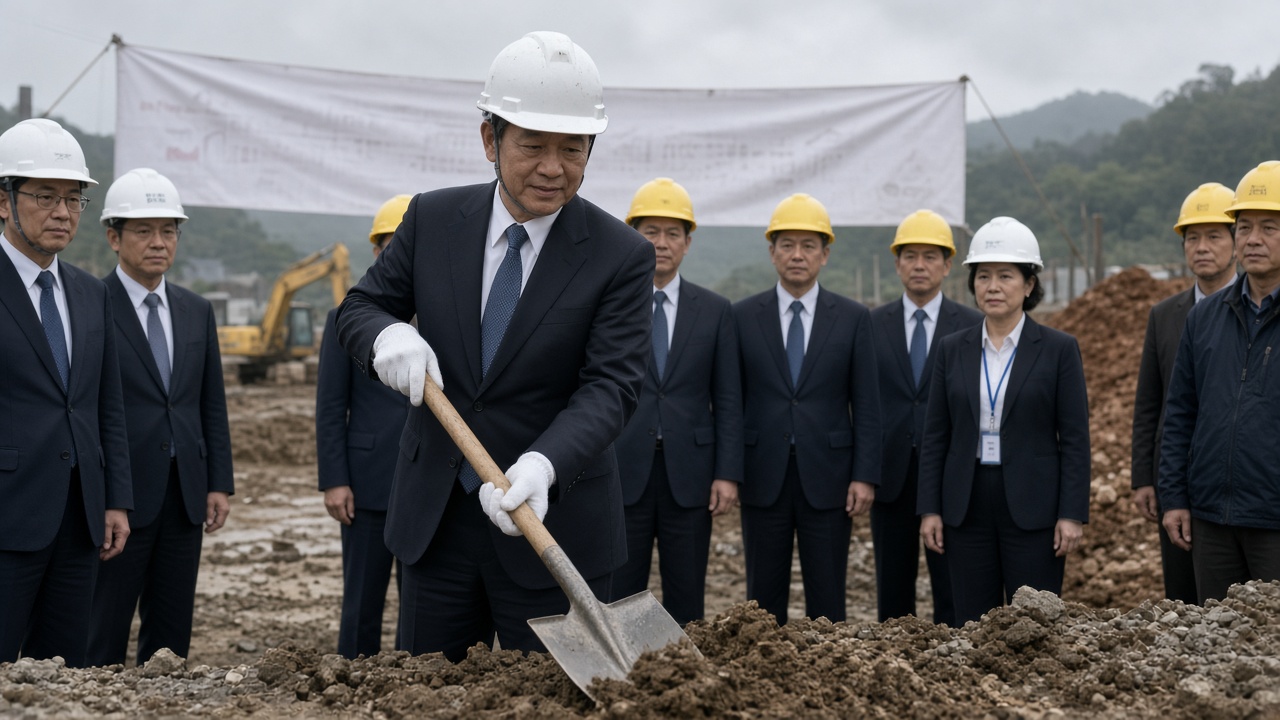
President Lai Ching-te broke ground Monday on a drone industrial park in Chiayi County, telling officials that Taiwan must deepen cooperation with democratic partners on unmanned systems that have reshaped modern battlefields. The ceremony in southern Taiwan came as the defense ministry reported fresh Chinese military activity around the island and Taipei officials continued to parse language from last week’s U.S.–China summit in Washington.
Lai said the Chiayi site will host research, testing, and production lines for commercial and dual-use unmanned aircraft, with the government pitching tax incentives and export licensing support for companies that meet allied security standards. He argued that Taiwan’s semiconductor supply chain gives local drone makers an edge in guidance chips and sensors, but that the island still needs foreign partners for engines, secure communications, and battlefield integration know-how.
Defense spending and allied supply chains
Taiwan has raised defense budgets and accelerated domestic weapons programs as the People’s Liberation Army increases patrols around the island. The Ministry of National Defense said that as of 6 a.m. Monday it had tracked three PLA aircraft, five navy vessels, and four official ships operating near Taiwan, with one aircraft crossing the median line into the northern air defense identification zone. The ministry said ROC forces monitored the activity with combat air patrols, navy ships, and coastal missile systems.
Lai linked the Chiayi park to that wider posture, saying drones are no longer niche gadgets but core tools for surveillance, targeting, and damage assessment. He did not name specific foreign firms at the groundbreaking, but economic officials said they expect U.S., Japanese, and European suppliers to explore joint ventures once export-control reviews clear.
Summit fallout in Taipei
The drone announcement unfolded against diplomatic anxiety in Taipei over how President Donald Trump and Chinese leader Xi Jinping framed World War Two cooperation in a White House fact sheet after their meeting. Deputy Mainland Affairs Council minister Shen Yu-chung said Beijing is trying to steer the historical narrative in ways that marginalize Taiwan’s wartime role and could soften U.S. support for the island.
U.S. Ambassador to China David Perdue told reporters that American policy toward Taiwan is unchanged and that Washington continues to oppose both Taiwanese independence and coercion from Beijing. He said the Trump administration has approved $11 billion in arms sales to Taiwan and is discussing additional packages. Taiwan’s de facto envoy to Washington, Alexander Yui, said on U.S. television that the island’s role as an advanced chip supplier creates a “symbiotic relationship” with the United States that should underpin security ties.
What happens next in Chiayi
County officials said the first construction phase will focus on hangar space, electromagnetic-quiet test ranges, and a training center for operators and maintenance crews. They expect the park to open partial facilities in late 2027, pending environmental reviews and land transfers from state-owned enterprises.
Opposition lawmakers have asked the Executive Yuan to detail how drone exports will be screened to avoid technology leakage to Chinese front companies. The Lai administration said it will use the same end-user monitoring rules that apply to missile components and that allied intelligence sharing will flag risky buyers.
For residents near the Chiayi site, the project promises construction jobs and higher land values, but also noise from engine tests. Local farmers’ associations said they want binding schedules for flight demonstrations so crop-dusting operations are not disrupted during harvest season.