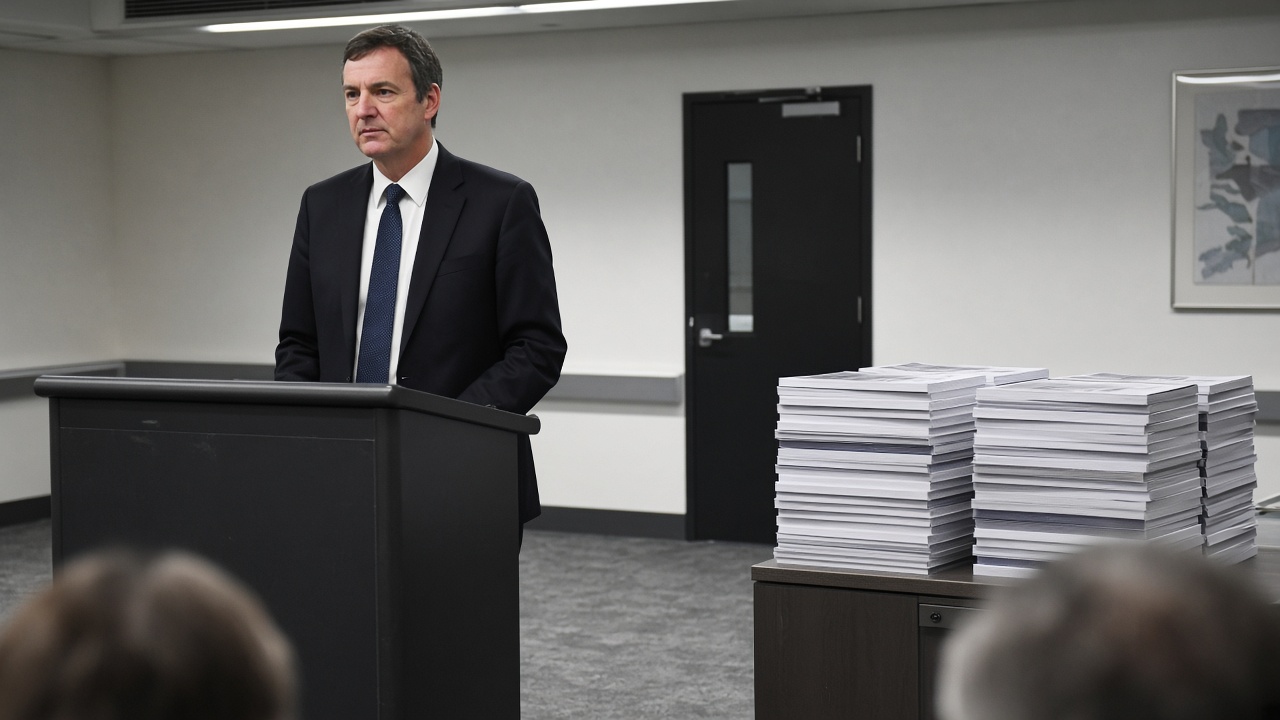
Treasurer Jim Chalmers tabled the 2025-26 final budget outcome in Canberra on Monday morning, telling reporters the underlying cash deficit landed about six billion dollars better than the May budget forecast while warning that higher global bond yields will still inflate Commonwealth interest bills.
The Finance Department documents show the government closed the financial year with a narrower underlying shortfall than the $28.3 billion projected at budget time, a result Chalmers attributed to stronger revenue and spending restraint rather than new taxes. Headline figures that include one-off programs remain larger, but Treasury officials said the improvement is concentrated in programs that feed directly into the medium-term fiscal strategy Labor took to the election.
What moved the number
Corporate tax collections held up as commodity prices stayed elevated through the June quarter, while personal income tax receipts benefited from a labour market that was still tight even as unemployment drifted toward 4.6 per cent in August. On the spending side, delays in some NDIS and infrastructure payments reduced cash outlays in the final months of the year, though Chalmers cautioned those bills can simply shift into 2026-27.
Net debt and gross debt trajectories were left broadly unchanged in the outcome statement, with officials emphasising that the improvement is measured against May’s forward estimates rather than a return to surplus. Chalmers repeated that Labor has delivered two surpluses earlier in the term and argued Monday’s books demonstrate “responsible economic management” ahead of a Reserve Bank board meeting that markets expect will lift the cash rate to 4.60 per cent on Tuesday.
Political and market read-through
Opposition finance spokespeople seized on the timing, arguing the government is highlighting a one-year upgrade while the Intergenerational Report’s hypothetical tax cap implies a much larger hole over the decade. Chalmers declined to reopen May’s surplus pathway on Monday, saying productivity and ageing pressures remain the dominant long-run risks.
Commonwealth bond traders were focused less on the six-billion-dollar upgrade than on how much extra borrowing cost the Treasury will book when it updates MYEFO. Chalmers flagged that work for later in the year, noting that US and European yield moves have already added billions to projected interest expenses. For ASX investors, the outcome is a mild positive for the fiscal outlook but does little to change near-term rate expectations embedded in bank bill futures.
What households should watch
The final outcome does not alter scheduled stage-three tax cuts or Medicare levy settings, but it does set the baseline for any pre-election cost-of-living package. Economists at the major banks said the upgrade gives Chalmers a small buffer if growth slows after Tuesday’s expected rate rise, though they warned against treating a single-year beat as proof that inflation is beaten.
Chalmers will face Senate estimates later this week, where Coalition senators are likely to press for line-by-line explanations of the NDIS and defence underspends that helped the beat. Departments were instructed to publish agency-level reconciliations by Friday so Parliament can see whether the beat reflects durable savings or timing tricks.
For households, the outcome is mostly background noise compared with Tuesday’s rate decision. Still, the beat gives the government a talking point in a week when mortgage holders are bracing for another quarter-point increase. Chalmers insisted he would not pre-empt the board, but he repeated that fiscal policy is doing its share through savings legislated since 2022. The treasurer’s message is simple: the books are a bit better than feared in May, but not better enough to take pressure off the RBA as it begins two days of deliberations in Sydney.