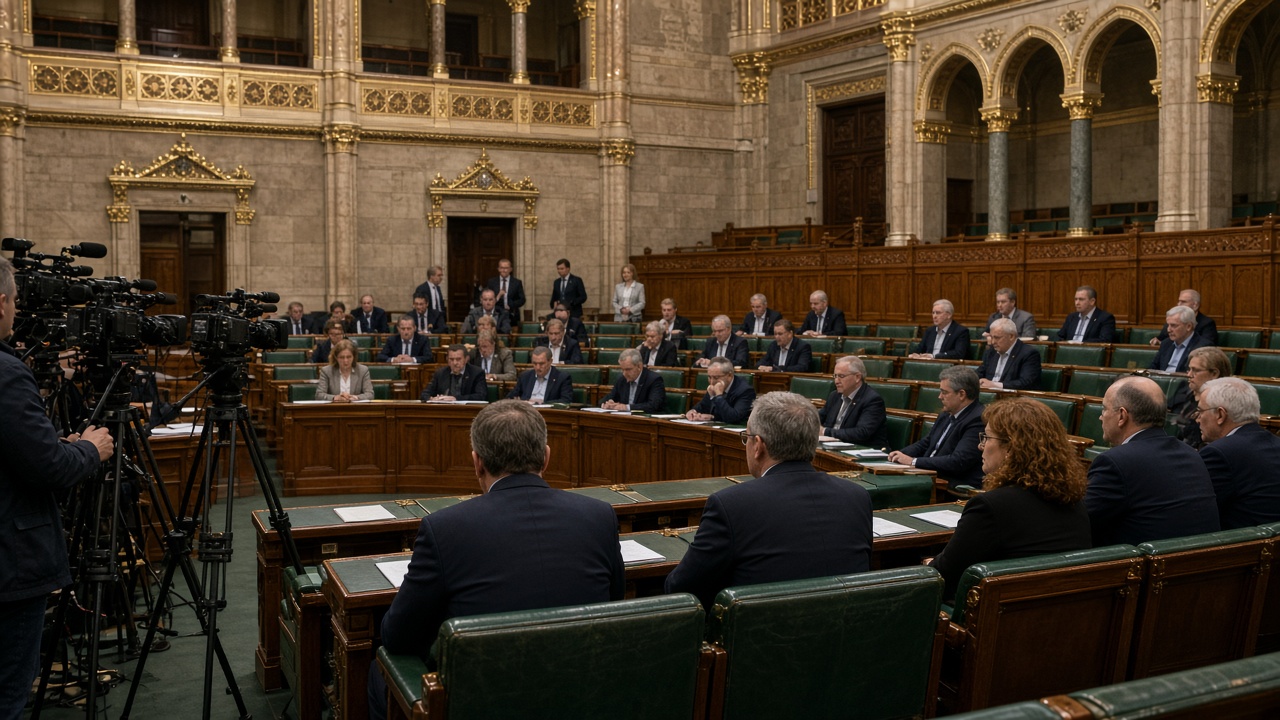
BUDAPEST — Hungary’s parliament voted on Monday to lift the immunity of Prime Minister Peter Magyar and two ministers from Viktor Orban’s former government, clearing prosecutors to pursue separate criminal cases that reach from the prime minister’s office into the culture and transport portfolios of the ousted Fidesz era.
The ballot followed requests from the chief prosecutor’s office and came with unusual symmetry: Magyar, who faces a theft investigation, had asked lawmakers to strip his own protection so he could answer what he called a politically motivated “character assassination.” Prosecutors simultaneously sought permission to investigate former culture minister Balazs Hanko and former national development minister Miklos Sesztak over embezzlement and bribery allegations tied to public contracts.
What prosecutors allege
Authorities have not published full indictments, but parliamentary debate and Hungarian media reporting outline the contours of each file. Investigators examining Hanko are said to be tracing more than 40 million euros in public funds they believe were diverted to benefit the 2026 election campaign and private interests. The Sesztak probe centres on vehicle procurement at a state bus company, with prosecutors alleging more than $37 million in bribes and kickbacks.
Magyar’s case is narrower in the public record — a theft charge the prime minister denies — yet it carries the highest political voltage. Since Tisza’s landslide win in April ended Orban’s 16-year premiership, Magyar has framed corruption prosecutions as the price of restoring rule-of-law credibility with Brussels and with voters who backed his anti-graft platform.
Orban’s party pushes back
Fidesz lawmakers voted against lifting immunity for the two former ministers and accused the new government of selective justice. Orban allies argue that opening criminal files against senior figures from the previous administration while Magyar seeks a public vindication risks turning the judiciary into a score-settling tool. Government spokespeople counter that the cases were prepared by an independent prosecution service and that Magyar’s willingness to face investigation sets a different standard than the impunity claims that dogged the prior decade.
European Union officials have watched Budapest closely since the election. Several frozen cohesion payments were tied to concerns over judicial independence and procurement transparency under Orban. Magyar’s team has promised a dedicated asset-recovery unit focused on alleged wrongdoing from the Fidesz years; Monday’s votes are the first time sitting and former cabinet-level figures from opposite sides of Hungary’s recent political earthquake are simultaneously exposed to criminal process.
What happens next
Prosecutors can now summon witnesses, seek warrants, and move toward formal charges without seeking another parliamentary waiver. Magyar has said he will cooperate fully to disprove the theft allegation. Hanko and Sesztak have not detailed their legal strategies in public statements reviewed by InfoHandle, though Fidesz channels have portrayed the probes as retaliation.
Constitutional lawyers note that immunity removal is not a conviction — it is a procedural gate — but in Hungarian politics the imagery matters. A prime minister who campaigned on cleaning up Orban-era contracts is now himself inside a criminal file, while two of Orban’s most visible ministers face the prospect of trials that could air years of spending decisions in open court.
Parliament returns to economic legislation later this week, including budget lines linked to EU recovery funds. Diplomats in Brussels said Monday’s votes will be read as an early test of whether Magyar can pursue corruption cases without triggering a constitutional crisis at home or a fresh freeze on European money.