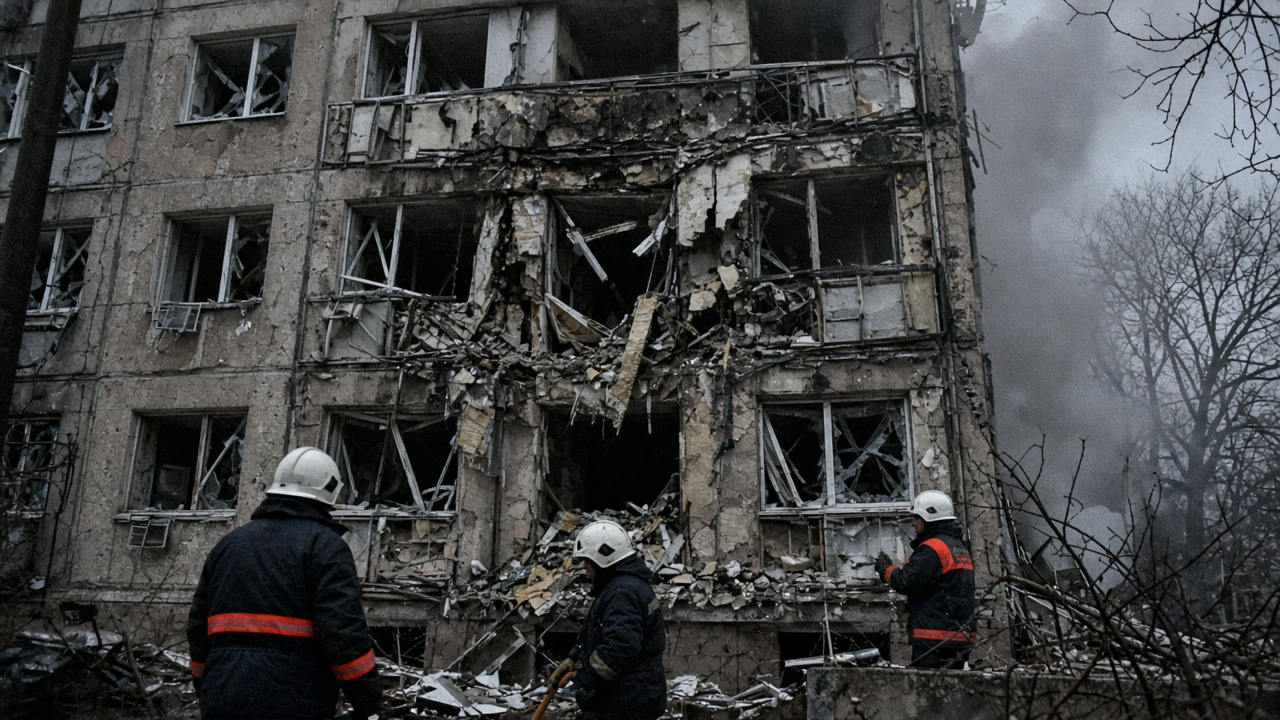
Russian President Vladimir Putin is trying to compel Ukraine to capitulate by the spring of 2027 by intensifying combined air strikes rather than settling into an open-ended bombardment, the Institute for the Study of War concluded in an assessment published Monday as attacks across Ukraine killed at least eight people and wounded dozens more.
The Washington-based think tank said the Kremlin likely views the current escalation—record drone salvos, massed glide bombs and periodic missile volleys—as a timed pressure campaign. Analysts wrote that Putin probably does not expect an endless air war to grind on for years, but instead hopes sharper, more frequent strikes will erode Kyiv’s ability to defend cities, exhaust Western patience and force political concessions before the next U.S. electoral cycle fully resets the battlefield.
What the week’s numbers show
Ukrainian President Volodymyr Zelenskyy said Sunday that Russia had launched more than 2,200 attack drones, 1,630 glide bombs and 38 missiles of various types against Ukraine in the preceding seven days. The tally landed as rescue crews pulled bodies from damaged housing in Sumy, where authorities said a strike on a children’s centre killed three people, including a 16-year-old girl, and as Kharkiv officials reported 22 injuries from a glide-bomb hit on an apartment block.
ISW tied those figures to its broader argument: Moscow is not merely probing air defenses but attempting to normalize a pace of strikes that outstrips repair crews, power engineers and civil-defense budgets. The institute noted that Ukrainian forces have answered with deeper strikes on Russian energy infrastructure, including reports Monday of a fire at the Pavlovskaya oil depot in Russia’s Krasnodar region after a drone attack.
Why spring 2027 matters to planners
The spring 2027 horizon matters because it sits just beyond the next U.S. midterm elections, a period when American military aid packages and diplomatic attention often narrow. ISW argued that Putin may believe a sustained aerial punishment regime through 2026 could leave Ukraine negotiating from weakness even if front-line ground advances remain incremental.
Zelenskyy, speaking after Monday’s strikes in central Kyiv, warned that deepening military cooperation among Russia, Iran and North Korea was feeding a global ballistic-missile threat. He said Ukraine and European partners were developing a joint anti-ballistic system called Freyja that could be operational within 12 months—a timeline that overlaps with ISW’s 2027 capitulation window and underscores how both sides are racing clocks, not just maps.
What comes next
U.S.-led diplomacy to end the war has yet to produce a durable ceasefire, and the United Nations continues to document rising civilian casualties. For now, the ISW assessment gives Western capitals a blunt framing question: whether the current strike tempo is a prelude to negotiations or the opening phase of a two-year coercion strategy aimed at a formal Ukrainian surrender. Kyiv’s answer, on the ground and in procurement offices, will be measured in interceptors, generator shipments and how many Mondays begin under uninterrupted air-raid alerts.