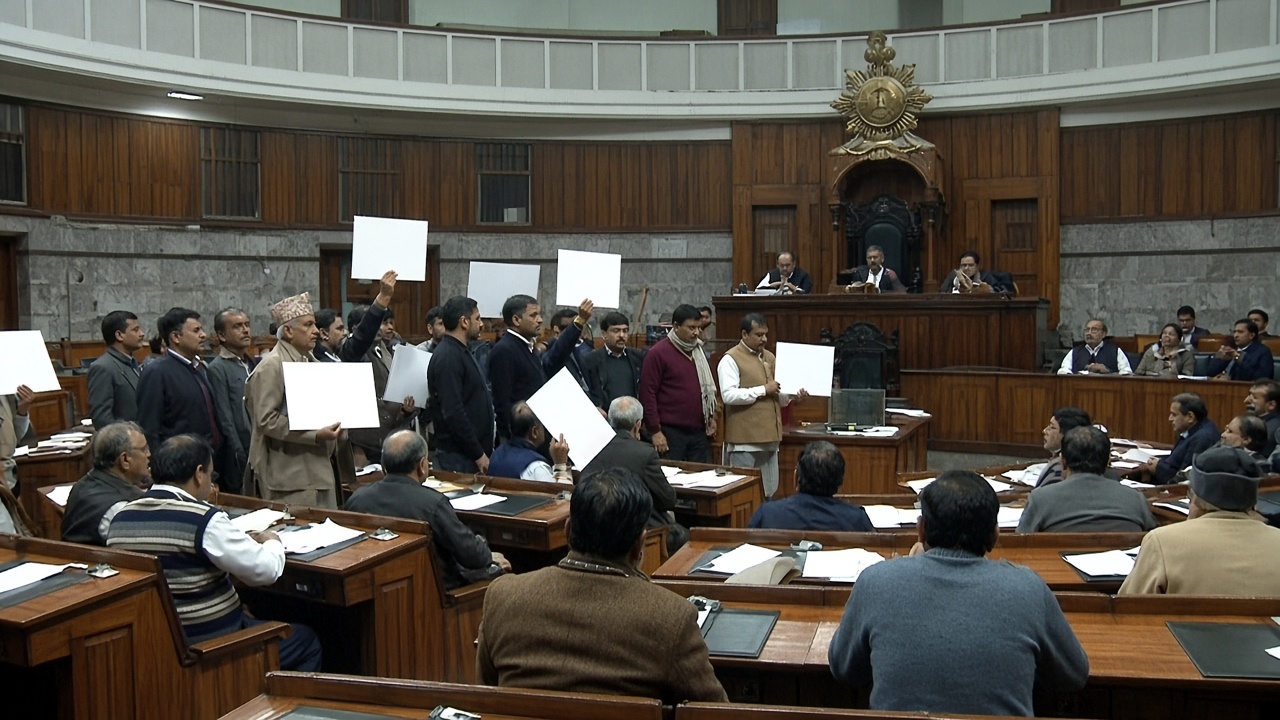
The Jammu and Kashmir Legislative Assembly on Monday adopted a resolution calling for the “immediate and urgent restoration of full statehood” to the union territory, after nearly three hours of debate that ended with Bharatiya Janata Party members walking out before the vote.
Chief Minister Omar Abdullah, who leads the National Conference–Congress alliance, moved the resolution on September 25 during the autumn session. The text passed with support from parties other than the BJP, which remains the largest opposition bloc in the 90-seat house even though it is not in power.
What the resolution asks
The measure does not by itself change Jammu and Kashmir’s legal status. Union territories are governed from New Delhi on subjects reserved to the lieutenant governor, and statehood can only be restored by the central government and Parliament.
Abdullah’s resolution nevertheless puts a formal demand on record from the elected assembly seven years after the BJP-led centre abrogated Article 370 in August 2019 and split the former state into the union territories of Jammu and Kashmir and Ladakh. Speaker Abdul Rahim Rather is expected to forward the resolution to the Prime Minister’s Office, according to reports from the chamber.
BJP objections and procedure fight
BJP legislators protested from the opening of Monday’s sitting, arguing that Rather had allowed the resolution in relaxation of assembly rules. Opposition members also moved a motion seeking the speaker’s removal, alleging he had permitted the chief minister’s item improperly.
The BJP objected to references in the debate to earlier assembly decisions, including a June 2000 autonomy resolution and a November 2024 special-status motion. Party leaders said any attempt to revive autonomy or Article 370-related demands was unacceptable. Central BJP figures have maintained that statehood remains a decision for the union government “at an appropriate time,” separate from reopening the 2019 reorganisation.
Ten amendments from various legislators sought stronger language on Articles 370 and 35A or the 2000 autonomy text. Movers supported Abdullah’s original resolution while pressing their changes; the BJP left the floor at voting time, and the chair declared the resolution passed by majority.
What happens next
The house adjourned until Tuesday, the eighth day of a 10-day autumn session. For Abdullah, the vote is a political assertion that his government can marshal numbers on statehood even without BJP consent.
For Prime Minister Narendra Modi’s administration, the file returns to Delhi unchanged in law but louder in politics: Ladakh remains a separate union territory, security and land policies stay centrally sensitive, and any statehood offer would be framed on the centre’s timeline—not the assembly’s calendar.
Abdullah told the house that delay in restoring statehood cannot be divorced from the 2019 reorganisation, a linkage the BJP rejects as reopening settled constitutional questions. Watch whether the PMO acknowledges the resolution formally or treats it as a regional protest ahead of wider talks on elections, delimitation, and the status of former state subjects.