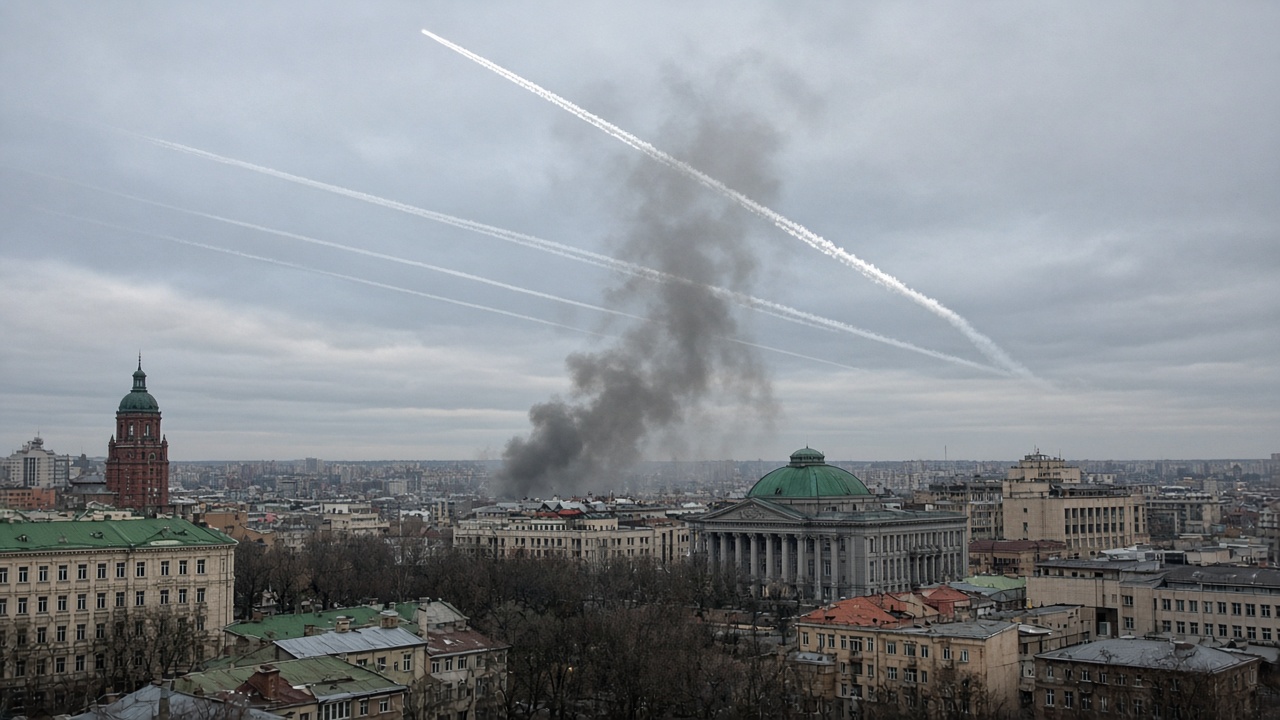
Russian attack drones hit central Kyiv on Monday in the middle of the working day, sending smoke above several districts and keeping air defenses engaged for hours while a citywide alert remained in force for much of the morning and afternoon.
Kyiv Mayor Vitali Klitschko said drones struck non-residential buildings in the Obolonskyi, Darnytskyi, and Shevchenkivskyi districts. Local reporters and Telegram channels described a strike adjacent to the main campus of Taras Shevchenko National University in the city center, where smoke was visible from multiple locations as residents moved through streets under an active alert.
What authorities confirmed
Klitschko reported that nine people were injured in drone-related incidents across Kyiv during the day, with six hospitalized, including one child. The tally added to casualties from a broader Russian aerial campaign that has pressed the capital around the clock in recent weeks.
The Monday strikes landed less than a day after eight people were killed in attacks elsewhere in Ukraine, according to Ukrainian officials. In Kharkiv, authorities said a glide-bomb strike on an apartment block injured at least 22 people, including children—a separate incident from the capital but part of the same intensified barrage President Volodymyr Zelenskyy has described as exceeding 2,200 attack drones, 1,630 aerial bombs, and 38 missiles of various types over the past week.
Capital under sustained pressure
The Kyiv Independent reported that air-defense activity was audible over central districts for much of the day, with blasts and intercepts filling the city during an alert that stretched for about nine hours. That pattern fits Moscow’s recent tactic of layering drone waves to exhaust interceptors and disrupt civilian routines, not only overnight.
On Sunday, Klitschko said two people were killed and four injured when a strike hit the Stolichny wholesale market just outside the capital, causing a fire at the food hub. The combination of peri-urban and downtown hits underscores that Kyiv’s protection problem is both geographic spread and timing: strikes are no longer confined to hours when most residents are asleep.
What happens next
Ukraine has responded in part by stepping up long-range strikes on Russian energy infrastructure. Ukrainian channels published footage Monday of a fire at the Pavlovskaya oil depot in Russia’s Krasnodar region, identifying the site as part of that counter-pressure campaign.
U.S.-led diplomacy to end the war has not produced a breakthrough, and the United Nations has repeatedly highlighted rising civilian harm. Interior Minister Ivan Vyhivskyi said separate strikes on Sunday killed three people when a children’s centre was damaged in Sumy and that Odesa region authorities reported one death in a massive southern barrage that also hit grain storage.
For Kyiv residents and institutions such as the national university, the immediate question is whether daylight salvos become a fixed feature of the capital’s risk profile—and whether air-defense coverage can keep pace without pulling resources from front-line cities also under glide-bomb and drone attack.