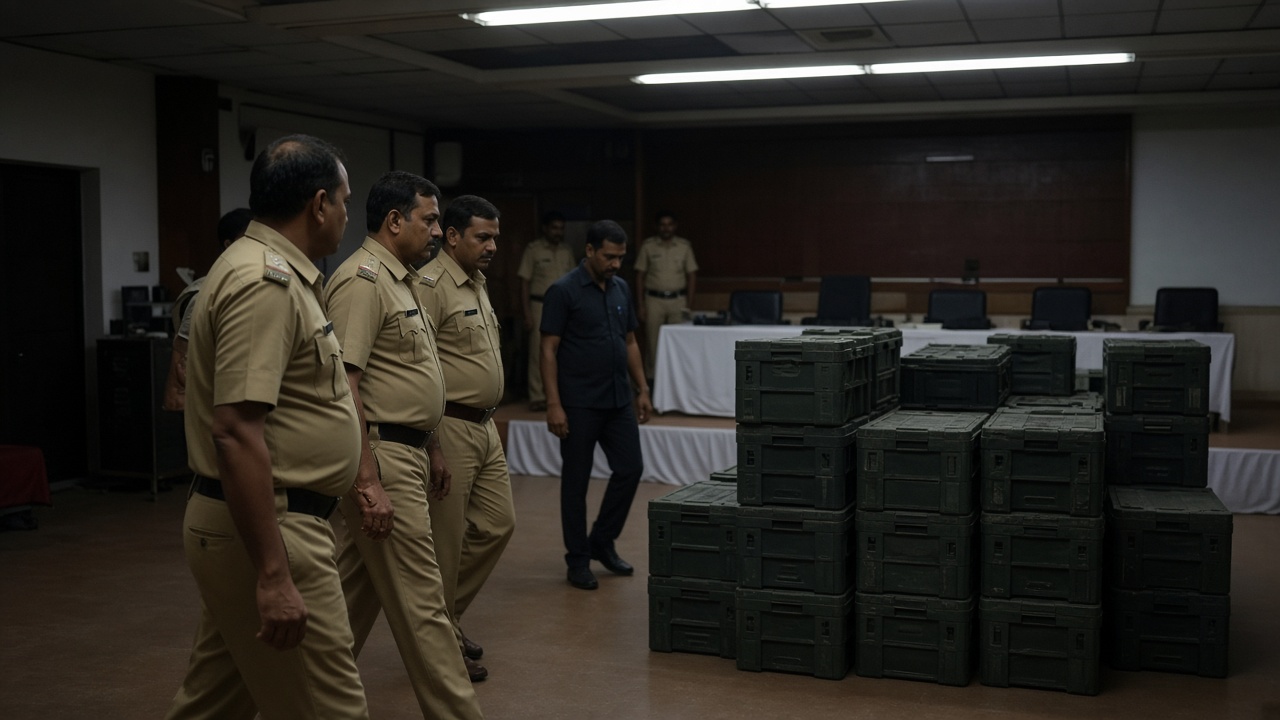
Union Home Minister Amit Shah said Monday that investigators have dismantled more than 40 modules tied to the Shahzad Bhatti network, arrested 350 suspects across 15 states and formally designated the Pakistan-based influencer’s operation a terrorist organisation under the Unlawful Activities (Prevention) Act.
Shah’s announcement, delivered at the inauguration of a national counter-terrorism conference called PRAHAAR in New Delhi, described Bhatti as a social-media figure whose followers were used to move weapons, explosives and narcotics across the border. The minister said more than 100 First Information Reports had been registered against network members, signalling that prosecutors intend to treat the case as a coordinated enterprise rather than isolated smuggling runs.
What agencies say they found
According to Shah, the National Investigation Agency and state police forces coordinated raids that mapped financing channels, courier routes and local recruiters in multiple regions. Officials have not publicly released a full charge sheet, but the scale of arrests—350 people in 15 states—suggests investigators believe the network maintained parallel cells that could operate even if one conduit was shut down.
The UAPA listing matters because it allows the Centre to seize assets, ban affiliated fronts and pursue harsher sentences for membership or support. Legal experts note that designations of this kind are often challenged in court, yet they immediately raise the compliance burden for banks, telecom providers and social platforms asked to monitor related accounts.
Extradition push at the same forum
Shah used the conference to launch a new Extradition Portal that the Home Ministry said will coordinate efforts to return fugitives from abroad. He directed state police forces to form dedicated teams that can work with central agencies on extradition requests and mutual legal assistance treaties.
Foreign Secretary Vikram Misri, Intelligence Bureau Director Mahesh Dixit and police chiefs from 15 states attended the session, along with anti-terror squads from every state and union territory joining virtually. The guest list underscores that New Delhi is trying to align state-level policing with a single national narrative on cross-border crime at a moment when tensions with Pakistan remain acute.
What happens next in the states
State anti-terror units will now face pressure to convert the mass arrests into convictions, a process that can take years when digital evidence must be authenticated and cross-border witnesses are hard to secure. For households near border districts, the practical effect may be tighter scrutiny of informal money transfers and courier packages as banks implement enhanced due diligence triggers tied to the new terrorist label.
Shah offered no timeline for charging Bhatti himself, who remains outside Indian jurisdiction. Investigators will likely focus next on tracing whether proceeds from narcotics sales financed other militant activity—a question that could draw in additional central agencies if forensic accounting links the modules to prior attacks.