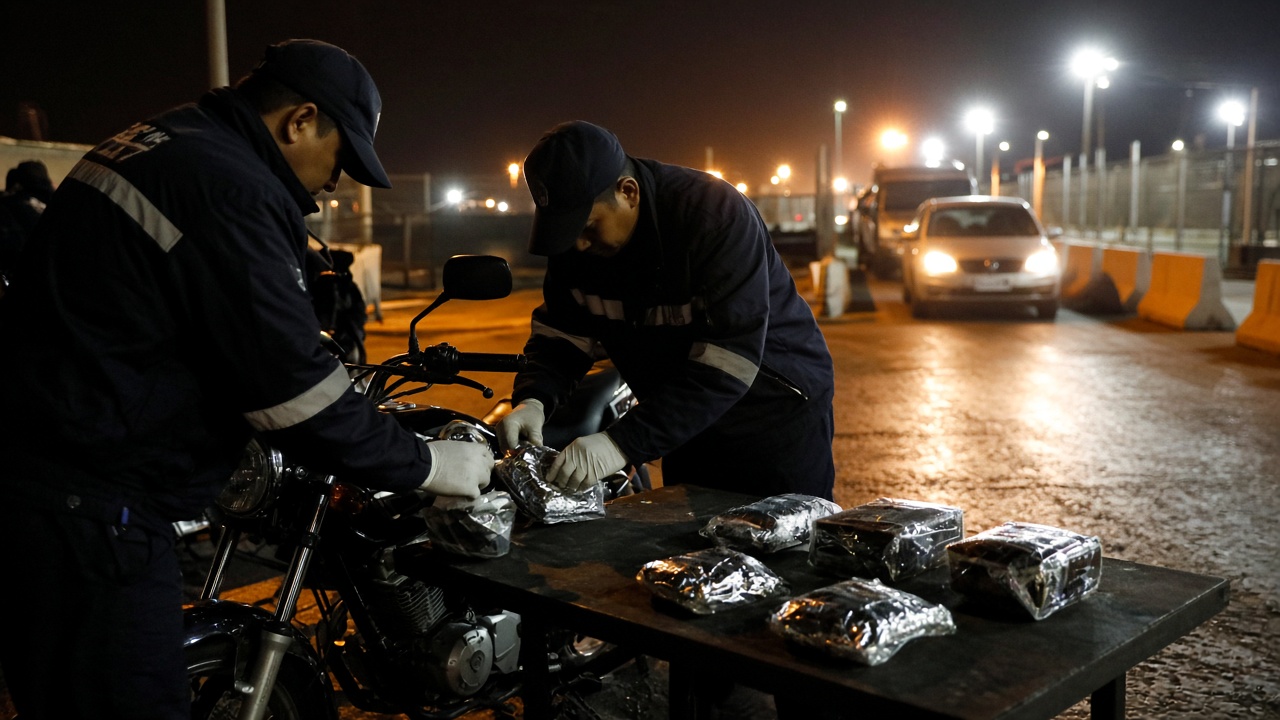
Immigration officers at Tuas Checkpoint uncovered nearly seven kilograms of heroin hidden inside sealed packets labelled as commercial biscuits on 23 September, the Immigration and Checkpoints Authority and Central Narcotics Bureau said on Monday. The joint statement said a 32-year-old Malaysian man was stopped after enhanced checks on his Malaysia-registered motorcycle, and CNB later located a 41-year-old Singaporean man during follow-up work in Tampines.
The agencies valued the combined haul at more than S$1 million (about US$782,000). They released photographs showing officers in gloves unpacking foil-wrapped bricks from the bike’s rear box and later laying out bags of powder seized from a residential unit.
What the checkpoint search found
According to the joint statement, ICA referred the motorcycle for secondary inspection and found packets disguised as biscuit products. Besides the heroin, officers seized about one kilogram of methamphetamine and one kilogram of cannabis from the vehicle.
The statement described the Tuas stop as part of routine enhanced checks at the land crossing, one of the busiest routes for goods and workers between Singapore and Johor. CNB said follow-up inquiries began immediately.
Tampines search expanded the case
Later on 23 September, CNB officers encountered a 41-year-old Singaporean man near Tampines Street 83 and searched his flat, the agencies said. They recovered about 790 grams of heroin, 602 grams of cannabis, 127 grams of Ice, 51 grams of Ecstasy tablets and 21 grams of ketamine, along with S$33,086 in cash.
The agencies said investigations are continuing and did not say on Monday whether the two men would appear in court or how they might be linked beyond the timing of the operations. Singapore law sets heavy penalties for trafficking in controlled drugs, with thresholds above 15 grams of heroin carrying a possible death sentence; charging decisions rest with the Attorney-General’s Chambers.
Why the announcement landed today
Singapore often bundles ICA and CNB disclosures once laboratory weighing is complete, which explains why the Tuas interception—made last Tuesday—was publicised on Monday morning. The release lands amid continued pressure on syndicates to exploit land checkpoints after pandemic-era air-travel disruptions shifted some routes back to road crossings.
ICA has expanded scanner and canine deployments at Tuas and Woodlands in recent years, and Monday’s statement emphasised that enhanced checks remain routine rather than reactive. For commuters, the practical effect may be longer motorcycle lanes during peak hours as officers pull vehicles for inspection.
CNB will likely seek travel and financial records as it maps whether the heroin was destined for local distribution or transshipment. Until any court filing is published, the confirmed facts in the agency release are the weights, the concealment method and the two men identified in the statement—a snapshot of how Singapore’s zero-tolerance enforcement still hinges on checkpoint vigilance.